Resilience, Trust, and Change: Tapio Lahtero on the work of the principal in Finland during and after COVID (Part 3) 

In the third part of this three-part interview, Tapio Lahtero discusses the impact of the pandemic on student learning and concludes with reflections on Finland’s efforts to develop more interdisciplinary curriculum and to reform upper secondary matriculation exams. The first part of the interview focused on how the schools Lahtero leads responded initially to the school closures and how they developed their digital competence (Leading when following is not required). The second part addressed how the schools Lahtero leads continued to carry out their key role as teacher training schools and addressed concerns about students’ mental health (Sustaining teacher education and supporting students’ mental health).

Lahtero serves as the Administrative Principal of both Teacher Training Schools of the University of Helsinki – Viikki Teacher Training School and Helsinki Normal School. He also leads the principal training program of the University of Helsinki and has written extensively on issues of leadership in Finland.  This post is one part of a continuing series looking at what aspects of schooling and education are and are not changing following the school closures in different education systems. For more from the series, see “What can change in schools after the pandemic?” and “ We will now resume our regular programming.  Previous interviews and posts have also looked at developments in the Netherlands, ItalyPolandFinlandNew ZealandSouth Africa, and Vietnam. This article was originally posted on internationalednews.com on October 16, 2024.

Thomas Hatch (TH):  What about learning loss – in the US, there’s a lot of talk about learning loss and that students test scores have gone way down and that some may never recover. I know that there has not been as much of a discussion about this in Finland, but have you seen any evidence of this kind of effect on academics or on particular groups of students such as immigrant students or those from lower socioeconomic backgrounds?

Tapio Lahtero (TL): Some students dropped out during COVID, but not that many in our schools. It is not only because of us, though; it is because of the socioeconomic environment around our schools. But I know that in some schools, there were dropouts and teachers couldn’t get into contact with them. Some students didn’t participate in virtual meetings, and even some students who did, wouldn’t turn on their cameras, so we couldn’t tell what was happening with these students. Maybe learning loss is the wrong word for this. Maybe it’s more like “pupil loss.” We lost these students. We don’t know where they are. This is, of course, quite a bad thing, especially because this often happened with the students who had the most difficulties before COVID. However, when it comes to the so-called “average” student there was not as much direct effect on academics, but these mental issues contributed to learning loss indirectly.

TH: You’ve talked about a number of changes you made in response to COVID, including changing the digital environment, particularly in terms of meetings and communication; some new digital tools are being used; and you’ve hired some additional special educators or other staff. Are there any other major changes you’ve made?  For example, many in the US are trying to implement more tutoring, are there other things that you’ve had to do now that you haven’t had to do before?

TL: The school is like an athlete who needs continuous training. When the match begins, they should be in good condition, technically sound, and well-prepared. If there are significant difficulties with teachers not trusting each other or lacking trust in the principal, then we are in trouble. All these aspects need to be in good condition for the school to function effectively. Now, with uncertainty about when the “match” (normal operations) will start, we need to stay vigilant and maintain readiness. It’s crucial to have a solid foundation in various aspects for the school to function well.

TH:  I’ve used this metaphor as well. I think it’s part of the global lesson, although we already knew it in some ways. When schools or school systems were already in good condition, they took a hit, and staggered, maybe even got knocked down, but they could get up. Other schools and systems that were already struggling are more like boxers in the sixth round who have already been knocked down a few times. When they get hit, they go down, and it takes them much longer to get back up.

TL: Yes, and let’s think about my relationship with my Dean [my boss]. I don’t need to be afraid of our Dean. What would happen if I was afraid of making a mistake? Maybe because of that I wouldn’t have the courage to do anything.  But I don’t need to be afraid, and that’s why I have the courage to do these things.

TH:  That’s fascinating. I’d like to get your take on a couple of other things before we end. Have you seen what I would call “micro-innovations” that your teachers have developed during COVID to help them teach specific skills or topics?

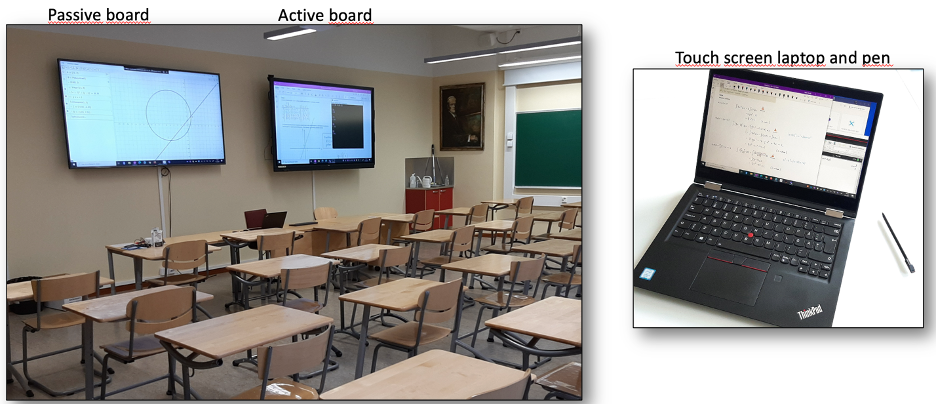
TL: Yes, we have a good example from one our math teachers, Päivi Kivelä. It started before COVID when she was a new teacher. After just two weeks working here, she went to one of our Assistant Principals and said, “I can’t work here; this school is too old.” She said “I have a method, and I need two smartboards – one ‘passive’ and one ‘active.’” The Assistant Principal asked me what to do. I said, “We have to try these boards. I want to see what exactly happens.” We found out that the active” board was a touchscreen where she wrote and calculated mathematical examples, and then her work was transmitted to all the pupils’ computers. Afterward, students could review the examples, and they could see the result, but also the steps the teacher went through. The passive board is just a typical screen for the teacher or student to project examples or answers. And then other math teachers in the school noticed and said they wanted to use this method too. So we put more of these dual screens in our classrooms.

Key equipment for the passive board/active board approach

When COVD started, they could use this same method for remote teaching by using a touchscreen laptop computer. Microsoft was so interested in this method that they made their own video [in Finnish] about what Päivi was doing. This is a good example because it is a new pedagogical solution that saves evergy and helps students to learn. Now, this solution has been adopted more widely by our chemistry and physics teachers as well.

TH:  That’s a fabulous example! I also wanted to ask you about Finland’s efforts to develop more of what in the US we call interdisciplinary learning. Here in Finland you call it transversal or phenomena-based learning, and when I was in Finland the last time in 2016, the latest curriculum reform was being discussed, including the importance of pursuing more phenomena-based learning. Now, on this visit, I haven’t heard much talk about it.  Have you seen any innovations in your schools in terms of transversal or phenomenon-based learning?

TL: You actually can’t find the word phenomenon-based learning in the national curriculum. Our new curriculum is quite nice, but I cannot find any major differences with earlier curricula. Some of the same kind of ideas about phenomenon-based learning were found in earlier curriculums. When the new core curriculum came out in 2016 some people and the media started to talk a lot about phenomenon-based learning because, of course, they found the idea very cool. But we haven’t talked that much more about it because it already happens. We use the method every day in primary school education and quite a lot also in lower and upper secondary school education. There may be more now than before, but I think we don’t find a lot of schools where the whole thing is phenomenon-based learning.

TH:  But the latest curriculum does say every student should engage in a module with transversal learning every year?  How do you make sure that happens?

TL: Yes, and we make sure that happens, but not by measuring. I know it happens. In primary school, our teachers have co-teaching sometimes, and I know when they have co-teaching, they do projects that are organized around some phenomenon. It’s a quite normal way for them to teach, and it has been going on for some time. But we have changed our system in some ways. For example, in the Viikki school, where we have more space, all three first grade teachers are in one classroom, and they can group things flexibly, and they have a special education teacher who is the fourth teacher in the room. They have projects where they put different subjects together. And if you read their timetables, it cannot say that this lesson is math; they feel they’re teaching in a different way. In lower secondary school where we have subject teachers, we don’t have as many possibilities, but we also have some co-teaching projects. For example, history teachers, physics teachers, and mother tongue teachers have a yearly project together, and I know all our students go through this project. Every year, we also have other yearly projects. For example, we have a “Light Week” in the fall, and during this week, at the whole school level, we have different projects that link different subjects together to study light and electricity.

TH:  I also wanted to ask you about the upper secondary schools and the matriculation exams. I know that a reform has been passed, but that right now students who do well on the mathematics exams have a better chance of getting in to university. Have you seen any positive or negative effects of that?

TL:  Negative. You can say that the higher level of education always leads the orchestra. What happens in the university always leads what happens at the upper secondary level; and the upper secondary schools leads the orchestra for the lower secondary schools.  When students in lower secondary schools want to get into high-level upper secondary schools, they are very interested in their grades in mathematics, mother tongue, and so on. When we have these weeks for projects, some pupils and parents don’t like that because they are just focused on getting high grades in the subjects. Now, our upper secondary school students know that the system is that you need high grades in mathematics. Even if you want to study history, you need high grades in mathematics. If you want to pursue law or become a medical doctor, you need high grades in mathematics. So all of them want to take mathematics, but they struggle because they dislike mathematics, but they have to do it because it is so important both for the exam and for their grade point average if they want to go to university. Now, they have changed the system, and in the fall of 2024, our new students in lower secondary school they knew that the university system is going to be a bit different when they get there. I hope it’s even possible for people who love history and want to study history at the university to concentrate on history. We really hope this helps the situation. Students could choose more languages, more humanistic studies, and more.

Sustaining teacher education and supporting students’ mental health: Tapio Lahtero on the work of the principal in Finland during and after COVID (Part 2)

What does school leadership look like in Finland? Tapio Lahtero shares his perspective on what it was like to lead schools with well-prepared but highly autonomous educators through the challenges created by the COVID-19 pandemic. The second part of this three-part interview describes how the schools he leads continued to carry out their key role as teacher training institutions and addressed concerns about students’ mental health. The first part of the interview concentrated on how the schools responded to the school closures and developed their digital competence (Leading when following is not required: Tapio Lahtero on the work of the principal in Finland during and after COVID (Part 1)). The third part of the interview will discuss the impact of the pandemic on student learning and the progress and prospects of Finland’s efforts to develop more “phenomenon-based learning” and to reform upper secondary matriculation exams.

Lahtero serves as the Administrative Principal of both Teacher Training Schools of the University of Helsinki – Viikki Teacher Training School and Helsinki Normal School. He also leads the principal training program of the University of Helsinki and has written extensively on issues of leadership in Finland. This post is one part of a continuing series looking at what aspects of schooling and education are and are not changing following the school closures in different education systems. For more from the series, see “What can change in schools after the pandemic?” and “We will now resume our regular programming.”  Previous interviews and posts have also looked at developments in the Netherlands, Italy, Poland, FinlandNew ZealandSouth Africa, and Vietnam. This article was originally posted on internationalednews.com on October 9, 2024.

Tapio Lahtero (TL): With teacher training we also continued in our normal way. The student teachers still observed lessons. They had a link so they could come and observe what happens in our virtual classroom. When the teachers and pupils worked in small groups in breakout rooms, the student teachers could join the breakout room and observe. The student teachers also had to do their own lessons, so we told them you have to learn how to use these devices and give your lessons virtually, and they would share their screen and work with the students in breakout rooms. After the lesson, the student teachers and our teachers had their feedback discussion, and we had group seminars with the student teachers and our teachers using Microsoft Teams. The student teachers sent their lesson plans via email, and after that they would have another Teams meeting to discuss how to improve their plans. It was all like before but online. And this all happened overnight, and we made sure that the student teachers could submit everything they had to for their programs on time. But it was not a rich enough experience for the student teachers, particularly in how to help them meet and create connection with students. I’m not happy when it comes to those kinds of things, but somehow it was quite unbelievable that we could really change our system. If I think about my leadership in that kind of crisis, the Finnish way to lead schools is to talk with teachers, trust them, ask for advice. But in that crisis, I needed to give straight orders, and the first order I gave is that nothing changes. Everything continues as normal, but I knew the teachers and staff struggled.

TH: Did you ever consider another option? Did you think about taking a week off to figure things out and then come back?  Why did you know that you had to continue this way?

TL: In Finland, we have very strong cultural reasons for keeping schools open.  Even with hospitals, it is possible to say that today we have big problems, and we can’t take patients.  But with schools, even during the Second World War and times of bombing in Helsinki and Turku, schools operated. Our role in school is to take care that our society works as normally as possible. I think that is the answer, because you can’t find any teacher or principal who could even think that “today we don’t have school.” For some reason, it’s not possible. I cannot think like that. I can think of one situation when I worked as the Superintendent of Basic Education in the city of Vantaa, when a school building burned down overnight. The morning after, the school was destroyed, and in that situation, we had one day without school. But the next day, we had school in some other buildings. That is the only exception I know. It is cultural. I know that in many countries, they just closed or waited. But in Finland, we have autonomy, and I think we have a climate where we should not be scared if we make mistakes. We continue.

TH: What about your new teachers…The school had worked on digitization for two years, but you had new teachers. Did you have to do anything special to get them ready for digitization and the move to remote learning?

TL: After we had developed solid systems, all our administrative operations happen in Teams. Meetings occur in Teams; discussions in the teacher room happen in Teams; and various memos and materials are stored in Teams. Nowadays, when we have new teachers, the system is that they come to work in this digital environment.  It’s not something extra. Before, with new teachers, we had to tell them that we have this extra system, and we need to teach you how to use it, and we have to hope that they use it. But now, they cannot work here at all without using these digital environments. Now the landscape is very different too. Especially when we recruit younger teachers, they are already better using these tools.  It’s more natural now. It was trickier before we had a uniform system.

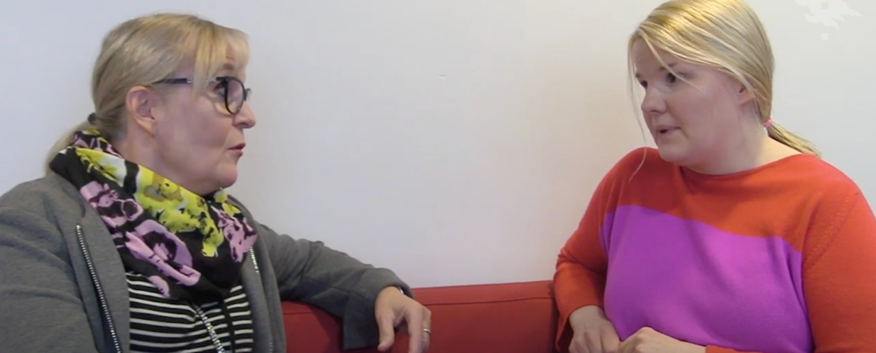
Sirkku Myllyntuasta, Teacher Training Coordinator at the Viikki School, talks with Karolina Salonen, a teacher trainee

TH: Are there particular things that weren’t digital before but that are digital now? Do teachers still have some of their meetings online or digitally?

TL: We have a lot of meetings with different working groups and teams, like a school culture team, a wellbeing team, subject based teams, the class level teachers in the primary school, and the leadership team. We also have meetings with the staff of each of the schools, and we also have some meetings for all the teachers, that are sometimes followed by smaller group discussions. Some groups, like subject teachers, can decide whether they want to meet face-to-face or online, and often they choose to meet online. Leadership teams often prefer face-to-face but sometimes may decide to meet virtually. Every Wednesday, there’s a one-hour time window when all teachers need to be present, and then the principals of each school make the decision whether it’s face-to-face or online. We also have the meetings for mentoring or guiding the student teachers and more and more these meetings are online.

TH: You said one of the downsides during COVID was that student teachers didn’t have a chance to develop personal relationships with students. Are there other issues coming out of COVID? Are people doing too much digitization?

TL: I think we are finding the right balance with digitization. But during the COVID time, maybe I couldn’t really understand how bad things were for people. I read newspapers, and I discussed it with researchers, and they mentioned that this was a very heavy for time students, principals, and teachers. But I think I understand it better and better now. For example, for upper secondary school students a very significant part of their school years were during COVID, and they have many more mental health issues than students of the same age had before. When COVID came, our teacher organization didn’t meet for a long time, and even when we were present in school, we couldn’t come together in the teacher’s room. We worked alone, month after month. We have not found the same level of community, and it takes time. Many teachers are very tired, and they have not recovered and the same happens with principals.

TH: Have you seen other evidence of issues with student well-being in your school? Are more students needing counseling, and how have you responded? How do you know about it? Do teachers report it to you?

TL: When I read the newspapers and when I discussed this with researchers, they describe this phenomenon nationwide. After that, I can recognize the same phenomena in my own school. It’s not easy for a single principal with 1,700 students, but I can see some difficulties among our upper secondary school students. Normally, when they start the school year, we have different kinds of programs, and we try to create a good understanding about the school, and we try to create good groups. I have been doing this for a couple of years, but now we have had much more difficulties in this. Sometimes I think they don’t feel they are part of the group like before. When it comes to our teachers and their cooperation and sense of community, I can feel differences compared to before COVID.

TH: Have you had to do anything differently as a principal to deal with these mental health issues, like hire more counselors?

TL: We’ve been able to adapt the structures and personnel we have to address these challenges. But we also receive project funds every year to support various initiatives or to support students with different learning needs, and, then we also received additional funds for addressing COVID-related challenges. With this money, we’ve hired more school assistants and more special education teachers. But we’ve used these people in a different way. For example, at our Viikki campus, the role of these new people has been somewhat different. We have had special education teachers that work with our primary school students and special education teachers that work with our lower secondary school teachers, but this new teacher starts working with 6th graders at the end of primary school and then will continue with them into lower secondary school to support their transition.

Next week: Resilience, Trust, and Change: Tapio Lahtero on the work of the principal in Finland during and after COVID (Part 3)

Leading when following is not required: Tapio Lahtero on the work of the principal in Finland during and after COVID (Part 1)

What does school leadership look like in Finland? Tapio Lahtero shares his perspective on what it was like to lead schools with well-prepared but highly autonomous educators through the challenges created by the COVID-19 pandemic. The first part of this three-part interview focuses on how the schools he leads responded to the initial shift to remote learning and accelerated the development of the digital competence of the whole staff. The second and third parts highlight how the schools continued to carry out their key role as teacher training institutions during the pandemic, describes how the schools have addressed concerns about students’ mental health and learning, and discusses the progress and prospects of major reform initiatives to support more “phenomenon-based learning” and improve the matriculation exams in Finland.

Lahtero serves as the Administrative Principal of both Teacher Training Schools of the University of Helsinki – Viikki Teacher Training School and Helsinki Normal School. He also leads the principal training program of the University of Helsinki and has written extensively on issues of leadership in Finland. This post is one part of a continuing series looking at aspects of schooling and education that are and are not changing following the school closures in different education systems. For more from the series, see “What can change in schools after the pandemic?” and “ We will now resume our regular programming“. Previous interviews and posts have also looked at developments in the Netherlands, ItalyPolandFinlandNew ZealandSouth Africa, and Vietnam. This article was originally posted on internationalednews.com on October 2, 2024.


Thomas Hatch (TH): Your official appointment is at the University of Helsinki, where you are the administrator in charge of the two teacher training schools that are part of the University of Helsinki’s Teacher Education Program, can you tell me how this is organized? Who do you report to?

Tapio Lahtero (TL): This is a bit unusual, but the principals of the two training schools report to me; I report to the Dean of the University of Helsinki and also directly to the Ministry of Education. The Ministry of Education and the Ministry of Finance provide funds directly to the two schools. The system isn’t that they give money to the university, and the university gives it to us. The funds come directly from the Ministry. That’s why I report directly to the Ministry as well.

The Ministry of Education has different Departments – the Department of Higher Education, Department of Basic Education, Department of Upper Secondary School Education – and I cooperate with all of them. That’s because in our teacher training role we are part of higher education. But at the same time, we also are a normal neighborhood school for Helsinki pupils, and I need to talk with the Department of Basic Education too.

TH: I’m particularly interested in how schools in different education systems responded to the COVID-19 pandemic. I understand the Ministry made the initial decision to close the schools early in the pandemic, but can you tell me about how schools in Finland responded?

TL: I think we were quite successful in Finland in dealing with the COVID situation, and one reason is the high level of autonomy for municipalities, principals, and teachers. We didn’t wait for commands from the Ministry. The situation was so complicated that I don’t believe it was even possible to give instructions to everybody at once in a short time. I know in many parts of the world, principals waited, and they
waited and waited practically until COVID was over. But in Finland, we transformed our system overnight.

Of course, there were some differences. Some municipalities and schools performed well, but some municipalities struggled to find effective solutions. What are the reasons we had these differences? One reason for the differences is resources. For instance, in our teacher training schools, we could give every student their own laptops the day before the closures. And then the next day, the school continued with a “normal” day, but we were online. We had exactly the same lessons, timetables, lunch breaks,
everything.

TH: But the decision to close was made at the national level, wasn’t it?

TL: We knew this decision was coming, but, at that moment, it was really up to us to decide whether or how to get every student a laptop. If you wait until you know the decision will come, then it is too late to do any radical things. You are ready or you are not ready. That means whatever you did two years before is really crucial. For the schools and municipalities that had developed ICT-based pedagogies and had invested in devices in earlier years, closing the next day wasn’t a big issue. We were in a hurry, and it was hard work, and it was mentally challenging, but we didn’t encounter major problems. However, the municipalities that had not done their homework, or who felt this ICT-pedagogy is too difficult or these devices are too expensive, they had problems because in one week, in one month, you can’t do any miracles. It’s not possible. I know that in some places in Finland the teachers had to write the assignments on paper, and then walk around the municipality and deliver them to the students. But of course, with a high level of autonomy, quite soon they developed their systems. For example, they used mobile phones; they used applications like WhatsApp, which may not be ideal normally but were okay for the COVID situation.

Also, in our school in Viikki, our first and second graders they hardly know how to read, so they barely know how to open or use the computer for online learning. So when we knew the schools were going to close, that same day, I sent our secretaries to buy “good-enough” mobile phones for our first and second-grade teachers, and they used Whatsapp to start to contact the students and their parents, and during the first week, they met all students and parents via mobile phone. They taught the parents to use the computers and after one or two weeks, the students also knew how to open their computers and see their classmates. It was easier with the older students of course.

It was not a happy time, but we didn’t have huge problems, because we had resources and we had worked hard for several years on our technology. We had bought the computers, but we had also adopted Office 365, and the teachers and the students knew how to use it. That all helped us.

TH: You mentioned that you started this work with technology several years before the pandemic. Did you do that in response to the push for digital competency as part of the curriculum reform in 2016? It wasn’t specifically intended for emergencies or crises, was it?

TL: That’s right. We’ve been developing our digital systems for some time. This is quite funny now, but when we started to buy computers; when we started to train our teachers; and when we started to use Office 365, we ran into many difficulties. Some of our teachers liked it. Some of them didn’t like it. They said “I have my own system; I hate this Office 365. I don’t think this ICT-based pedagogy is very good. I don’t want to learn it…” But, of course, we had some teachers who liked it and who had really high-level skills. As principals, year after year, we tried to build professional learning communities so teachers could learn from each other and share materials. But the results were very small. Changing school culture is not easy. But then COVID came along, and I am a bit bitter because this small virus without a brain was better than I was at changing school culture, and I was supposed to be the expert!

From the beginning of COVID, what happened was that the teachers started to self-organize; they started to give each other advice; they started to ask for help; they started to meet online and share materials; and they started to learn how to use these devices better than before. During this first couple of months during COVID, there was much more of this activity than there was before that. As the administrative principal in charge of the two schools, I had bought devices; I had chosen Office 365; I had ordered some training sessions; I had asked some teachers to help their colleagues; But looking back, I think I had done a good job as the manager, but this small virus did better work as a leader than I had.

Organizational research says that in institutions like schools very strong reforms don’t take place without some crisis. Before COVID, some teachers would give reasons why they couldn’t use technology, but they knew and I knew that the real reason was because they did not have the skills and did not want to develop them. It was like we all knew a secret, but we couldn’t say it out loud. But now after COVID, all our teachers have good enough skills with ICT-based pedagogy, and they can make pedagogical
decisions about whether or not to use technology.

TH: Isn’t the “Finnish Way” to have the teachers involved in the decisions about how to implement the curriculum reforms and whether to adopt Office 365 or other platforms and tools and to come to some consensus?

TL: Normally, municipalities have their autonomy, and the municipalities make these kinds of decisions. But we are not run by a municipality, so it needs to be my decision. Of course, we had prepared, and we had a long process where we asked all the teachers for their input. But even before that process, we knew more than half of the teachers would have to change their systems, whatever platform we chose. If we didn’t make the decision, then we would have a fragmented system. Before this decision, our students had to sign into different systems several times a day, and it caused problems with their personal laptops, so I thought we had to pick one platform.

TH: What’s the legacy of this decision and the uses of technology during the pandemic? You said your teachers now have the skills to use digital pedagogy more effectively. But are they using that pedagogy? Or have they just gone back to teaching the way they were before?

TL: That is an interesting question. I don’t know if we are using technology more effectively now. It also depends exactly what we are talking about. For example, now we digital materials, so we have a paper book and the same book digitally with videos and audio. Now, my question is, what happens with pedagogy? And I’m very skeptical. In my school, I think that teachers can use paper books just as effectively as digital materials. But digital environments, like Office 365, and digital tools are more interesting. Now all our teachers use this digital environment, because it’s easy, and it gives more time for more important things; and our students learn how to work in this kind of digital environment. Then also, in different subjects, teachers use digital methods, and didactics, and materials, and that is okay.

But the question for me, as the principal, is should I control that? I’ve even told one history teacher I hope you don’t use a lot of digital tools, because this teacher is very talented at telling stories. Students love these stories, and they love history as a subject. Why should I, as the principal, tell him to use digital tools and stop telling stories? The question isn’t how much do teachers use technology, the question is what do students learn? So not every teacher in every subject needs to use these tools in the same way.

TH: Anything else you want to add about your leadership during COVID?

TL: Well, I don’t think it’s possible for the organization to operate in different ways at different levels. If I, as the principal, ask teachers to use ICT-based pedagogies, but I don’t use it, then it’s a paradox. COVID helped us because we changed all our meetings– our teacher meetings, our team meetings, our leadership meetings – to using Office 365, and then even after COVID, we continued using these kinds of tools. Now I can say that our whole organization, not only at the pedagogical level but also at the administrative level, works at a new way. But before COVID, we really hadn’t used Office 365 for administration before that. Maybe that’s one reason why I wasn’t so successful before this little COVID guy forced me to work in a new way.

Next Week: Sustaining teacher education and supporting students’ mental health: Tapio Lahtero on the work of the principal in Finland during and after COVID (Part 2)

Leading headlines from OECD’s Education at a Glance: September 2024 Edition

This week, IEN scans the headlines reporting on this year’s OECD Education at a Glance for 2024. Published on September 10th 2024, this year’s report focuses particularly on equity and disparities in opportunities at every level of education. Every year, the report also summarizes recent developments in access, participation, and progress in education across countries. Overall, secondary attainment improved as have educational and labour-market outcomes for youth most at risk of falling behind. The earnings gap between females and males shrank, but girls and women continue to earn less than boys and men, despite outperforming them on most measures. The headlines about the report compiled in this scan, highlight issues such as decreases in education funding and increases in teacher-student ratios in some countries. For some historical context, see IEN’s coverage of previous reports: Education at a Glance 2023 Scan, Education at a Glance 2022 Scan, Education at a Glance 2021 Scan, Education at a Glance 2019 Scan. This article was originally posted on internationalednews.com on September 25, 2024.

Global

Financial incentives not enough to fix teacher shortages across the OECD, EducationHQ

Teacher recruitment woes are not unique to Australia, with a major new OECD report finding many countries are grappling with critical staff shortages, along with an ageing workforce that carries a marked gender imbalance.

Albania

OECD report: Albania far from the EU and last in the region for digital skills, CNA.al

Australia

New report highlights inequity in Australia’s schools, The Educator

Australia significantly underperforms against most OECD countries when it comes to investing in public
schools, new data shows.


Australia spending more on private schools than other developed nations, Nine News

“The gap in Australia’s education system has been revealed in new research examining
global schooling trends.”

Brazil

Brazil’s compulsory schooling surpasses OECD average, Agência Brasil

Finland

Education at a Glance: Major gender differences in education paths found among OECD countries – international comparison shows Finland’s situation remains largely unchanged, Finnish Government

The Organisation for Economic Co-operation and Development (OECD) has published its Education at a Glance, an annual publication of indicators describing education systems.”

Hungary

Ministry: OECD acknowledges achievements of Hungarian public education, The Budapest Times

“A high proportion of children in Hungary receive pre-school education, while the
ratio of children to teachers and the number of students who drop out or repeat a grade is below average…”

Ireland

Ireland ranks last in investment in education in OECD, RTE

“The organisation’s latest Education at a Glance report places Ireland last out of 34 countries when it comes to the proportion of its GDP that it invests in education.”

Irish principals condemn ‘vacuous’ OECD review which missed ‘severe deprivation’ in some schools, The Irish Times

Italy

Italian female college graduates earn half the income of men, Agenzia ANSA

“Young women with a university degree in Italy on average earn roughly half the income of their male counterparts, or 58%, the widest gender gap recorded in the 38-country area of the Organization for Economic Cooperation and Development(OECD), according to a report out on Tuesday.”

Korea

Young Korean women are more educated, less employed than men, OECD finds, The Hankyoreh

Korean teachers handling larger classes, but starting pay lags behind OECD average, The Korea Herald

Portugal

Immigrant students up by 160%, The Portugal News

The number of immigrant students in Portuguese schools has increased by 160% over the last five years, and the Ministry of Education is preparing a set of mechanisms for schools to integrate these children and young people.”

Portuguese families lead in preschool spending, The Portugal News

Spain

School enrolment for 0 to 3-year-olds in Spain rises ten points in a decade, exceeding OECD and EU averages, La Moncloa

Türkiye

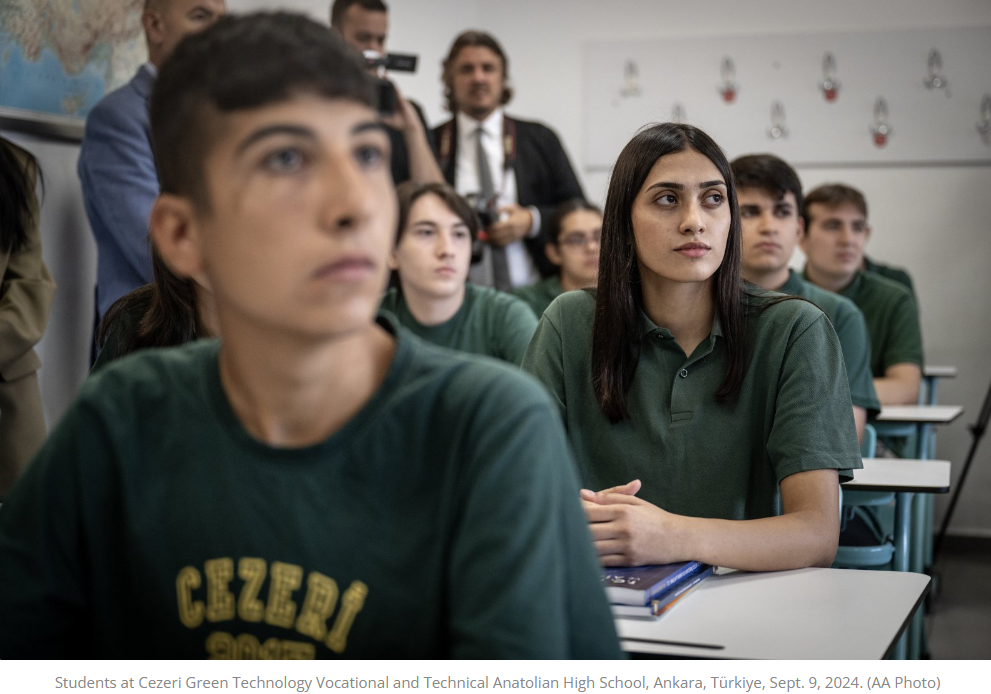
Türkiye’s school enrollment hits 98.8% for ages 6-14 in 2023, Daily Sabah

“In Türkiye, as of 2023, the school enrollment rate for the 6-14 age group was 98.8%, while the education participation rate for the 15-19 age group was 73%.”

United Kingdom

UK among nations with lowest spending per child on pre-primary education – OECD, Guardian-Series

“In early childhood education, expenditure per child in the UK is around 6,893 dollars (£5,272), according to the Organisation for Economic Co-operation and Development’s (OECD) latest Education at a Glance study. This is compared with around 11,735 dollars (£8,976) per child on average across OECD countries with data available.”

UK primary class sizes among biggest in industrialised world, report finds, The Guardian

Only Chile exceeds UK’s 27 pupils a class in OECD study, with UK pupil-teacher ratio also among highest.”

Banning Cell Phones Around the World? Scanning the Back-to-School Headlines for 2024-25 (Part 3)

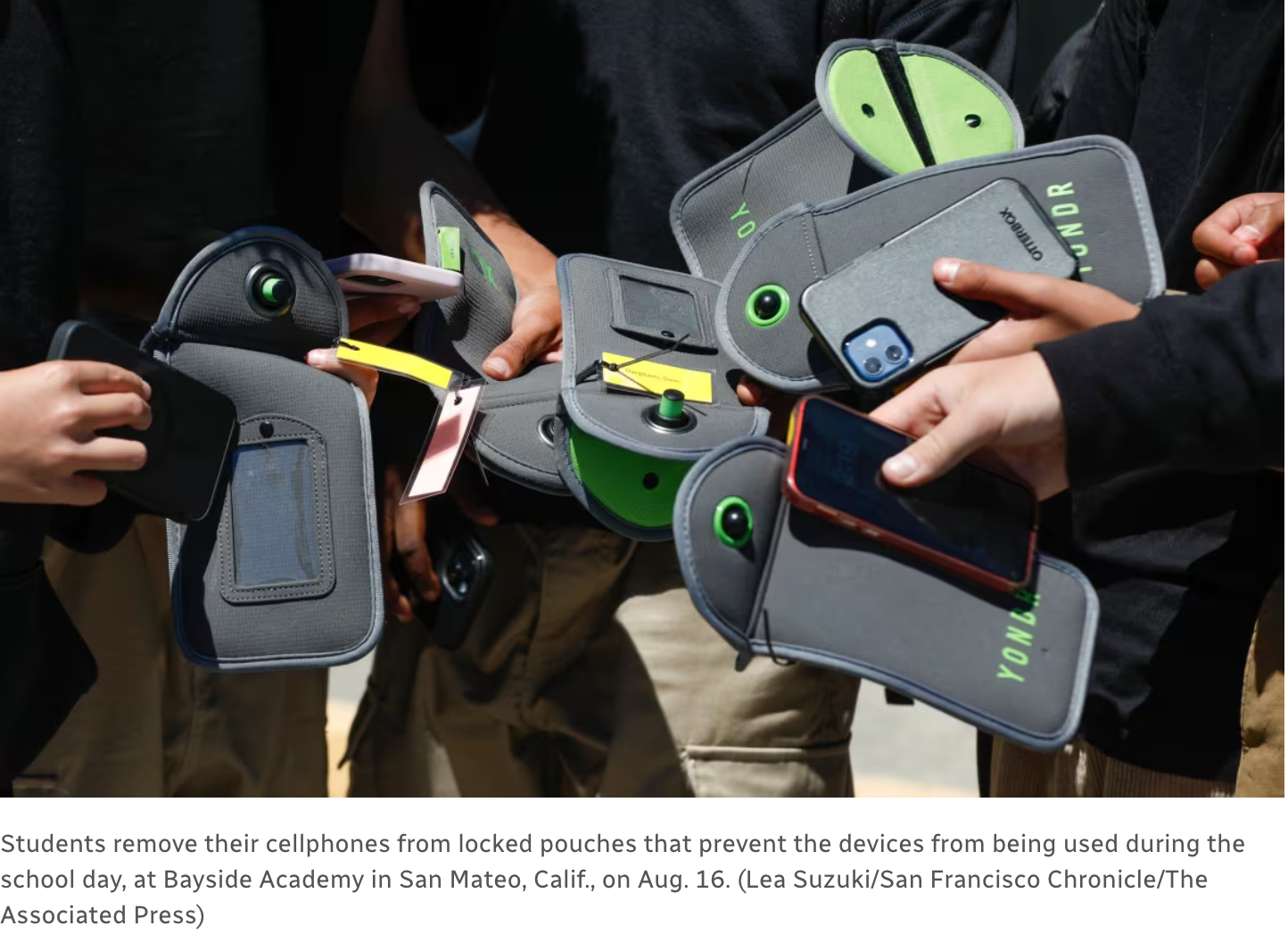
Today, we roundup some of the many headlines that discuss the banning of cellphones as students head back to school in many parts of the world. Part 1 of this year’s Back-to-School scan provided an overview of some of the many election-related education stories that have appeared in the press as the new school year begins in the northern hemisphere (Politics, Policies, and Polarization: Scanning the 2024-25 Back-To-School Headlines in the US). Part 2 brought together stories addressing the cost of supplies, shortages – particularly of bus drivers, hot weather and other issues (Supplies, Shortages, and Other Disruptions? Scanning the Back-to-School Headlines for 2024-25). This article was originally posted on internationalednews.com on September 19, 2024.

Why Schools Are Racing to Ban Student Phones , The New York Times

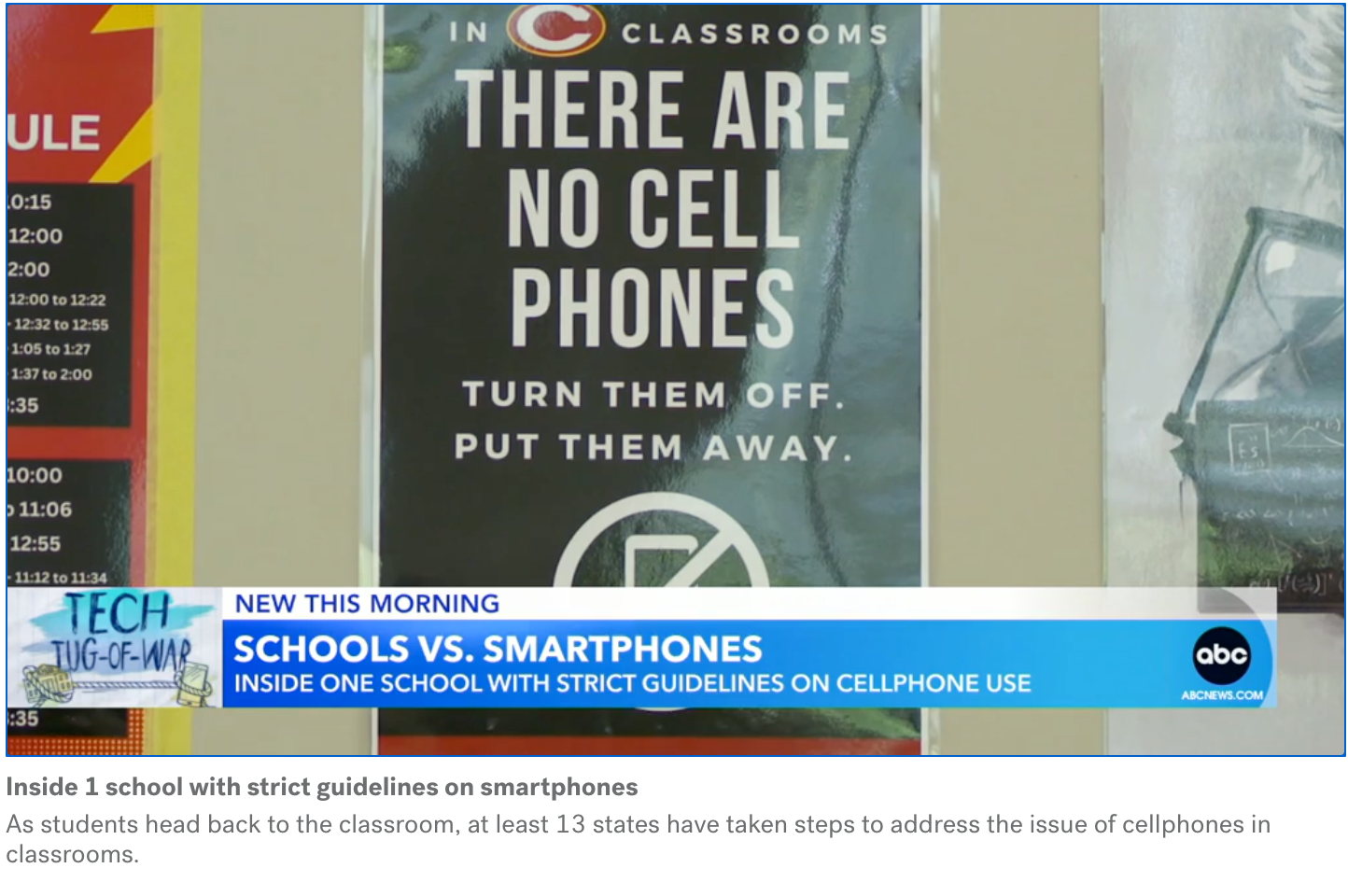
Cellphone bans in schools take center stage amid mental health crisis, ABC News

There are cellphone bans in schools around the world. Do any of them work?, CBC News

What Research Shows About Smartphone Bans In Schools, Science Friday

Saying phones should be banned in schools is easy. Actually doing it is a lot more complicated, Yahoo! News

School Cellphone Bans Complicated by Logistics, Politics and Violence, Politico

Do smartphone bans work if parents push back?, USA Today

Parents push back on school cellphone bans, K-12 Dive

78% of parents polled want their children to have cellphone access during the school day in case there’s an emergency. Some 58% said cellphone access is needed so parents can get in touch with their children and find out where they are, and 48% said contact is needed to coordinate transportation.

Why do parents oppose cell phone bans? They want to reach their kids if ‘the worst happens.’, Chalkbeat

Cellphone Bans Around the World

Back to School in Central Europe… With or Without Phones, Balkan Institute

European schools crack down on mobile phone use over health concerns, Yahoo! News

Back to school: France tests smartphone ban in 200 middle schools, EuroNews

The state does not contribute to funding this test ban, leaving the financial burden to the country’s departments responsible for funding middle schools, some of which consider it too heavy.

France to trial ban on mobile phones at school for children under 15, The Guardian

Mobile phones to be banned in Greek schools from September, Euronews

Hungary sacks principal for opposing new phone ban in schools, The Strait Times

Netherlands: Nationwide ban on phones in schools underway, DW

Cell phones, smart watches, and tablets are now banned for pupils at Dutch primary and secondary schools. The Dutch government called them a “distraction” that reduces academic performance and social interaction.

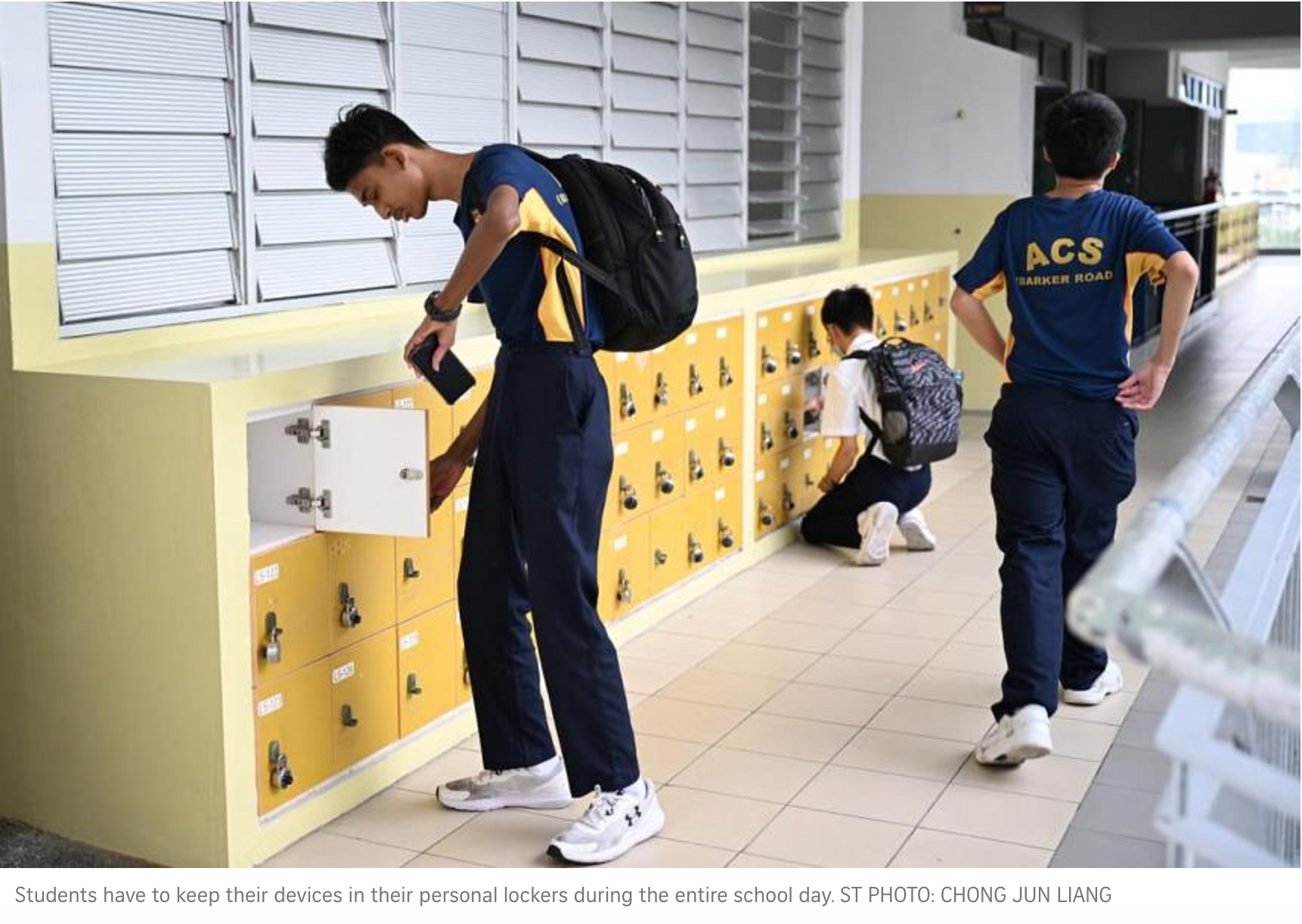
Schools in Singapore impose phone bans to reduce distractions, rekindle social interaction, The Strait Times

Cellphone Bans in Canada

On the first day of school, Canada’s new student cellphone bans will face a crucial test, The Globe And Mail

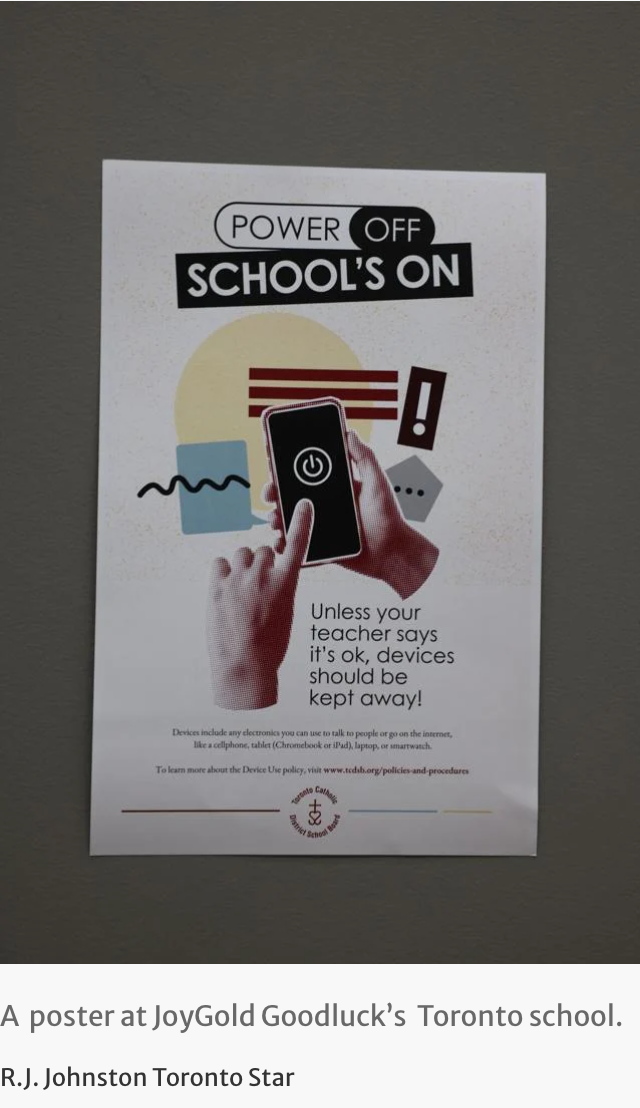
Cellphones will be banned in Ontario classrooms when students return next week. Here is how it will work, CP24

Ontario’s new school cellphone ban has started. Why we should prepare for ‘a hard transition’, Toronto Star

B.C. brings in ‘bell-to-bell’ school cellphone ban, CBC

B.C.’s phone ban in schools: What students and parents/guardians need to know, Vancouver Sun

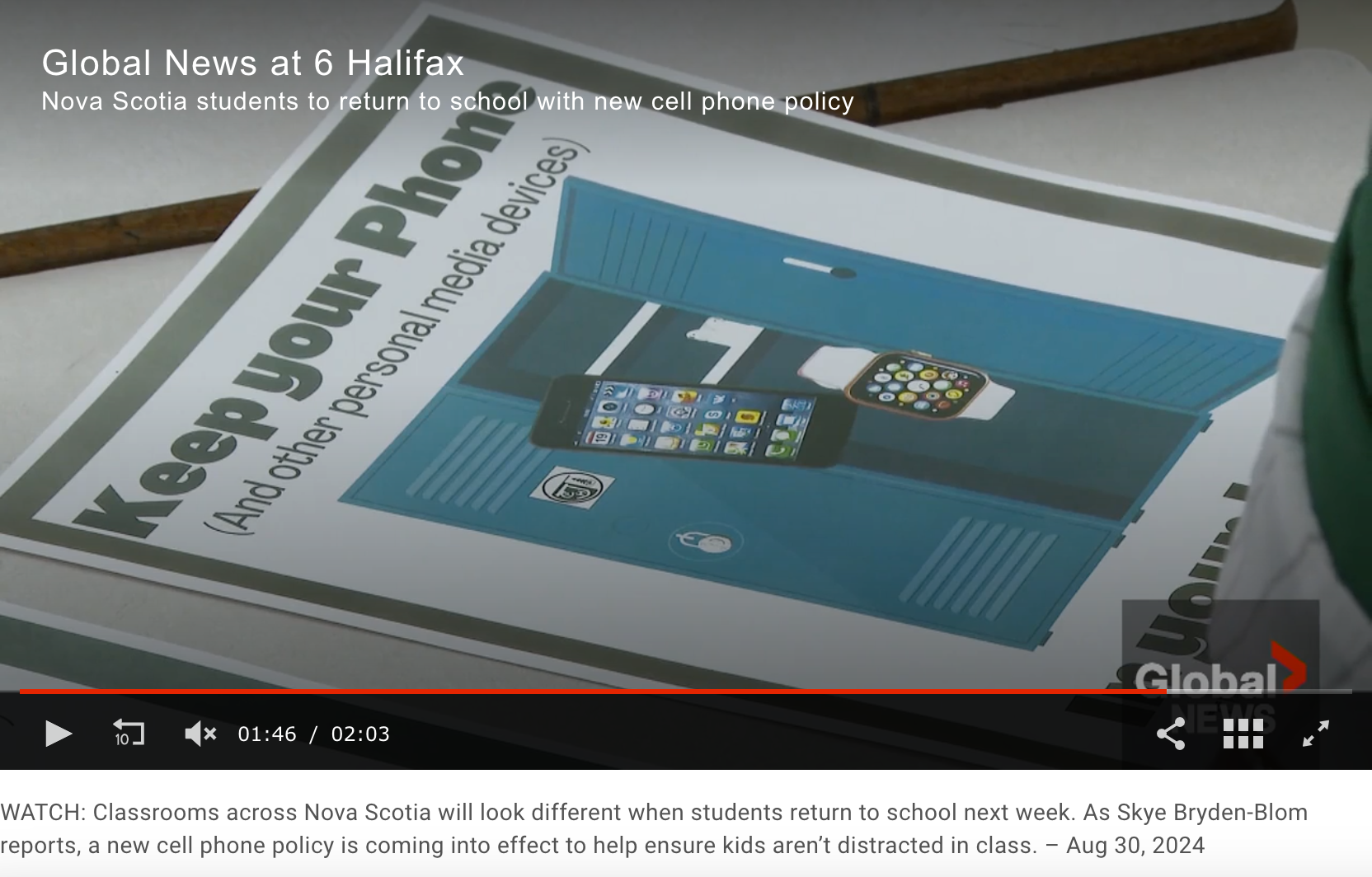
Cellphone bans in Maritime schools should increase academic performance, says school psychologist, CTV News

We are constantly having parts of our brain being drawn to the phone…So, by just either having it on the desk, in our backpack or in our pocket, as long as it’s in reach of us, our brain is continuously thinking about that. And that diverts the attention away from what the teachers are saying… – Clinical and school psychologist Todd Cunningham

Parents hung up on Manitoba’s school cell phone ban, The Winnipeg Sun

How will the new school cellphone bans actually be enforced?, CBC

Cellphone Bans in the United States

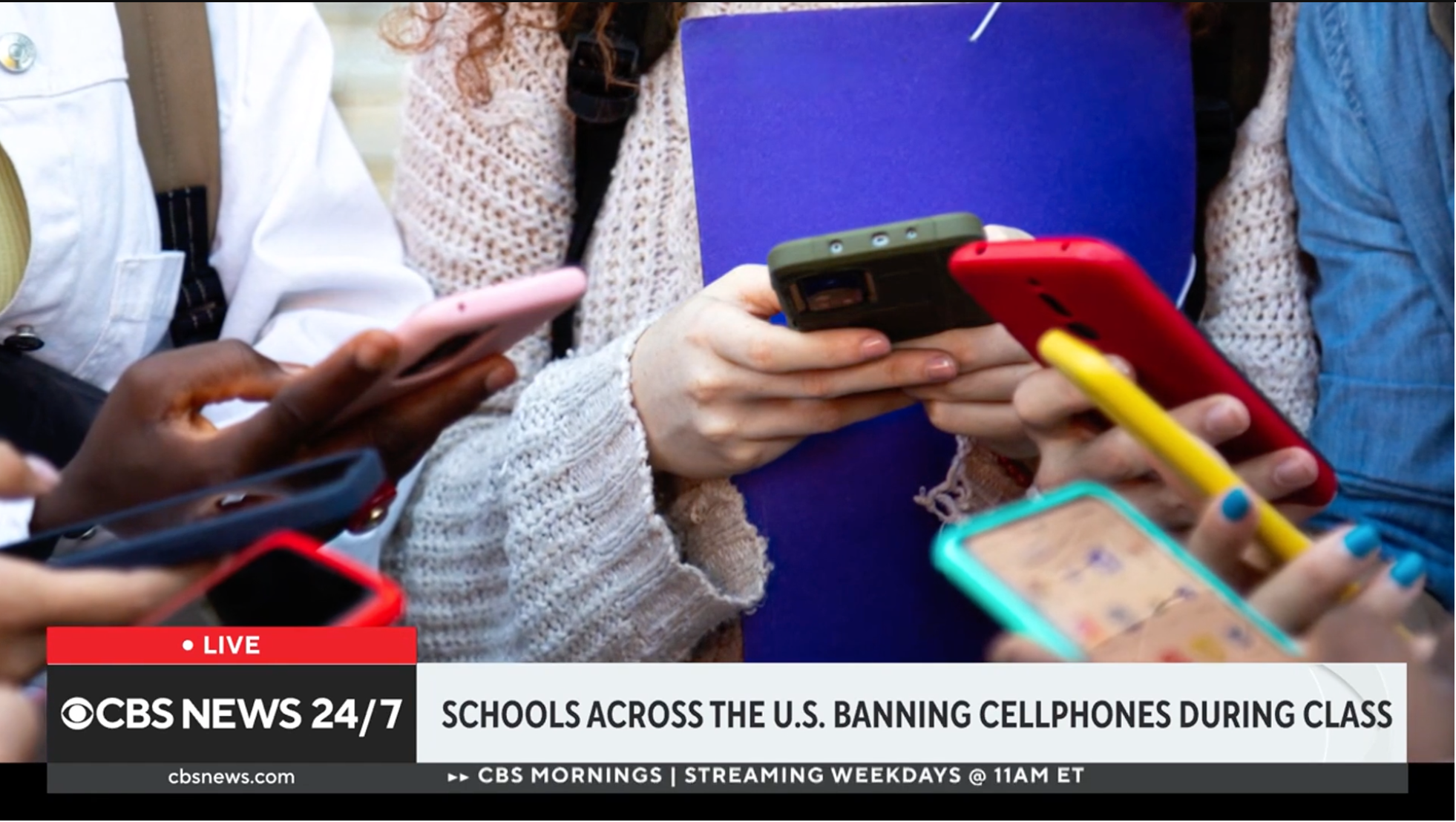
Schools across the U.S. restrict cellphones amid growing behavior, mental health, academic concerns, CBS News

Educators…worry that constant access to social media can adversely impact kids’ mental health. A number of studies have made that correlation, finding that time spent on platforms like Instagram and TikTok can lead to anxiety, depression and low self-esteem as kids get harassed or embarrassed online and compare their lives with the polished and carefully curated narratives crafted by others.

A Look at State Efforts to Ban Cellphones in Schools and Implications for Youth Mental Health, KFF

Back To School But Not To Screens: States Ramp Up Cellphone Bans, Forbes

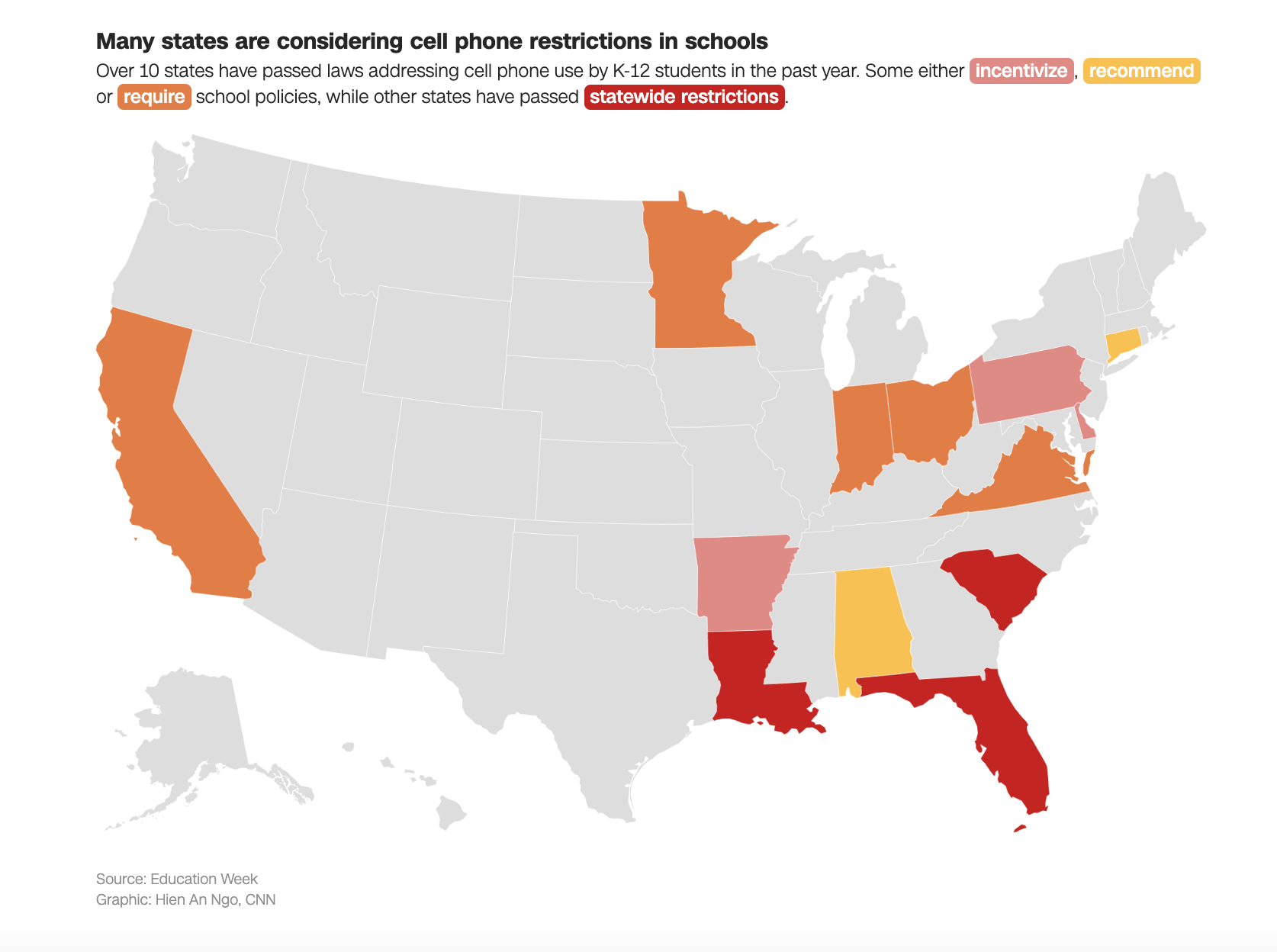
Eight states have already enacted laws about cell phone use in K-12 schools, including outright bans in Florida, Indiana, Louisiana, and South Carolina…Several others are inching closer to doing the same.

Cell Phone Ban Wagon, The Grade

Cellphone bans becoming more common in California schools, EdSource

‘It’s completely wreaking havoc’: Phone ban in Bay Area schools off to a rough start, SF Gate

Many Connecticut schools are banning cellphones ahead of new school year, and more could follow, CT Insider

Indiana’s cellphone ban means less school drama. But students miss their headphones, NPR

‘We’re not there yet,’ Eric Adams says of NYC-wide school cellphone ban, Chalkbeat New York

Back to school for many NYC students means turn off your cell phone, even without a citywide ban, New York Daily News

South Carolina Board of Education approves statewide cellphone ban, WCBD

Several Texas school districts adopt cellphone bans in classroom. Here’s a list, Austin American-Statesman

Schools across Wisconsin are limiting cell phone use this year, Wisconsin Public Radio

For some historical perspective on how the issues have evolved since the school closures of the COVID-19 pandemic, explore the back-to-school headlines from previous years:

Supplies, Shortages, and Other Disruptions? Scanning the Back-to-School Headlines for 2024-25 (Part 2)

What’s in the education news as the school year begins in many parts of the Northern Hemisphere? This week, in part 2 of IEN’s annual back-to-school scan, we share the headlines from across the US and around the world that touch on issues like the costs of supplies and other materials for parents as well as teachers; hot weather and other disruptions; shortages – particularly of bus drivers in the US; and a variety of other topics. In Part 3, we will gather together some of the many stories discussing cell phone bans, particularly in the US and Canada. Last week, Part 1 of this year’s scan provided an overview of some of the many election-related education stories that have appeared in the press as students return to school Politics, Policies, and Polarization: Scanning the 2024-25 Back-To-School Headlines in the US (Part 1). This article was originally posted on internationalednews.com on September 12, 2024.

Back-to-school headlines around the world

Clash between tech and textbooks as Canadians head back to school, CityNews

Back to school could mean back to the hot seat for Big Tech. Social media platforms TikTok, Facebook, Instagram and Snapchat spent last school year embroiled in a lawsuit accusing them of disrupting learning, contributing to a mental health crisis among youth and leaving teachers to manage the fallout. When students return to class this September, experts say the clash between tech and textbooks will be reignited

French teachers wrangle with new reforms as children return to classroom, FRANCE24

Summer holidays end for school children in the south of the Netherlands, Dutch News

French teachers wrangle with new reforms as children return to classroom, FRANCE24

Ukrainian front-line students celebrate back-to-school despite ever-present air raid alarms, Local10

Ukrainian children return to school in underground shelter amid Russian bombardments, Firstpost

Thousands of Children Cut off from School by North Vietnam Floods, Cambodianess

Education Costs/Supplies

Thousands of children will struggle to return to school because of North Vietnam floods, CamNess

Back to school: Which of Europe’s ‘Big Five’ countries pays the most for school supplies?, Euronews

Although textbook prices vary from school to school, they add a substantial burden: €591,44 on average in Italy and €491.90 in Spain, the highest ever

Rising cost of living puts pressure on parents’ back-to-school finances in Germany, Euronews

Moroccan Families Break-the-Bank as Children Return Back-to-School, Morocco World News

Families with multiple children, in particular, are struggling to balance their budgets as they manage not only the cost of school supplies but also additional needs such as furniture and other essentials for their children.

Back-to-school spending averages $586 per student, Yahoo Finance

Educators Prepare Early, Spend Their Own Money for New School Year, Education Week

Shortages

Some districts are still struggling to hire teachers for the new year, Education Week

‘They have to have known’: Hawaii scrambles for solutions to bus driver shortage, Honolulu Civil Beat

Durham schools face second day of bus delays, district promises swift action, WRAL

Parents Scramble to Get Kids to School as Bus Shortage Hits St. Louis — Again, The 74

Back-to-School Issues Around the US

The School Year Is Off to a Hot Start—Again. What Districts Need to Know, Education Week

All-black outfits, hoodies, Crocs, cell phones and mirrors. Some students are returning to school with new bans in effect, CNN

What’s in: Nostalgic school supplies. What’s out: Leggings and cellphones, Axios

Top legal hurdles facing schools in 2024-25, K-12 Dive

Snuggles, pep talks and love notes: 10 ways to calm your kid’s back-to-school jitters, NPR

As a New School Year Begins, Ensuring All Students Feel a Sense of Belonging, The 74

Learning and Love: A Lesson from Mr. Rogers for the Start of a New School Year, The 74

Alabama

No Crocs, hoodies, backpacks? Figuring out shifting Alabama school dress codes, AL.com

Massachusetts

Back to school, back to COVID safety. What to know about best health practices in classrooms, The Boston Globe

California

New laws impacting education go into effect as the school year begins, EdSource

Legislation going into effect this school year will bring changes to California campuses. One new law requires elementary schools to offer free menstrual products in some bathrooms and another requires that all students, beginning in first grade, learn about climate change.

Students heading back to school may have cell phones banned as more states pass laws limiting use, WSB-TV

Too many kids are going back to school this month without functioning A/C, Los Angeles Times

LAUSD students are back to school with street safety measures in place and a cell phone ban, CBS News

Local school districts announce schedule changes amid record temps in Southern California, KTLA 5

Chicago

Chicago Public Schools heads back to class amid extreme heat, Chalkbeat

Florida

New metal detectors delay students’ first day of school in one South Florida district, AP

Each of the district’s high schools was allocated at least two metal detectors to screen their students, with larger schools getting four, like Cypress Bay High School in suburban Weston, which has more than 4,700 students. But even at smaller schools, kids were stuck waiting — leaving students and parents with more than the usual first-day nerves.

Iowa

Nearly two weeks before school starts, Iowa districts are navigating the implementation of the 2023 education law, WeAreIowa

Michigan

Cellphone bans, free meals, student funding: What to know as Michigan heads back to school, Detroit Free Press

New York City

Literacy overhaul to ChatGPT: 5 NYC education issues we’re watching this school year, Chalkbeat

Elementary school teachers and students will continue to adjust to the city’s literacy curriculum mandate. Schools will still grapple with how best to meet the needs of the thousands of asylum-seeking and other migrant students who have entered the school system. And tensions fueled by the Israel-Hamas war could persist in school communities this year.

Thousands of NYC special ed students denied services days before school starts, New York Post

With high-fives and dance moves, NYC’s nearly 900,000 students return for first day of school, Chalkbeat

New Pencils, New Folders … and New Schools, The New York Times

Seattle

Seattle Public Schools students return as district prepares for a year of change, The Seattle Times

For some historical perspective on how the issues have evolved since the school closures of the COVID-19 pandemic, explore the back-to-school headlines from previous years:

Politics, Policies, and Polarization: Scanning the 2024-25 Back-To-School Headlines in the US (Part 1)

As students in many parts of the northern hemisphere start a new school year, IEN begins our annual scan of the back-to-school headlines. This year, with the surge of interest in the presidential election since Kamala Harris became the democratic nominee, a number of news stories have focused on the election, the candidates, and their education policies. Harris’ choice of Tim Walz – a former teacher – to be her candidate for Vice-President contributed to a wave of stories about Walz and his record and even spawned stories about his wife Gwen Walz – also a former teacher – and other educators who are running for office. Several stories, most from Education Week, also explore whether and how teachers might try to address in their classrooms the election and the many controversial issues that divide and polarize Americans today.  Part 1 of our 2024-25 Back-to-School scan pulls together some of these election-related stories. Next week’s scan will provide a round-up of stories about many of the other issues that are in the news in the education sources that we follow as classes resume. This article was originally posted on internationalednews.com on September 4, 2024.

For some historical perspective on how the issues have evolved since the school closures of the COVID-19 pandemic, explore the back-to-school headlines from previous years:

Policies, Platforms & Issues

Decision Guide: What happens to education under Trump v. Harris, U.S. News

Harris-Walz and Trump-Vance tickets offer radically different visions of public education, EdSource

Education Policy: How Harris and Trump Differ on K-12, Higher Education and More, ABC News

4 Takeaways on What VP Picks Vance and Walz Mean for the Race to Come, PBS Newshour

Education Debates You’ll Likely Hear About in the Election, Explained, Education Week

Public education reform missing from 2024 presidential platforms, Axios

What education could look like under Trump and Vance, Hechinger Report

Trump’s Agenda47 on education: Abolish teacher tenure, universal school choice, patriotism, USA Today

Trump’s VP Pick: What We Know About JD Vance’s Record on Education, Education Week

Vance vs. Pence: How Trump’s VP picks compare on education,Thomas B. Fordham Institute

What Would Happen to K-12 in a 2nd Trump Term? A Detailed Policy Agenda Offers Clues, Education Week

The Great Project 2025 Freakout, Rick Hess, Education Week

Trump Vows Historic Cuts to Education Department in Second Term, Washington Examiner

Why ending the U.S. Department of Education is so alluring to the GOP — and so difficult, Chalkbeat

Republicans’ missing policy issue: Education, Thomas B. Fordham Institute

At Moms for Liberty National Summit, Trump Hardly Mentions Education, Education Week

Harris Could Set Democrats’ K-12 Agenda: By Reviving Ideas from 2020, The74

Where Does Kamala Harris Stand on Education? Inside the 2024 Democratic Platform, Education Week

What We Know About Kamala Harris’ Education Record, Education Week

Veep, Candidate, brat: Kamala Harris Fires Up Gen Z on Social Media, The74

Kamala Harris’ Potential VP Picks: Where They Stand on Education, Education Week

What education could look like under Harris and Walz, Hechinger Report

The Education Issue Americans Agree on That’s Not Good News for Teaching, Education Week

Long a Stranger to the Spotlight, Child Tax Credit Earns Embrace of Both Parties, The74

Millions of campaign dollars aimed at tilting school voucher battle are flowing into state races, AP

The Future of Property Taxes Is on Ballots This Fall. Why It Matters for SchoolsEducation Week

What Role Should the Federal Government Play in Education Policy? NEPC

Educators/Candidates

Harris chooses Minnesota Gov. Tim Walz, a former educator, as running mate, K-12 Dive

A Teacher in the White House: What Harris-Walz Could Mean for Education, Education Week

Tim Walz is Kamala Harris’ running mate. Here’s what he’s done for education in Minnesota, Chalkbeat)

Tim Walz, a Former Teacher, Is Kamala Harris’ Running Mate

The Freshman: How Tim Walz Went From the Classroom to Congress (from 2007), Education Week

8 Things to Know About Tim Walz, the Democratic Ticket’s Top Teacher, The74

Harris Pick Tim Walz Would Be First K-12 Teacher Since Lyndon Johnson to be VP, The74

How Teaching Shaped Tim Walz’ Politics, The Nation

‘Coaching and Politics’: What Coaches See in Tim Walz’s VP Candidacy, Education Week

Gwen Walz, wife of Harris’s VP pick Tim Walz, is also a longtime teacher, Washington Post

Tim Walz’s wife Gwen, a former teacher, is a ‘champion’ of college behind bars, USA Today

Are Educators a Natural Fit for Public Office? These Candidates Think So, EdSurge

Jan. 6 Protester, Former Supe Vie to Lead North Carolina’s Schools, The74

Teaching the election

Schools Are Now Political Battlegrounds. We’ve Been Here Before, Education Week

Why Most Teachers Won’t Be Talking About the Election in Their Classrooms, Education Week

Teaching the 2024 Election: Learning Opportunity or Landmine? Education Week

Big Ideas for Upending Polarization, Education Week

How Teachers Tackle 2024 Election Discussions, Education Week

11 Ways to Teach the 2024 Election With The New York Times, New York Times

Teaching Presidential Elections Isn’t Easy. How One Teacher Manages, Education Week

How Should Educators Approach the 2024 Election? Rick Hess, Education Week

Schools Don’t Change, but They’re Always Changing: A Conversation with Yong Zhao on the Evolution of the Chinese Education System (Part 2)

What’s changing in the China’s education system? What might change in the future? Those are some of the questions that Thomas Hatch asked Yong Zhao about in preparation for a visit to China last month. Zhao was born in China and now works all over the world, including in China, exploring the implications of globalization and technology on education. In part two of this interview, Zhao offers his impressions of recent changes in addressing students’ mental health and discusses the broader context of the Chinese education system and some of the challenges and opportunities for changes in the future. In the first part of the interview, Zhao shared his observations about some of the educational innovations he’s seen, and he’s been involved in China. This article was originally posted on internationalednews.com on June 20, 2024.

Thomas Hatch (TH): In the first part of our conversation, you shared a number of examples some new schools and educational developments in China. In other places like Finland, the US, and even in places like Vietnam and Singapore, I’ve also seen more attention to students’ mental health. Have you seen any initiatives related to supporting students’ healthy development or mental health and well-being in China?

Yong Zhao (YZ): I think that is happening because they’re adding more psychiatrists, more psychologists or “psychological teachers” to schools. Those never existed in China until recent years. So that’s a beginning. But also, traditionally, teachers of Chinese have had a responsibility for psychological support, though they may not have specific training for it. But the approach in Chinese culture is also different from the western way of constructing psychological and mental well-being. In the West, I think we sometimes misunderstand psychological issues because we just describe them, we measure them, we test them.  And we have a handbook that defines what’s considered mental health.  I’m quite worried about this. Is this a good thing to do? 

It’s similar with what’s considered special education in China. Asian countries definitely have a very different definition. There the term applies primarily to those who have a major disability. But now the Western movement of attending to ADHD and learning differences is slowly spreading, though they are not being addressed in schools.

TH: When you say you think that the approach to psychological well-being and health is different in China, how would you describe it?

 YZ: First, I’m not a researcher in that area, so I cannot describe it, but I’m very worried about the Western definition going into China and getting applied in that cultural context. I’ve always worried about what is China and what is the Western way of doing things? I’m struggling with this.

Yong Zhao

But one thing I want to emphasize is people always think I’m critical of China, but I’ve said, “I’m critical of everybody.” This is very important. I don’t think anyone has got it right. If someone had it right, we could retire.  And some people say, “you’re pro- America.” And the truth is, I’m more critical of American education than other places. I think there is an interesting question about whether the Western way is the right way of doing this. when you think about well-being, I’m not sure because when you look you can see there is widespread misuse of special education, misuse of mental health issues, and I think there are a lot of problems that arise with psychiatrists and psychoanalysts. Many things are happening

TH: One of my goals is to understand what’s changing within a Chinese context and to think about the cultural, economic, and geographical conditions or “affordances” and what they can tell us about the possibilities of educational change. Can you give us your sense of the Chinese conception of development overall and the purposes and aims that underlie Chinese education?

YZ: Right now, I think China is quite misunderstood. People are easily influenced by media stories. You and I started this conversation talking about how schools don’t change, but like Larry Cuban has said, changes are like a breath on the window in the wintertime. You breathe on the window, and something happens, but then you’re gone, and it’s gone. We need to keep that in mind. Schools do not change, but they’re always changing. This is what I love about it. It’s happening all the time. Every week, for example, I receive emails from someone who is discussing innovation somewhere.  Innovation is still there. But how come most schools don’t change? But schools actually do change because they do little things. When you refer back to the grammar of schooling, the grammar in schools hasn’t changed in a long time. But at the same time, there are activities that are changing. So, we need to consider how big a change is a change. That’s another thing to think about.

TH: Your comments about change and the grammar of schooling are fascinating because the “grammar” hasn’t changed, but only if you look back within the modern, industrial era. Because if you think back beyond 100 or 120 years — if you go back far enough – some key aspects of schooling have definitely changed. So, it’s a question of perspective.  If today, instead of trying to produce changes that we’re going to see tomorrow, we’re actually looking ahead to 40 or 50 years, we might be much more successful if we can be strategic in terms of enabling schools to shift over the long-term. As you look ahead and think about what could or what might happen in terms of Chinese education, do you see ways that it is changing or that it could change in the future?

YZ: What is going to happen in China? First of all, in any foreseeable future, China will not drop the Gaokao, the national exam to select students for university. The Chinese people value college credentials very much. I used to joke about how much Chinese love credentials. Even if they don’t know how to drive, they want to buy a driver’s license, they just want that damn thing. So that will not change. But the Chinese government has been trying very hard to adjust the numbers of students going to high schools and universities and to vocational high schools. Now, at the end of 9th grade, the students are divided into two groups by the Gaokao. It’s like the German system used to be. The highest scorers on the test go to the general high school and then they go to college. Another group goes to the vocational, technical high school, and then you go to the workforce. There’s a lot of problems with that, and right now they’ve changed the quotas so that more students are supposed to be sent to vocational schools. So, they’re trying to adjust that.

But my view is this. I think I wrote in my book “Who’s Afraid of the Big Bad Dragon” that in China, the big problem is that no matter what you do, people will think there is always one best college – for example, Tsinghua or Peking University – and you can only take in so many kids no matter what you do. So, no matter how you change the exam, there are only so many kids who can go in. That is a huge problem. So, the Gaokao will dominate for a long time, and you will have a lot of kids dropping out of the education system before 9th grade if they’re not getting on the path to the best universities. It’s just that, basically, there’s no point to stay in the system. So, that’s not going to change.

Who’s Afraid of the Big Bad Dragon, Book Cover

What is going to change? Is after school, weekends. I also think that because of the access to technology and the quick spread of AI, you will have a group of students who, in a sense, are already pre-selected to get into general high schools and to prepare for the colleges. But you will also have a lot of students who have decided “I’m not going to college. I can’t go to college.” Those places with those students might see some changes, and those schools that have those students are not visited and are not understood by people. You know, if you go to a county level, they have high schools, and those high schools don’t have the best students because the best students have been sent to the provincial capital. I don’t think people understand the experiences of those kids who aren’t going to college, what their life is, and you might see some significant changes in those places.

TH: That’s fascinating, and it connects with Clayton Christensen’s notion that disruptive innovation emerges when there are people who are unserved, and I think you’re identifying in China that there are students who in a sense are not served by their schools or colleges. It could be fascinating to see what might develop there, particularly given the development of technologies and the spread of internet and AI. 

YZ: There’s another thing that will affect China a lot, and that’s the drop-in birth rate. Right now, China is graduating over 11,000,000 college students, but the birth rate last year in China was closer to 9 million. As a result, a lot of elementary schools and kindergartens are closing because they don’t have enough students. But now there are groups of private colleges, smaller colleges, and they’re actually trying very hard to get kids in because that’s how they make money.  Imagine what would happen if you opened all those places and take in every kid into college?

Dr. Yong Zhao is a Foundation Distinguished Professor in the School of Education at the University of Kansas and a professor in Educational Leadership at the Faculty of Education, University of Melbourne in Australia. He previously served as the Presidential Chair, Associate Dean, and Director of the Institute for Global and Online Education in the College of Education, University of Oregon, where he was also a Professor in the Department of Educational Measurement, Policy, and Leadership. Prior to Oregon, Yong Zhao was University Distinguished Professor at the College of Education, Michigan State University, where he also served as the founding director of the Center for Teaching and Technology, executive director of the Confucius Institute, as well as the US-China Center for Research on Educational Excellence. He is an elected member of the National Academy of Education and a fellow of the International Academy of Education

The Desire for Innovation is Always There: A Conversation with Yong Zhao on the Evolution of the Chinese Education System

What’s changing in China’s education system? What might change in the future? Those are some of the questions that led Thomas Hatch to spend almost a month in China this spring. In preparation for that visit, he talked with Yong Zhao to get his perspective on what’s been happening in education in China in the past few years. Zhao was born in China and now works all over the world, including in China, exploring the implications of globalization and technology on education. In the first part of this two-part post, Zhao shares his observations about some of the educational innovations he’s seen in China and about some of the work he’s been involved in there. In part two, Zhao offers his impressions of recent changes in addressing students’ mental health and discusses the broader context of the Chinese education system and some of the challenges and opportunities for changes in the future. This article was originally posted on internationalednews.com on June 12, 2024.

Thomas Hatch (TH): You’ve written extensively about China in the past, but I’m particularly interested in what’s happening in the Chinese education system over the last few years. Are you seeing some innovations or changes in classrooms and schools in China since the COVID-19 pandemic and the school closures? 

Yong Zhao (YZ): I think there’s a huge hunger for innovation in China. Let me give you an example. I was just talking to a group of school principals and heads of the Education Commission in the Chaoyang District in Beijing. It’s the largest district in Beijing, and it’s where most of the embassies and many foreign companies are located. We were planning to do a summer camp for students from different countries based on my education philosophy, which is very much child-centered, focused on uniqueness, personalization, project-driven instruction, and problem-solving. We wanted to make the camp very big, involving kids from different countries, and they were open to the idea. Alongside the camp, we planned to organize learning festivals to discuss topics like artificial intelligence and what I call “Re-globalization.”

We started this conversation in January, and the issue is that very few schools outside China are willing to send their students and teachers here at the moment, so we’re planning to do it next year. But this kind of summer camp is something I began working on before COVID, in May 2018 in Chongqing. Every year since, we’ve been running similar innovative programs in the summer. Even during COVID, we tried it out. The first year in Chongqing, we had students from US schools, Australian and British schools, with hundreds of students and teachers staying in the same dorms, interacting. 

In addition, in the public schools in Chongqing, we have students enrolled in a special course I helped design called ICEE, which stands for innovation, creativity, and entrepreneurship education. It’s expanding in the public schools even though students have to pay extra to participate, which shows that parents and schools are interested in it. Beijing Academy is another school that is particularly innovative. I was partially responsible for co-designing that school. We formed a global advisory group, including people like Richard Elmore and Kurt Fischer and Ron Beghetto. It was an international collaboration. They built a brand-new school based on our advice. It just celebrated its 10th anniversary in Beijing. Now they have over 9 or 10 campuses. 

I think this shows that many parents and students and teachers actually want change. You cannot make massive changes like, for example, saying, let’s forget about the major policies like the double reduction policy, but many people are still trying to find ways to change. It also shows that working in the Chinese education system might be one of the most difficult things in the world. On the one hand, you have to do this. On the other hand, you have to do that. But ultimately, your school’s reputation matters, and innovation as a school leader in China is crucial. 

TH: So, on the one hand, you can’t do anything, but on the other hand, you have to do something…

YH: Yes, exactly. It’s fascinating. I’m puzzled by this system, you know? Right now, I’m getting older. When I was younger, I didn’t really think a lot about it, but I cannot think of how human societies can be organized like that. You cannot do anything, but you have to do something. It’s a fascinating way to think about it, isn’t it?

 TH: It is! But if we step back for a second and try to characterize what’s happening with educational innovation overall right now, my understanding is that the education ecosystem in China has contracted. There were more innovative schools and smaller schools starting, more tutoring programs, more after-school programs. But now, following the school closures and the double reduction policy, in a sense, this seems to be period of consolidation. People I’ve talked to say it’s not a prime time for innovation. Is that the way you see it? (For more on the double reduction policy see “Surprise, Controversy, and the “Double Reduction Policy” in China” and “China reiterates implementation of ‘double reduction’ policy”)

YZ: Yes, your description is right from a general, outside perspective. You can see the contractions. Even the Gaokao has become more nationalized. It was decentralized, with some differences across regions, but it’s gotten more centralized. Now they’re all saying they are using the national tests and very few provinces use their own. The curriculum has become more centralized too with more centrally required courses and teaching materials. But honestly, I think the beauty of the Chinese ecosystem is that, at the same time, children are children, and parents understand that their children, growing up, need innovative education.

They do see the power of artificial intelligence, and AI is becoming more prevalent. They also see new geopolitical conflicts, or what I call “re-globalization.” China always has this happening, and what’s underground is different. Yes, some international schools have closed, and private schools are becoming public. But at the same time, public schools have to become more innovative. The desire for innovation is always there. It’s bubbling up everywhere, but it’s happening. Many local schools have to think about innovation, and even the government, if you look at the most recent speech by the Minister of Education, talks a lot about AI. They are thinking about it in every part of teaching and teacher training. I don’t know how well it’s been implemented, because it’s still very new, but the same is true in the US. China also issued a call last year for schools that were willing to be part of experiments with AI in education. The central government awarded several hundred of these grants to create pilot sites and to spread the message to other places. So, it’s a lot more complex in China than what many people think. The whole system is evolving.

TH: Despite that, have you seen some schools or initiatives or afterschool programs or other things that you think are particularly interesting or innovative in the Chinese context?

YZ: In the book Let the Children Play, Pasi Sahlberg and William Doyle described an approach in the Zhejiang Province near Shanghai that developed genuine playhouses for preschool and kindergarten (Anji Play). It was really play-driven, play-based, and it started in one kindergarten and then it spread around the whole province. It wasn’t country-wide, but it was a model recognized by the Chinese Ministry of Education, and they began to promote it across the country. I don’t know how it’s going now, but that is something that I think it’s definitely worth looking at.

There are also a number of schools that are trying to do something different. The Beijing City International School just had me visit for three days. Their student population is over 90% Chinese students, and they are struggling with the fact that parents have invested significant amounts of money, expecting their children to attend prestigious universities like Harvard and Columbia.  But they also want to change, so they had me over to discuss transitioning to personalized education. Whenever someone has me presenting, they are willing to be challenged.

The Beijing National Day School and a couple of other public schools are also known for being innovative. Another interesting school is the one called #80 Secondary School in Beijing. I was just there, and I was impressed. If you are a good student in some areas, then you don’t have to take certain courses. They would allow you to explore on your own, which shocked me. It’s a Chinese government high school, and it’s quite powerful. 

Thomas Hatch: Coming from Teachers College, where there’s a history of connection with China through John Dewey’s visits, I’m fascinated to see that there has been a long-term interest in China in progressive education. As I began to get ready for my trip, I’ve realized there are a number of educators in China over the years, who have become very well known for being innovative and supporting innovative education. Can you talk about any of those enduring traditions related to alternative education?

Yong Zhao: It’s a very interesting question. But first of all, let’s not underestimate the power of the Gaokao – the college entrance examination. Similar pressure is widespread, happening not only in China but also in Japan, South Korea, Vietnam, Hong Kong, Macau, and Taiwan. Let’s not forget that the Gaokao and the imperial exam tradition, dominates and controls parents’, students’, and teachers’ minds. But continuously, there has been talk about change in China, and I’ve found that the conversation about needing a different kind of student from the “Gaokao type” has never stopped. It’s always been there. 

Even in the 1950s, Mao was very against the Gaokao exam. Regardless of who he was or what he is – I’m not debating that – he was actually very innovative in education. Ideologically, he never really wanted exams. During the Cultural Revolution, people think he destroyed the Chinese education system. But on the other hand, he was basically saying education does not need to be so pedantic, does not need to be traditional and academic in an ivory tower. He started education in my village. That’s how I went to school.  He said education needs to be shorter. It only has to be 10 years and it can happen in rural villages or in factories. If you think about that, that’s very much the progressive tradition. But the long tradition of using exams to select government officials has also always stayed in the Communist education philosophy, and the tradition of using exams to select and reward people is a long-standing cultural problem.

Next Week: Schools do not Change, But They’re Always Changing: A Conversation with Yong Zhao on the Evolution of the Chinese Education System (Part 2)

Dr. Yong Zhao is a Foundation Distinguished Professor in the School of Education at the University of Kansas and a professor in Educational Leadership at the Faculty of Education, University of Melbourne in Australia. He previously served as the Presidential Chair, Associate Dean, and Director of the Institute for Global and Online Education in the College of Education, University of Oregon, where he was also a Professor in the Department of Educational Measurement, Policy, and Leadership. Prior to Oregon, Yong Zhao was University Distinguished Professor at the College of Education, Michigan State University, where he also served as the founding director of the Center for Teaching and Technology, executive director of the Confucius Institute, as well as the US-China Center for Research on Educational Excellence. He is an elected member of the National Academy of Education and a fellow of the International Academy of Education

A process not an event: A Conversation with Alma Harris & Carol Campbell about the National Discussion on Scottish Education One Year Later (Part 2)

In the second part of this conversation, Alma Harris and Carol Campbell talk with IEN Editor Thomas Hatch about what has (and has not) happened since the release of their report “All Learners in Scotland Matter- National Discussion on Education,” from the National Discussion on Scottish Education almost one year ago. They also share lessons for those who might want to pursue a similar large-scale public engagement and explore how this kind of dialogue could offer a new process to support educational change in the future. In part 1, Harris and Campbell discuss their initial steps and the procedure they pursued as facilitators of the dialogue. The interview was edited by Sarah Etzel & Thomas Hatch. This article was originally posted on internationalednews.com on June 5, 2024.

TH: Can you give us a quick sense of some of those things that you felt you had to put in the report to make sure that children’s concerns were honored?

CC: We had a large volume of responses, but we wanted to make sure that we honored the children’s voices by ensuring that their views, including the challenges they were experiencing as well as their hopes for the future, were included in the report. Plus, Alma and I were personally involved in lots of events and communications where we either heard children and young people’s voices directly or through adults speaking on their behalf, so there were stories that we carried with us, and they had an impact that we wanted to make sure were included. For example, a major issue is additional support needs. Scotland has a way of identifying additional support needs which is quite encompassing; it includes but extends beyond a medical diagnosis or a specific identification of a special educational need. At the time of the report, over 1/3 of school-aged children in Scotland had an additional support need. That’s increased since then. I was in a school where over 50% of the pupils had an additional support need. This has been brought up in previous reviews but the issue is getting more and more complex. Obviously the COVID-19 recovery has exacerbated some things and resources are not there to fully support all learners. For me, that was one issue we had to be clear about. When it’s almost half of your demographic, it’s no longer an additional support need; it’s the need of pupils in Scotland. We had quite a lot to say about that.

AH: We gave feedback to the Scottish Government that their core guiding principle of ‘excellence and equity’ was just not being fulfilled on the ground. There are a whole range of complex reasons for that, of course, and responsibility does not just reside within education as inequity is multi-faceted. When talking to parents and those who look after children and young people, one thing was crystal clear, that the ravages of poverty on educational progress and attainment were tangible and were getting worse. The issue of social justice runs right through the National Discussion report. The effect of poverty on the lives and life chances of existing and future generations in Scotland, like so many other countries, is the real issue to be tackled.

In many ways, the whole National Discussion was about inequities in the system, not by design but by default. Most of the anger and frustration we heard, from many groups including teachers and other educational professionals, could be attributed to some sort of injustice or inequity emanating, most usually, from a lack of resource. It was clear that everyone we spoke to wanted to do their level best for children and young people in Scotland. There was a great deal of praise for the Scottish Education system but also a real sense that more could be done. In many ways the National Discussion held a mirror up to the daily reality facing children and young people and the adults that care for and support them. There were many positive things we heard from learners, things they liked, great things about teachers and an excitement about learning. In the report, we talk about the joy of learning and the way in which teachers enthuse and encourage all learners at all levels within the system. In many ways, Scotland is a good education system aiming to be better but to make this jump, as we heard time and time again, some change needs to happen.

CC: Also, the title of the report is, “All Learners in Scotland Matter,” and we were asked to develop a vision. The vision is about all learners in Scotland, which sounds glib, but given what we had heard, to actually realize in practice that all learners in Scotland matter was crucial. So, Scotland’s main education priority is closing the poverty related attainment gap, which is very important. As Alma has indicated, poverty is a serious issue and children’s poverty is a very serious issue, but not all the needs we heard were about this. Some were more about physical disability, some were about mental health, some were about racial or sexual discrimination. Now these intersect, but we were saying you need to look at the full range of inequities and differential treatment.

AH: The thing that struck me most was the fact that there were so many different groups associated with a wide range of issues in education that it was almost impossible to decide who was standing for which specific issue. It was a very crowded landscape. We had the privilege, however, to go beneath the surface, and I think we have a more informed picture of Scottish education because we listened to so many diverse positions and viewpoints.

TH: This does raise the next question, which is, it’s one thing to say truth to power, but then what happens next? Are there ways in which the government has listened and is responding?

CC: The report with the vision, values, and call to action, which gets a bit more into the details of the different things that are being suggested, was released at the end of May last year. There was a parliamentary debate about the report led by the Cabinet Secretary for Education and Skills. All political parties in the Scottish Government have accepted and endorsed the National Discussion and have officially supported it. This is unusual because education is a very political priority in Scotland, so to have all party support was unusual and to have a full parliamentary debate was one way of bringing the report into the public eye. The vision from the report from the National Discussion has been accepted by the Scottish Government and now informs the “National Improvement Framework.”, which is the annual framework for educational improvement in Scotland. The calls to action are intended to inform government decisions and actions moving forward as they align strongly with priorities for attention and implementation.

One positive aspect that I find noteworthy is that the groups we’ve engaged with have embraced certain topics from the National Discussion to advance their own advocacy agendas. Professional organizations, for instance, are highlighting issues such as valuing and developing the profession, while parents are also echoing concerns we’ve addressed, such as support for early learners. This reflects the alignment with the broader national discourse, wherein groups are leveraging specific statements or discussions to push for action. Local authorities, akin to school districts, have integrated elements from the National Discussion into their strategic plans and work.

While progress has been made, it’s fair to say that we would like to see further explicit action and rapid implementation linked to the National Discussion calls to action. The challenge lies in seamlessly integrating these discussions into existing frameworks and plans. This can be particularly frustrating for parents, as they inquire about the fate of their input. We will be asked directly what happened to something a parent or other person told us directly during the National Discussion. While the calls to action are being integrated into governmental work stream, this is not a satisfactory response for people who want explicit and visible responses to their input.

AH:  A couple of reflections on the follow-up. I think responding to a large and complex report based on a huge public engagement exercise is inevitably challenging. Looking at the report, you might think “where to start and what to privilege when everything is so important?“ In reality, also everything costs money. Hence it is perfectly possible that there are just too many things that need attending to in the ‘Call to Action’ section of the National Discussion Report. We accept this but we represented what we heard, faithfully and accurately.

Possibly there is a sense of disappointment that the National Discussion did not point to any one definitive thing that needed to be introduced or changed. If this had been the outcome it would have certainly been neat but also fundamentally unrepresentative of what we heard. On reflection, this public engagement approach to education reform is worthy of consideration by other education systems, primarily because  it offers an alternative to the top-down processes that tend to dominate policy formation and so often fail to deliver.

As a recent Times Educational Supplement article about the National Discussion noted: “This is a model that could be built on and replicated in future reform. It is crucial that the potential here is not lost-the future of Scottish Education depends on it.”

CC: To build on that, over 38,000 people are engaged now. Yes, the scale of data was overwhelming. The range of possibilities is overwhelming. But as Alma said, our advice would be to choose one thing, choose three things. There are clearly some things that need attention. Another generation is going through our education system and there’s an argument about the system being overstretched and not wanting to make wrong decisions on reform, but we can’t leave the status quo either, we heard about urgent and needed changes. For example, workload, violence, equity, all of these things are issues which requires some change.

What came through to me was that people wanted to be heard, and they wanted to make a difference. It wasn’t a case of “please don’t change everything, we’re tired, please go away.” They actually were willing when they were asked. But that quickly turns into frustration and cynicism if you’ve taken your time and effort to engage and you don’t feel appropriate follow through has happened. While we did try to do this differently, it is one of many reviews of Scottish education. Now, the other ones are more specific about curriculum or assessment. But for some people and groups, they’ve now given their advice many times. That’s kind of a tipping point. The government needs to listen and use the evidence to inform decisions.

One of the calls to action is called “Human-centered Educational Improvement”. We’re thinking about this as a new way of making educational changes. A lot of the previous reviews have ended up being very structural in terms of recommendations – abolishing organizations, introducing new qualifications. These all matter, but what we actually heard was people wanted to focus on the people: the children, the young people, the carers, the educators. For them, that was the guiding purpose. The other stuff was important, but they didn’t want another set of structural reforms. They wanted to get the focus back to people and relationships in education.

TH: Let’s delve into that further. If you had the opportunity to do this again or were advising others looking to engage in a similar process, how would you approach it differently? What additional steps would you take to steer it in the direction of being a novel process and form of support for educational change?

CC: There’s interest in Scotland in making sure this is not a one-off event, but we’ve also had international interest. There’s a team in Germany who would like to do something similar, so we’ve been talking about it. I do think the team that’s involved is crucial because it’s a huge amount of work, involving logistics, strategy, research, analysis, and communication. The individuals leading it, whether independent facilitators, senior government figures or some form of ambassadorial role, set the tone, and that matters. It’s important to encourage people from various backgrounds and experiences to lead their own discussions, aligning with our vision that these conversations would take place across different settings, with participants then submitting their insights. Having a clear and compelling question or purpose is essential; otherwise, people may struggle to understand the initiative’s intent. It’s crucial not to overwhelm with too many questions.

In hindsight, I think perhaps we asked too many questions. Don’t try to be too clever about the questions. What do you want? Why? Because people were struggling with any question that seemed complex or abstract. We were asking them to look 20 years into the future, but people were talking about what happened yesterday or what was happening on Monday. I think some of that future thinking is just difficult for people when they’re dealing with their day-to-day.

People were much more comfortable expressing challenges and concerns but articulated less suggestions for practical alternatives. So, perhaps after these large public engagements, you need a slightly different approach to reaching the next steps. As we were working on our final report, we revisited the key groups and tested out the vision and values. This involved another round of iteration to ensure that the wording and content resonated and connected with participants. Mostly, we received positive feedback, but there were some suggestions for improvement. I also think if you say you’re going to listen, you need to genuinely listen.

As independent facilitators, there’s also an expectation that we remain independent, facilitate the discussion, and present the report. But for some countries or systems, I think we should have considered advocacy and action more thoroughly – moving from presenting the report to instigating change. It’s essential to encourage people not to rely solely on the government for all changes. Some require government action, but others relate to cultural shifts within the education system or how people interact with each other. The calls to action from the National Discussion are for everyone involved in Scottish education.

AH: In terms of additional steps, three things come to mind. The first is starting with the end in mind. I think being clearer about exactly what the end point should look like, in terms of action, would have been helpful. In other words, a deep commitment to some change that would follow the National Discussion. The second thing is about policy churn. Inevitably, things change quickly in politics and often policy attention moves on simply because that is just the way that policy works, not because it is a reflection on the nature or importance of the work undertaken.

The third thing I’d say is that the National Discussion remains a good example of flipping the system, shifting power relationships so that ideas flow from a broader base to inform policy making and shape the discourse of education reform. The National Discussion succeeded in providing a broad range of views, in that sense it was an achievement as a genuine broad-based listening exercise. It is important to see the National Discussion therefore not as an event but as on ongoing process of dialogue within the system.

TH: To me, it sounds almost like you’ve described a new and powerful process for engaging many people in sharing their concerns and hopes. But it seems like the mechanisms and routines for continuing that conversation and engaging in advocacy and decision-making at a local and national level have not been fully established yet. Can you imagine some mechanisms or routines that you would like to see put in place to help sustain the conversation and support responses that would address the priorities that surfaced?

CC: There’s a current fear, if we’re honest, in doing anything that might be unpopular or destabilizing. But the National Discussion includes the voices of a lot of people. If I were the political leader or an educational leader, there’s material there to support bringing about changes. It’s not just an idea from the government or from the civil service or from one particular interest group; there’s evidence and voices from thousands of people. The National Discussion needed resources, as we’ve discussed, but an ongoing conversation in Scotland doesn’t. Social media continues, parents’ groups continue to meet, teachers continue to meet, educational organizations continue to advocate.

To pursue transformation, some of the challenges lie in the existing established practices for example linked to the improvement framework and data requirements. However, we would encourage school and system leaders to have the courage to recognize that the status quo needs changes. While they can’t change everything, they can make a difference in their own spheres, whether it’s their classroom, organization, or local authority. I will say that there are some local authorities and schools that have embraced this mindset. It’s about instilling a cultural shift. It doesn’t mean changing everything, but it should mean changing something.

AH: My hope is that the National Discussion shows that an alternative, inclusive approach to educational change and reform is perfectly possible. Very few countries have undertaken such a discussion on education on such a large scale, so in many ways Scotland is ahead of the game. My hope is that this model of change will be embraced by other countries and that in Scotland the National Discussion continues, as a process, in some way.

TH: Is there anything else you want to add that you haven’t mentioned or anything that you learned from the process that you wanted to share at this point?

AH: I have been working in the field of educational change for over three decades and my observation is that I don’t think much has changed in terms of our approaches to reform at scale. I think we know that top-down approaches don’t always work yet there is still an over-reliance on approaches to educational change that are tightly controlled and not creative. Without question, the National Discussion was a creative approach to educational change that generated a great deal of buy-in. I think it offers an alternative approach to reform at scale but only if concrete, meaningful and informed change follows from it. If change does not happen, it is quite simply, a lost opportunity.

CC: It’s of course extremely important to engage and listen with all the formal representative groups in education, teachers, school leaders, etcetera. But by doing this in a broader sense, and we aimed our best to be inclusive and to listen, we heard different things, and we heard important things. Sometimes we hear about student voices or parent engagement, but we heard things I don’t think would have come through the same way. So, I think there are times when a genuinely public engagement matters. I wouldn’t say for something that’s very technical or specific, but this was about what we want for the future of Scottish education. I think that matters. I think that inevitably, and rightly, much of the conversation right now is about digital and artificial intelligence, but we kept hearing about people and relationships, so let’s not lose the priority importance of human-centered educational improvements as we have these other conversations.