Author Archives: T Hatch

A process not an event: A Conversation with Alma Harris & Carol Campbell about the National Discussion on Scottish Education One Year Later (Part 2)

In the second part of this conversation, Alma Harris and Carol Campbell talk with IEN Editor Thomas Hatch about what has (and has not) happened since the release of their report “All Learners in Scotland Matter- National Discussion on Education,” from the National Discussion on Scottish Education almost one year ago. They also share lessons for those who might want to pursue a similar large-scale public engagement and explore how this kind of dialogue could offer a new process to support educational change in the future. In part 1, Harris and Campbell discuss their initial steps and the procedure they pursued as facilitators of the dialogue. The interview was edited by Sarah Etzel & Thomas Hatch. This article was originally posted on internationalednews.com on June 5, 2024.

TH: Can you give us a quick sense of some of those things that you felt you had to put in the report to make sure that children’s concerns were honored?

CC: We had a large volume of responses, but we wanted to make sure that we honored the children’s voices by ensuring that their views, including the challenges they were experiencing as well as their hopes for the future, were included in the report. Plus, Alma and I were personally involved in lots of events and communications where we either heard children and young people’s voices directly or through adults speaking on their behalf, so there were stories that we carried with us, and they had an impact that we wanted to make sure were included. For example, a major issue is additional support needs. Scotland has a way of identifying additional support needs which is quite encompassing; it includes but extends beyond a medical diagnosis or a specific identification of a special educational need. At the time of the report, over 1/3 of school-aged children in Scotland had an additional support need. That’s increased since then. I was in a school where over 50% of the pupils had an additional support need. This has been brought up in previous reviews but the issue is getting more and more complex. Obviously the COVID-19 recovery has exacerbated some things and resources are not there to fully support all learners. For me, that was one issue we had to be clear about. When it’s almost half of your demographic, it’s no longer an additional support need; it’s the need of pupils in Scotland. We had quite a lot to say about that.

AH: We gave feedback to the Scottish Government that their core guiding principle of ‘excellence and equity’ was just not being fulfilled on the ground. There are a whole range of complex reasons for that, of course, and responsibility does not just reside within education as inequity is multi-faceted. When talking to parents and those who look after children and young people, one thing was crystal clear, that the ravages of poverty on educational progress and attainment were tangible and were getting worse. The issue of social justice runs right through the National Discussion report. The effect of poverty on the lives and life chances of existing and future generations in Scotland, like so many other countries, is the real issue to be tackled.

In many ways, the whole National Discussion was about inequities in the system, not by design but by default. Most of the anger and frustration we heard, from many groups including teachers and other educational professionals, could be attributed to some sort of injustice or inequity emanating, most usually, from a lack of resource. It was clear that everyone we spoke to wanted to do their level best for children and young people in Scotland. There was a great deal of praise for the Scottish Education system but also a real sense that more could be done. In many ways the National Discussion held a mirror up to the daily reality facing children and young people and the adults that care for and support them. There were many positive things we heard from learners, things they liked, great things about teachers and an excitement about learning. In the report, we talk about the joy of learning and the way in which teachers enthuse and encourage all learners at all levels within the system. In many ways, Scotland is a good education system aiming to be better but to make this jump, as we heard time and time again, some change needs to happen.

CC: Also, the title of the report is, “All Learners in Scotland Matter,” and we were asked to develop a vision. The vision is about all learners in Scotland, which sounds glib, but given what we had heard, to actually realize in practice that all learners in Scotland matter was crucial. So, Scotland’s main education priority is closing the poverty related attainment gap, which is very important. As Alma has indicated, poverty is a serious issue and children’s poverty is a very serious issue, but not all the needs we heard were about this. Some were more about physical disability, some were about mental health, some were about racial or sexual discrimination. Now these intersect, but we were saying you need to look at the full range of inequities and differential treatment.

AH: The thing that struck me most was the fact that there were so many different groups associated with a wide range of issues in education that it was almost impossible to decide who was standing for which specific issue. It was a very crowded landscape. We had the privilege, however, to go beneath the surface, and I think we have a more informed picture of Scottish education because we listened to so many diverse positions and viewpoints.

TH: This does raise the next question, which is, it’s one thing to say truth to power, but then what happens next? Are there ways in which the government has listened and is responding?

CC: The report with the vision, values, and call to action, which gets a bit more into the details of the different things that are being suggested, was released at the end of May last year. There was a parliamentary debate about the report led by the Cabinet Secretary for Education and Skills. All political parties in the Scottish Government have accepted and endorsed the National Discussion and have officially supported it. This is unusual because education is a very political priority in Scotland, so to have all party support was unusual and to have a full parliamentary debate was one way of bringing the report into the public eye. The vision from the report from the National Discussion has been accepted by the Scottish Government and now informs the “National Improvement Framework.”, which is the annual framework for educational improvement in Scotland. The calls to action are intended to inform government decisions and actions moving forward as they align strongly with priorities for attention and implementation.

One positive aspect that I find noteworthy is that the groups we’ve engaged with have embraced certain topics from the National Discussion to advance their own advocacy agendas. Professional organizations, for instance, are highlighting issues such as valuing and developing the profession, while parents are also echoing concerns we’ve addressed, such as support for early learners. This reflects the alignment with the broader national discourse, wherein groups are leveraging specific statements or discussions to push for action. Local authorities, akin to school districts, have integrated elements from the National Discussion into their strategic plans and work.

While progress has been made, it’s fair to say that we would like to see further explicit action and rapid implementation linked to the National Discussion calls to action. The challenge lies in seamlessly integrating these discussions into existing frameworks and plans. This can be particularly frustrating for parents, as they inquire about the fate of their input. We will be asked directly what happened to something a parent or other person told us directly during the National Discussion. While the calls to action are being integrated into governmental work stream, this is not a satisfactory response for people who want explicit and visible responses to their input.

AH:  A couple of reflections on the follow-up. I think responding to a large and complex report based on a huge public engagement exercise is inevitably challenging. Looking at the report, you might think “where to start and what to privilege when everything is so important?“ In reality, also everything costs money. Hence it is perfectly possible that there are just too many things that need attending to in the ‘Call to Action’ section of the National Discussion Report. We accept this but we represented what we heard, faithfully and accurately.

Possibly there is a sense of disappointment that the National Discussion did not point to any one definitive thing that needed to be introduced or changed. If this had been the outcome it would have certainly been neat but also fundamentally unrepresentative of what we heard. On reflection, this public engagement approach to education reform is worthy of consideration by other education systems, primarily because  it offers an alternative to the top-down processes that tend to dominate policy formation and so often fail to deliver.

As a recent Times Educational Supplement article about the National Discussion noted: “This is a model that could be built on and replicated in future reform. It is crucial that the potential here is not lost-the future of Scottish Education depends on it.”

CC: To build on that, over 38,000 people are engaged now. Yes, the scale of data was overwhelming. The range of possibilities is overwhelming. But as Alma said, our advice would be to choose one thing, choose three things. There are clearly some things that need attention. Another generation is going through our education system and there’s an argument about the system being overstretched and not wanting to make wrong decisions on reform, but we can’t leave the status quo either, we heard about urgent and needed changes. For example, workload, violence, equity, all of these things are issues which requires some change.

What came through to me was that people wanted to be heard, and they wanted to make a difference. It wasn’t a case of “please don’t change everything, we’re tired, please go away.” They actually were willing when they were asked. But that quickly turns into frustration and cynicism if you’ve taken your time and effort to engage and you don’t feel appropriate follow through has happened. While we did try to do this differently, it is one of many reviews of Scottish education. Now, the other ones are more specific about curriculum or assessment. But for some people and groups, they’ve now given their advice many times. That’s kind of a tipping point. The government needs to listen and use the evidence to inform decisions.

One of the calls to action is called “Human-centered Educational Improvement”. We’re thinking about this as a new way of making educational changes. A lot of the previous reviews have ended up being very structural in terms of recommendations – abolishing organizations, introducing new qualifications. These all matter, but what we actually heard was people wanted to focus on the people: the children, the young people, the carers, the educators. For them, that was the guiding purpose. The other stuff was important, but they didn’t want another set of structural reforms. They wanted to get the focus back to people and relationships in education.

TH: Let’s delve into that further. If you had the opportunity to do this again or were advising others looking to engage in a similar process, how would you approach it differently? What additional steps would you take to steer it in the direction of being a novel process and form of support for educational change?

CC: There’s interest in Scotland in making sure this is not a one-off event, but we’ve also had international interest. There’s a team in Germany who would like to do something similar, so we’ve been talking about it. I do think the team that’s involved is crucial because it’s a huge amount of work, involving logistics, strategy, research, analysis, and communication. The individuals leading it, whether independent facilitators, senior government figures or some form of ambassadorial role, set the tone, and that matters. It’s important to encourage people from various backgrounds and experiences to lead their own discussions, aligning with our vision that these conversations would take place across different settings, with participants then submitting their insights. Having a clear and compelling question or purpose is essential; otherwise, people may struggle to understand the initiative’s intent. It’s crucial not to overwhelm with too many questions.

In hindsight, I think perhaps we asked too many questions. Don’t try to be too clever about the questions. What do you want? Why? Because people were struggling with any question that seemed complex or abstract. We were asking them to look 20 years into the future, but people were talking about what happened yesterday or what was happening on Monday. I think some of that future thinking is just difficult for people when they’re dealing with their day-to-day.

People were much more comfortable expressing challenges and concerns but articulated less suggestions for practical alternatives. So, perhaps after these large public engagements, you need a slightly different approach to reaching the next steps. As we were working on our final report, we revisited the key groups and tested out the vision and values. This involved another round of iteration to ensure that the wording and content resonated and connected with participants. Mostly, we received positive feedback, but there were some suggestions for improvement. I also think if you say you’re going to listen, you need to genuinely listen.

As independent facilitators, there’s also an expectation that we remain independent, facilitate the discussion, and present the report. But for some countries or systems, I think we should have considered advocacy and action more thoroughly – moving from presenting the report to instigating change. It’s essential to encourage people not to rely solely on the government for all changes. Some require government action, but others relate to cultural shifts within the education system or how people interact with each other. The calls to action from the National Discussion are for everyone involved in Scottish education.

AH: In terms of additional steps, three things come to mind. The first is starting with the end in mind. I think being clearer about exactly what the end point should look like, in terms of action, would have been helpful. In other words, a deep commitment to some change that would follow the National Discussion. The second thing is about policy churn. Inevitably, things change quickly in politics and often policy attention moves on simply because that is just the way that policy works, not because it is a reflection on the nature or importance of the work undertaken.

The third thing I’d say is that the National Discussion remains a good example of flipping the system, shifting power relationships so that ideas flow from a broader base to inform policy making and shape the discourse of education reform. The National Discussion succeeded in providing a broad range of views, in that sense it was an achievement as a genuine broad-based listening exercise. It is important to see the National Discussion therefore not as an event but as on ongoing process of dialogue within the system.

TH: To me, it sounds almost like you’ve described a new and powerful process for engaging many people in sharing their concerns and hopes. But it seems like the mechanisms and routines for continuing that conversation and engaging in advocacy and decision-making at a local and national level have not been fully established yet. Can you imagine some mechanisms or routines that you would like to see put in place to help sustain the conversation and support responses that would address the priorities that surfaced?

CC: There’s a current fear, if we’re honest, in doing anything that might be unpopular or destabilizing. But the National Discussion includes the voices of a lot of people. If I were the political leader or an educational leader, there’s material there to support bringing about changes. It’s not just an idea from the government or from the civil service or from one particular interest group; there’s evidence and voices from thousands of people. The National Discussion needed resources, as we’ve discussed, but an ongoing conversation in Scotland doesn’t. Social media continues, parents’ groups continue to meet, teachers continue to meet, educational organizations continue to advocate.

To pursue transformation, some of the challenges lie in the existing established practices for example linked to the improvement framework and data requirements. However, we would encourage school and system leaders to have the courage to recognize that the status quo needs changes. While they can’t change everything, they can make a difference in their own spheres, whether it’s their classroom, organization, or local authority. I will say that there are some local authorities and schools that have embraced this mindset. It’s about instilling a cultural shift. It doesn’t mean changing everything, but it should mean changing something.

AH: My hope is that the National Discussion shows that an alternative, inclusive approach to educational change and reform is perfectly possible. Very few countries have undertaken such a discussion on education on such a large scale, so in many ways Scotland is ahead of the game. My hope is that this model of change will be embraced by other countries and that in Scotland the National Discussion continues, as a process, in some way.

TH: Is there anything else you want to add that you haven’t mentioned or anything that you learned from the process that you wanted to share at this point?

AH: I have been working in the field of educational change for over three decades and my observation is that I don’t think much has changed in terms of our approaches to reform at scale. I think we know that top-down approaches don’t always work yet there is still an over-reliance on approaches to educational change that are tightly controlled and not creative. Without question, the National Discussion was a creative approach to educational change that generated a great deal of buy-in. I think it offers an alternative approach to reform at scale but only if concrete, meaningful and informed change follows from it. If change does not happen, it is quite simply, a lost opportunity.

CC: It’s of course extremely important to engage and listen with all the formal representative groups in education, teachers, school leaders, etcetera. But by doing this in a broader sense, and we aimed our best to be inclusive and to listen, we heard different things, and we heard important things. Sometimes we hear about student voices or parent engagement, but we heard things I don’t think would have come through the same way. So, I think there are times when a genuinely public engagement matters. I wouldn’t say for something that’s very technical or specific, but this was about what we want for the future of Scottish education. I think that matters. I think that inevitably, and rightly, much of the conversation right now is about digital and artificial intelligence, but we kept hearing about people and relationships, so let’s not lose the priority importance of human-centered educational improvements as we have these other conversations.

Listening Beyond the System: A Conversation with Alma Harris & Carol Campbell about the National Discussion on Scottish Education One Year Later (Part 1)

Almost one year ago, Professors Alma Harris and Carol Campbell released the report “All Learners in Scotland Matter- National Discussion on Education,” a summary of the recommendations that came out of the National Discussion on Scottish Education that they facilitated from September to December 2022. This week, Harris and Campbell discuss with Thomas Hatch the initial steps they took and the overall process they pursued to engage as many people as possible, particularly youth and marginalized populations who are often left out of these conversations. Next week, Part 2 of the conversation considers lessons for others who might want to pursue a similar public engagement and explores how this kind of dialogue could offer a new process to support educational change. This article was originally posted on internationalednews.com on May 29, 2024.

The interview was edited by Sarah Etzel & Thomas Hatch

Thomas Hatch (TH): Can you set the stage for us and give us a sense of what the problem was that led the Scottish Government to ask you to develop this National Discussion on Education?

Carol Campbell (CC): Specifically, in Scotland over 20 years ago, there was a national debate about the purpose of education and what people wanted for the Scottish education system. This led to the development of the Curriculum for Excellence, which became the main curriculum for primary through early high school. However, in 2021, the Scottish government commissioned Professor Ken Muir to review the education system. Among his many recommendations, his first recommendation was to initiate a new large-scale public engagement conversation in Scotland about the future of the education system. His second recommendation emphasized the importance of inclusivity in this discussion, particularly involving children, young people, educators, and parents, and not to give “narrative privilege” to established voices.

TH: What was the source of those recommendations? Why did those things come to the top of the list?

CC: For one thing, with any curriculum that’s been in existence for about 20 years, there’s a question of whether it remains fit for purpose? But, more broadly, I think Professor Muir was thinking about the challenges not only in Scotland, but what was happening globally. For example, the sustainable development goals about access to education for all had been developed but require further attention to be achieved. Scotland has a well-developed education system, but there are still some children and young people who are not being well served. Scotland decided to incorporate the United Nations for the Convention on the Rights of the Child (UNCRC), and if you take that seriously – to support every child to reach their full potential, to value human rights, to value diversity, to care about peace, to care about the planet – that has major implications for education. These are new challenges for our world, and then there was the impact of COVID-19 as well. It was a really big move to go beyond individual reviews of specific things to say, “Okay overall, where are we going as an education system?”

Alma Harris (AH): Within Scotland, there have been a series of reviews undertaken by various specialists, but this was the first time in recent history when Scottish Government were prompted, by the Muir Report, to listen to those within the system about the future direction of education. At its heart, the National Discussion meant going beyond those who are normally consulted in reviews and listening to those who are not usually heard, especially children and young people. I think the prospect of doing something different, and at scale, was particularly exciting because it was a significant challenge to deliver a public engagement process. Despite its challenges, the National Discussion was a real chance to do something very different in terms of informing and shaping future education reform in Scotland.

TH: That’s a great foundation and framing for our conversation. What was your initial response, and what actions did you take?

AH: My initial response was to suggest to Scottish Government that Carol needed to be involved because I realized I couldn’t facilitate a discussion on this scale alone. It was clear from the outset that undertaking this National Discussion would require a lot of support and expertise. To their credit, the Scottish Government provided us immediately with a substantial expert team. Various civil servants and administrators covered all the logistical aspects, which was crucial to ensure we touched as many parts of the system as possible. One important lesson I learned is that to undertake a National Discussion or any public engagement exercise effectively, you need a supportive infrastructure to make sure that many different voices are heard, and varying perspectives are taken on board.

TH: Could you describe a bit about the nature of that team, especially the aspects that were most helpful to you in the process?

AH One critical aspect was the lead civil servant on the National Discussion team. Lorraine Davidson was our ‘go to’ person throughout the process and was simply outstanding. Lorraine provided much needed continuity and reassurance as well as high level problem solving when we needed it. Having a team of specialists, particularly those who could swiftly access schools and other specialist groups was invaluable. There were so many moving parts in this collaborative work that it truly was a huge team effort. Inevitably there were challenges along the way but having Lorraine and the team available to assist us at any time (day or night) was crucial to the success of the National Discussion. Do you agree, Carol?

CC: Yes, the team director was somebody who was very experienced in navigating government; she also had a background in communications. She’s a former political news reporter and that was important because, obviously for a public engagement, you have to think about different ways of communicating and engaging. Alma and I were hired as independent facilitators. We have backgrounds in education, we have connections to Scotland, but our job was actually to listen and to engage. We had to be quite creative about what that engagement might look like.

As one of the very early steps our team reached out to organizations that represent children and young people, that represent marginalized groups and parents, as well as education groups. Before we even officially started, we said to them, “there’s going to be this national discussion, what do you want to talk about?” With children and young people, we had to think about the tone and language to convey a National Discussion in a way that was interesting and meaningful to them. We had to have some advice and support in developing child friendly age-appropriate materials, and multilingual documents in community languages.

We also spent a lot of time going through different iterations and getting feedback on what’s going to be the framing question of this discussion. It ended up being “what kind of education will be needed by children and young people in Scotland in the future, and how do we make that a reality?”

Then it was a very extensive engagement strategy. We had the #TalkScottishEducation and we had a social media specialist on our team. We were super active on social media, but then we had more traditional meetings and focus groups and events as well. I think a key thing was that we didn’t always have to be personally in the room. We encouraged parents’ groups to have their own conversations; teachers to lead conversations in their classrooms; young people to have their own conversations. Then we asked them to submit some feedback along the way in whatever form best suited them.

Example of #TalkScottishEducation used by twitter account for Education Scotland

I think that was important and that’s the only way we got over 38,000 people engaged, some online, some written submissions, some surveys, some open responses in different formats, but that scale of response in a country the size of Scotland couldn’t have been done in a top-down way. It genuinely became a movement where people were hosting their own events, having their own conversations, in addition to the official forums.

TH: This is fascinating to me. What I hear is that there was a lot of work that started even before the “official” conversation began. But I also heard you saying that it was crucial to have this team of experts along with you. Were those all from the Education Ministry or were they in other parts of the civil service?

CC: They were mostly from the Scottish Government Education Department, they were civil servants from Education and people were also pulled in across government and from other key organizations, including the Convention of Scottish Local Authorities (CoSLA), at different times to work on the project. Somebody had a background in social research with an understanding of researching vulnerable people, not specific to education, and they were really helpful in navigating the laws about engaging with children and respecting protected characteristics. It was a case of drawing on people as and when needed, but officially the core team were all drawn from within the Education Department of the government.

TH: The initial work was around shaping the process. You began with engaging people rather than starting with the questions predefined. But how did you put this whole plan and process together? And were there any things that you had in the plan, but you weren’t able to do or things that you tried that didn’t work?

AH: Ahead of planning for the National Discussion came three core principles. The first principle focused on our positionality. Carol and I spent a lot of time reassuring people that we were truly independent facilitators and that we were genuinely interested in listening to all views. The second principle concerned transparency. We clearly communicated, at every opportunity exactly how the National Discussion would be undertaken, so that the same messages were being shared throughout the system and there could be no misunderstanding about our intentions.

The third principle focused on inclusivity. We were clear from the outset, that we intended to listen to the views of as many children and young people as we could, especially but not exclusively. With the support of our brilliant team, we actively sought to include the voices that are not normally heard. We deliberately and relentlessly contacted a wide variety of groups, organizations, and support agencies so we could include such voices.

Our efforts to reach marginalized or vulnerable children and young people so they could be heard was one of the main successes of the National Discussion. We were really keen that we didn’t just restate what various reports and reviews were already saying, so our methodology really pushed the boundaries and extended the reach of our data collection by using multiple and quite novel approaches.  Inevitably, by pushing the boundaries we heard some challenging views, but it was important that we captured those views authentically and with respect.

The very first step Carol and I took, even before the entire process began, was to publicly share a personal piece outlining our stance and our commitment to the process. We wanted those within the system to understand that we were truly independent and personally committed to listening to all voices in the system. 

TH: That’s very powerful. Were there any specific strategies or approaches that were particularly effective in reaching and hearing from people, especially those with challenging perspectives?

CC: If you take the principles that Alma has outlined, we had to honor those in our methods. We decided from quite early on that if we were going to do this, we did not want a typical government consultation – there’s lots of those. It had to look and feel different. Alma and I wrote personally; we did videos where we spoke to people; and we would engage in social media directly with #TalkScottishEducation. Governments are typically wary of social media, because obviously you can receive bots and trolls and criticism, but if you genuinely want to engage a large number of people, that’s how some people engage.

We did have a survey and we also received written submissions. Many of the professional organizations submitted their reports, too. But we also accepted submissions in any format that encouraged the person to contribute. We had videos and pictures, we had a song, and we had a poem. With the help of Education Scotland and what’s called e-Sgoil, which is an online learning platform, there were lessons designed at primary school level and secondary school level, so teachers could have a class discussion and the pupils and students, even young children, could contribute to the National Discussion. Analyzing that range of data was challenging, but it let people participate.

With the most vulnerable groups, we created focus groups with relevant children and young people’s organizations who knew how to work closely with, represent, and appropriately involve marginalized or disadvantaged children and young people. We made sure that either Alma or I was part of the focus group. These were online, but there were people there who really knew the population and knew how to work with them, how to approach them to engage young people in the focus groups too. We were very conscious that, as two professors with our own lived experiences, we don’t know everybody’s experience. That’s why we used mediators as well as encouraging groups to host their own events in ways that worked for them. There were discussion guides produced that people could use should they want to, with materials adapted for different age levels, different languages, and different accessibility requirements. For some people it became clear they would not go to a meeting in a school if somebody from the government was there, while for other people they wanted that. So, if you’re genuine about listening to all voices, you have to think about, “how do we actually listen to all voices?”

TH: That raises the data analysis challenge that you just mentioned. You’ve succeeded in getting this diversity of responses and you’re still two white women who are trying to honor this complexity. So how did you handle that?

AH: The volume of data was quite staggering. Scottish Government commissioned a company to help us manage and interpret the data in its various forms and to offer some initial thematic analysis. Carol and I also engaged with the data sets to ensure we were familiar with the themes and issues that were emerging.  It was important to us that we were not far removed from the data. We felt passionately about representing the views we heard accurately, so we engaged with the data from the National Discussion.

Both of us personally facilitated many discussions both face to face and online which was important as it allowed us to be close to the action. In the final report, we represent what we heard, and some of the issues we raise in the final report are challenging. Our promise to all who participated in the National Discussion was that we would try and encapsulate all views and opinions. We were very clear that this wasn’t about us or about the government; this was about the learners in the Scottish education system and those who educate and support them. In the report, we ensured that the voices of children and young people were front and center and we also made sure the report was about the future of education in Scotland for every learner, not just some.

We hear such a lot about the importance of student voice in educational change and reform but to listen – to really listen – is incredibly hard. The lesson I’ve learned is that you can say you will listen to children and young people but to do it on the ground requires a deep humility and expert brokerage. Without people mediating conversations for us, some children and young people would simply not have spoken to us. I think that the most powerful interviews we engaged in were with those with vulnerable, marginalized, disaffected children and young people who didn’t think the system was for them. Inevitably the volume of data was overwhelming and at times bewildering. I don’t think I’ve ever seen so much data in so many different forms. But I think we stayed true to our principles and our initial purpose by producing an independent final report that did not lose the detail or the nuances of what we heard.

CC: Being independent facilitators, our job was to represent what we heard as best we could. It wasn’t to pass judgment on it or add our interpretation to it. We ended up setting out quite a range of experiences. However, that was also very challenging because, of course, we have our own views and our own opinions. Some of what Alma I heard was heartbreaking, some of it was inspiring. There were some meetings where I came out, and it was just fantastic. There were other ones that were truly difficult and unsettling to listen to. We had to honor that range of experiences. It’s a different task from being a typical academic expert or government reviewer, to really place people’s voices at the heart of this and to take their experiences from what they have said to you. It was, we will say, probably one of the best experiences of our lives. But it was also very, very, very challenging because there’s a huge responsibility that comes with that.

TH: Could you share one or two examples that produced those feelings of elation as well as those that were challenging and heartbreaking?

AH: You do elation, I’ll do challenging.

CC: We were doing this in the context of a pay dispute between the largest teachers’ union in Scotland and the government. In that context, it could have been extremely challenging, but we personally made sure that we met with key people and all the key stakeholder organizations, and we said: “Please, we need you. Please engage in the National Discussion. This isn’t a typical government review, we need you, your insights and expertise, and the voices and experiences of your members.” On a Saturday during a pay dispute, over 100 teachers came together, supported by their union. They spoke about the joy of teaching, and they wanted to return to that joy of teaching and the love of learning. Obviously, that involved all of the real concerns and issues about workload and working conditions, but there was an understanding that was only part of the conversation. Whereas the National Discussion was about: “what do we want for children and young people and for education in Scotland?” That involved shifting to a different conversation about learners and learning. Trying to get to that conversation is a hard one when people are having difficult day-to-day experiences, but people went back to what it was that brought them into education, why they wanted to make a difference, and what their hopes were for the future of Scottish education and especially for learners. For me, those were the conversations that were genuinely joyful, but there were also some challenging ones.

AH: In terms of elation, it was wonderful when we saw on Twitter the videos that children and young people had put together in schools across Scotland, based upon their views of what needs to happen in the future for education. That was very uplifting, and it also signaled that the tone of the National Discussion was truly invitational.

“Launch of the National Discussion on education” by Scottish Government licensed under CC BY 2.0

For me personally, the issue within the National Discussion that I found most challenging was inequity. In summary, there are some children in Scotland right now who are getting a rough deal. There are three examples that immediately spring to mind. First, I spoke with a group of young people who care for a sick or disabled parent or family member. Heartbreaking just doesn’t go near it. Imagine you are a 7-year-old looking after your mum, and then going to school worrying if she will be okay and then getting told off for not concentrating or listening in class or being late (again) for school. As one young carer told me, “Why don’t they understand? I’m caring for my mum and that’s my full-time job. I have to be the adult in the house but at school they treat me like a naughty child.”

Second, there were lots of parents we talked to who were frustrated that their child’s additional learning needs were not being fully met. These parents were concerned that their child was just languishing in the system with no one actively helping them. Sometimes we heard anger, despair, and raw emotion from those adults just trying to navigate the system to get the best for their child.

Third, we heard a lot from children and young people about bullying and the way this made them feel about school. Some children and young people talked about being unsafe at school. These were the stories that kept me awake at night, the conversations with children and young people, who were afraid to go to school or didn’t have money to pay the electricity bill for their mum or get her medication for her.

Many of the young children and young people I spoke to found crucial support in a variety of forms, from specialist groups, from youth workers, from teachers, from after school clubs which they all said helped them cope. But it was still staggering just how many children and young people said (in their own way) that they felt lost or abandoned within the system.

One common frustration that children and young people often felt that no one was listening, so they said to us, “can you make them listen please?” There was one point at the end of the conversation where a young person said to me, “Okay, you’ve listened to us. But will you truly tell them what we think?” That was always the question from children and young people. Will you be honest for us? Will you speak truth to power? We always said that we would, and we always did.

Next week: A process not an event: A Conversation with Alma Harris & Carol Campbell about the National Dialogue on Scottish Education One Year Later (Part 2)

Looking toward the future and the implementation of a new competency-based curriculum in Vietnam: A Conversation about the Evolution of the Vietnamese School System with Phương Lương Minh and Lân Đỗ Đức (Part 2)

To learn more about how Vietnam has achieved almost universal education at a relatively high level of quality in a developing country of over 100 million people, I visited Hanoi last year and talked to a variety of Vietnamese educators, policymakers and researchers. My conversation with Phương Lương Minh and Lân Đỗ Đức at the Vietnam National Institute of Educational Sciences (VNIES) was especially instructive in providing insights into how schooling in Vietnam has improved in rural areas with ethnic minority students. The second part of this conversation looks ahead and discusses what might happen in the future as Vietnam rolls out a new competency-based curriculum and related textbooks. The first part discussed the efforts to improve education in Vietnam over the past thirty years, particularly in ethnic minority areas.  For related posts, see the Lead the Change Interview with Phương Minh Lương and A Conversation with Chi Hieu Nguyen about Vietnam’s responses to the COVID-19 school closures

Lân Đỗ Đức is the Vice Director, The Department of Scientific Management, Training, and International Cooperation at The Vietnam National Institute of Educational Sciences. Phương Lương Minh is a lecturer and coordinator of the Master Program of Global Leadership, Vietnam Japan University (Vietnam National University), and a collaborating researcher at the Vietnam National Institute of Educational Sciences. I am indebted to President Mai Lan and colleagues at VinUniversity for making this trip possible, and to Dr. Le Anh Vinh, Director General of the Vietnam Institute of Educational Sciences (VNIES) and his colleagues for their support.

                                                                                                                        – Thomas Hatch

Looking toward the future of educational improvement in Vietnam

Thomas Hatch (TH): “High-performing” education systems like those in Finland and Singapore have struggled to move to a system that is less exam-driven and that embraces a more active, student-centered pedagogy. Research in Singapore suggests that a kind of hybrid pedagogy has emerged that maintains some traditional practices but has some of the features of active methods as well. What do you expect will happen in classrooms as Vietnam implements the new competency-based curriculum?

Lân Đỗ Đức (LDD):  Good question! Asian countries have a Confucian tradition where learning is the top priority. We have great respect for teachers. The traditional teaching style is common across countries. Now in Vietnam, as of 2021-22, we have 1.4 million teachers. Although the Ministry of Education and Training (MOET) allocated a lot of resources and carries out professional development programs like the Enhancing Teacher Education Program (ETEP – funded by the World Bank) it’s likely not all are fully able to adopt new methods well. Professional development is a huge, ongoing effort. We hope most Vietnamese teachers are willing to change, but we lack evidence.

Phương Lương Minh (PML): I can share some findings from our report on technology in education conducted for UNESCO. After COVID, there was actually a positive impact on teacher professional development. We have seen that there are now substantial open resources for teachers, even in remote areas there are online learning systems and open resource centers available to them. The teachers now can learn from all the lesson plans already uploaded into the network and shared. We have heard from teachers who think this is really amazing. Even with over 1 million teachers, many can access these platforms. Some of these platforms are controlled by the Ministry of Education, but some are also from private providers. Of course, if creators want official approval, they need to propose learning materials for verification by the Ministry.

TH:  Are people in ethnic minority and rural areas aware of the competency-based curriculum change and the change in textbooks? Will it be easier to make this change in rural areas?

PML: I have not had the chance to see this from my own observations, but I have seen that in remote areas parents often are not close enough to see their children’s education or to know what they are learning or what textbooks they are using. For preschool and primary school, until grade 3, children attend satellite village schools and live at home. But after grade 3, they go to boarding schools located in larger communities, far from their home villages. In some villages that are big enough, they may have schools that go through 4th or 5th grade before children move to boarding schools. The boarding schools are usually far from the villages, in the commune center. The students stay there all week, and they only go home on the weekends so then the parents have no chance to know about the curriculum and the textbooks in the higher grades.

LDD: Depending on the population and number of students in an area, there might be two or three primary schools. When students complete 3rd grade, they transfer to boarding schools that serve as centers for the higher grades. When students transition to secondary school, they may attend boarding schools at that level as well.When boarding schools start depends on the population density in the area. Some places have boarding schools from 4th grade onwards. Others may start at 6th grade or even later.Boarding schools could potentially start as late as 10th grade at the upper secondary level, but not all students continue to 10th grade.

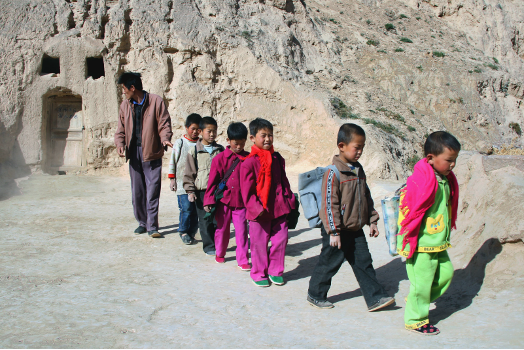
“Ethnic minorities in North Western Vietnam” by CIAT/Trong Chinh is licensed under CC BY-NC-ND 2.0

TH: I wonder what you predict might happen as Vietnam rolls-out the shift to a competency-based curriculum and textbooks. In ethnic minority areas, do you think teachers might resist or parents might worry their children won’t succeed? Or might it actually be easier to make that shift in rural schools?

LDD:  This is something that we hope to study, but I expect there will be varying levels of challenge in different areas. However, I think the willingness of the Vietnamese people to change is high. We really want to change because we that see that many students now don’t have the skills they need for higher education or for vocational education, so we hope the new competency-based curriculum will better prepare students. From 2022-2025 MOET will assign provinces to conduct research on implementation and outcomes. We are very interested in understanding local perspectives on coordination and real impacts, especially in rural and ethnic minority areas. The willingness for change gives me optimism, but we also need to closely study results on the ground.

“Vietnam: Poor and ethnic minority students face persistent lower education performance” by
Chau Doan/World Bank is licenced under CC BY-NC-ND 2.0

PML: In our research with the RISE Programme we planned to explore how the new competency-based curriculum was implemented in schools, but because of COVID, the implementation of the new textbooks was delayed. However, in our earlier qualitative longitudinal study we looked at teachers’ and headmasters’ understanding and perspectives on competency-based teaching. The majority have a very clear understanding the objectives of the lessons and the knowledge and skills when asked about the competencies they don’t have a very clear distinction between skills and competencies. Actually, when we looked at in practice, some teachers were doing competency-based teaching in their classroom, but they did not realize it.

TH: Help me understand what that looks like. How could you tell they were already teaching competencies without realizing it?

PML: We collected video recordings of lessons along with the lesson plan and an interview with the teacher before the class and an interview afterward where they watch the recording and reflect afterwards. We ask them what were the competencies that they were teaching. The lesson plans they were designing were still based on the old knowledge-based textbooks not the new curriculum, and we recorded this and had the post-interview, and we could see the teachers were teaching some competencies like creativity and critical thinking in their teaching activities. They still followed the textbook but they changed the pedagogy. They designed the teaching by themselves.

“Children at their desks in a primary school in Vietnam” by GPE/Koli Banik is licensed under CC BY-NC-ND 2.0

TH: But what led them to change their pedagogy? Was it the professional development?

PML: It depends on the individual. Usually, the government’s training is common, but the pedagogy for each lesson depends on each teacher, and the teaching method of the teachers from the rural provinces is different from that of those in the central region so we have to see what are the reasons for these differences: Why can’t the teachers from the Northern provinces teach the competencies as well as those from the central region? From that maybe we can get back to the professional development training delivered by the government and whether that was different or not. Or whether the networking in one school or region is different. 

LDD: These videos were collected before COVID around 2017, and the government has had strong, continuous professional development training every year, and they have had a focus on “active pedagogy” even before they began the comprehensive renovation of the curriculum.  The Ministry of Education actually promoted active teaching methods since the 2000s when we conducted the previous education reform. A lot of the civil society organizations in Vietnam also supported the educators in all the provinces to promote active teaching methods. It is not new. It is not that we changed to the competency-based curriculum, and then we promoted active teaching. Active teaching existed in the previous education reform.

Next steps?

TH:  What do you see as the next step Vietnam needs to take to continue improving its education for all students?

PML:  For me, the most important thing is still teachers. We cannot wait for support from the government or Ministry. What happens in the classroom still comes down to each teacher and child. Supporting training for teachers is critically important so that they enjoy their job and have the inspiration to improve their teaching. That’s why it’s good that we have open resources for them and now, with the Internet, they can easily learn and share with their colleagues from all corners of the country. I think we will be able to make changes very quickly if we can promote this online platform and provide open resources.

LDD: Along with teachers and human resources overall, I think in the coming years Vietnam has to deal with a number of economic issues so at the macro level we need to maintain enough investment in education. But we need to define the top priorities because we have limited resources, and we cannot do everything at once. In recent years, we have focused on changing the preschool. We have a plan, , and VNIES is charged with writing the new preschool curriculum, and it is going to be introduced next year, and we are going to have a pilot from 2025 to 2027. But, for me, for the next 10 years, I think higher education should be a priority. I don’t see many colleges or universities in Vietnam at a high rank.

Achieving Education for All for 100 Million People: A Conversation about the Evolution of the Vietnamese School System with Phương Minh Lương and Lân Đỗ Đức (Part 1)

Vietnam demonstrates that schooling can improve at a large scale, even in a country with a developing economy and over 15 million students. The majority of the Vietnamese population (nearly 86%) are from the Kinh ethnic group, but there 53 other ethnic groups. Some of these ethnic groups have long had high levels of literacy and education, but the Vietnamese government has also made a concerted effort to support the education of students from ethnic minority groups who live in rural areas and mountainous & remote regions and who experience higher levels of poverty. These efforts have contributed to near universal access to education at a relatively high level of quality. To learn more about how Vietnam’s education system has achieved this success, I visited Hanoi last year and talked to a variety of Vietnamese educators, policymakers and researchers. My conversation with Phương Lương Minh and Lân Đỗ Đứcat the Vietnam National Institute of Educational Sciences (VNIES) was especially instructive in providing insights into how schooling in Vietnam has improved in rural areas with ethnic minority students. The first part of this conversation centers on the efforts to improve education over the past thirty years, particularly in these ethnic minority areas. The second part looks ahead and discusses what might happen in the future as Vietnam rolls out a new competency-based curriculum and related textbooks. For related posts, see the Lead the Change Interview with Phương Minh Lương and A Conversation with Chi Hieu Nguyen about Vietnam’s responses to the COVID-19 school closures.

Lân Đỗ Đức is Vice Director of the Department of Scientific Management, Training, and International Cooperation at the Vietnam National Institute of Educational Sciences. Dr. Phương Lương Minh is a lecturer and coordinator of the Master Program of Global Leadership, Vietnam Japan University (Vietnam National University), and a collaborating researcher at the Vietnam National Institute of Educational Sciences. I am indebted to President Mai Lan and colleagues at VinUniversity for making this trip to Hanoi possible and to Dr. Le Anh Vinh, Director General of the Vietnam Institute of Educational Sciences (VNIES) and his colleagues for their support.

                                                                                                                        – Thomas Hatch

Policies for supporting access and quality of education in Vietnam

Thomas Hatch (TH): How has Vietnam managed to develop an education system that has almost universal access to education at a relatively high level of quality in a developing country of almost 100 million people?

Lân Đỗ Đức (LDD):  After the war, the Vietnamese government realized education should be the key to changing human resources and economy, and we tried to maintain almost 20% of national expenditure on education. We also have policies supporting the general education sector, and then we have policies supporting minority education through financial aid. That can include support in some remote areas for secondary students to go to boarding schools. In the remote areas, especially in mountainous areas where ethnic minority communities live, beside the funding from local authorities, one key thing is support from village heads. They are not under the power of the local authorities, but they work with local authorities to support bringing students to school. The provincial and district authorities also provide instructions to lower levels, including villages, to work closely with the education agencies. Under the coordination of the People’s Committee, there is also close cooperation between government authorities and education agencies across provincial, district, and village levels.

TH: I understand that to support quality education in ethnic minority areas, the Vietnamese government is also trying to encourage students from those areas to train to be teachers. What steps have they taken to create a pathway into teaching for these students?

LDD:  When there are not enough young teachers willing to go to rural areas, another key strategy is paying higher salaries as an incentive, with the allowance 50%, 70% , sometimes even two times higher. People also highly respect teachers and education. They understand the benefits for children and ethnic minorities. That’s why they strongly support initiatives to encourage and mobilize children to attend school.  But one barrier is that teachers from outside areas often cannot speak the local ethnic minority languages when they come to work in rural or mountainous villages so it’s very important to train local minority people to become teachers. We have some policies that can make it a bit easier for minority students to enter teacher training programs. Usually, some ethnic minority students are nominated by their provinces to pursue teaching careers, called “cử tuyển”, and they receive some advantages like lower entrance requirements and financial aid from their provinces. In college, they also receive a lot of support. For example, when I was studying math education at the National University, there was one section of a math class that specifically trained in-service math teachers from ethnic minority areas. But after graduation, the students who receive funding from their provinces must return to work in local schools after graduation. For other students, it is different; they must find schools and jobs themselves after graduating.

TH: Do the provinces provide incentives and support for ethnic minority students wanting to study other fields besides teaching?

Phương Minh Lương (PML): Yes, there is support for ethnic minority students in other areas such as agriculture, medicine, economics, and tourism besides just education.To get into college, local authorities can nominate students to apply to university without entrance exams. We call this “Cử tuyển” – “sending to school” – local authorities select the students based on certain criteria, and, normally, students in this program are offered jobs by local authorities after graduating.But in practice, this is often not true. Not all students receive jobs from local authorities after graduating. So then a lot of the parents from ethnic minority groups see that there is no guarantee for their children to receive a job even though there was a commitment.

The power of the collective and social networks in education improvement

TH: In the US, we only hear about the “miracles,” but in Singapore it took 30-40 years to build an effective education system.  In Vietnam, what was successful in the early days in the 1990’s? How were you able to reach people in rural areas and then get them into school and get them learning?

PML: That is the power of the collective that can be known as “power with.” There’s close coordination between authorities at grassroots levels and schools, with monthly meetings between the village or what we call the commune authorities and school leadership and educators. These include school officials like headmaster and representatives of mass organizations like the Women’s Union, Youth Union, and Study Promotion Associations at village level. These meetings are organized by the commune authorities, and they discuss all the problems related to the life of the local people in the village and in the school.  Then if there is a problem, like there are children who have dropped out, then the authorities can support the school in that area and they can come to see why these children dropped out and whether there are any solutions to get these children back to school.

TH: But does that coordination really happen at an individual level – where they meet in a village and say, “These 5 children dropped out, let’s go find out why and get them back in school”?

PML: Yes, the head of the village head works closely with the teachers to find those children. It’s not always easy for teachers to find the children because sometimes the children may be far away in the rice fields or the forests for days helping their families to complete the harvest. But the village head knows how to communicate with those families to discuss the situation. He can mobilize the engagement of police, women’s union, youth’s union and youth in village in this effort. As such, they can quickly find these dropout children and their parents.

TH:  Do you have an example or story of a specific student where this happened and a child dropped out and they brought him to school?

PML:  In Lao Cai and Ha Giang provinces where I worked, the Hmong have some of the lowest school attendance compared to other ethnic groups. The children of the Hmong group may drop out if there is a marriage festival or another village event. The children also often drop out during the tourist season in the summer because foreign visitors come and the children drop out to act as tour guides so they can earn money. To deal with this, there are two things the school headmaster can propose to the Bureau of Education and Training at the district level. First, if it is a festival for the Hmong people, the authorities can allow the school to close for a few days. In some areas, 100% of the students might be from the Hmong group, so in that case all of the children might stay home. So closing the school is the first option. 

Second, when children drop out to earn money, teachers have to work closely with parents and the village head to advocate for the children to attend school rather than earn money. The parents may support education, but some are too poor, or one parent may have died, and there is only one parent to earn money, so in that case, it’s really hard for the children to come to school.  But the government of Vietnam actually provides some financial support for children in disadvantaged areas so they can receive nearly $1,000,000 Vietnamese Dong (roughly $40 USD) per month if they attend school. The money is for the children, but the teachers distribute it to the parents according to the regulations. Apart from money, they can receive rice as well.

TH: One of the arguments I’ve made is that one the strengths of the Singaporean and the Finnish systems is that they are both highly connected and socially networked, both formally and also informally. Even though people are spread out in Vietnam, particularly in rural areas, it sounds like people are still relatively well-connected?

PML: Related to communication and connections, I’ll tell you a story from my experience. In 2011, I did fieldwork for my dissertation in Ha Giang province. It is an area with a high proportion of ethnic minorities – over 70% in some villages and 100% ethnic minorities in others. There was a non-governmental organization (namely ActionAid Vietnam that had a medical care program for children, and one day, my colleague went to a school with a doctor to do some health examinations of the primary and lower secondary school students. The doctor found some children that had teeth that needed to be pulled, otherwise, they’d become infected. Unfortunately, a terrible rumor started that the teacher pulled the children’s teeth to sell to the Chinese people for 15 million Vietnamese Dong per tooth! And the next day all the children were gone, and none of them came to school. Of course, this created a real headache for the local authorities, who had to figure out how to convince the children to come back.

We all thought it was strange that all these parents had the same information though they lived very far from each other.  The Hmong people are very spread out, with several households on each mountain. That was in 2011 and the Internet connection did not work well yet and mobile phones also weren’t common there. But the Hmong people had an informal channel to communicate and share that information so the next day, no children went to school. The local authorities at the district and commune levels and the headmaster and the healthcare center director had to come to each village and convince the parents the rumor wasn’t true and get them to bring the children back. The village head who is from the Hmong people has a good reputation, so he can gather all the Hmong households and get the teachers and the doctors to explain what happened.

Community engagement and educational improvement

TH: It seems like you could argue that Vietnam lacked the educational infrastructure and the money that some other systems have had, but it has had the social and cultural infrastructure that connects communities and maybe we have lost some of those connections in many communities in the US. Do you have some other examples of parent or community engagement in schools?  

PML: I can talk about another example of parent engagement in ethnic minority areas. In one of my chapters, I wrote about inequities for ethnic minority children in getting access to school. In first grade in primary schools, they have to learn the Vietnamese language, but without good language preparation, and this challenges the enactment of their rights under Article 5 in the Vietnamese Constitution to learn in their mother tongue from an early age – Article 5 of Vietnam’s Constitution states: “Every ethnic group has the right to use its own language and system of writing, to preserve its national identity, to promote its fine customs, habits, traditions and culture.” So we mobilized the ethnic minority parents who are good at the Vietnamese language to come to the school to help the teachers. Most teachers are Kinh people, and they can’t speak the local languages, but the parents can act as translators between children and teachers in those first months until the children understand the teacher and the teacher can understand the Hmong children. That’s a great initiative for bridging education and removing language barriers. Additionally, parents are also willing to contribute their labor to cook for children when schools lack the money to pay for support staff, so these are some good community engagement practices.

TH: You used the phrase “we mobilized parents,” but what does that mean? How did you do that?

PML:  Most parents are aware that, when children have access to education, they can have better lives and for that they need to know Vietnamese. But as I said, ethnic minority groups often live far from the commune centers, so we sometimes establish satellite schools in the villages. Then the parents can see that when the children come to school, they are having a lot of fun. They can see the children singing and reading stories in Vietnamese, and they can see the children’s happiness. It’s that simple – if children enjoy the class, parents will come to support them.

However, it is not easy for the parents to get access to the classrooms without approval from the school. That’s the reason why this model of parent engagement functions with the support of the NGO’s. The NGO’s see the need to engage the parents to help the teachers. It is not that the community people want to come to the school, and they are warmly welcomed by the school. It is the NGO that says to the school it would be good if you have the support of the parents. Recognition is very important here. When the school recognizes the contribution from the parents, then it works. Otherwise without any recognition, there is no chance for the parent to get involved in the school system, yeah. The same for the NGO as well. If they don’t request that the school recognize the contribution from the parents, then it doesn’t work.

THE CONSTITUTION OF THE SOCIALIST REPUBLIC OF VIETNAM

The aims of education and the right to mother tongue education

TH: the education system is focused on improving economic opportunity, getting students into higher education and the workforce. But as you have pointed out in some of your research, this comes at a cost if attention is not paid to local culture and history. Does the government understand this problem, or is it more focused on strengthening the overall economy and education system?

LDD: The government wants to preserve the local culture, and that’s why we also developed the bilingual teaching program funded by UNICEF. It ran for almost 10 years from about 2006 to 2015. Several million dollars were provided to develop learning and teaching materials in minority languages, and the Ministry of Education and Training (MOET) and VNIES  are continuing to work to support teacher training and learning materials for bilingual education and mother tongue instruction in some provinces. But some of these languages don’t have a written form so it is not easy.

PML: It is regulated very beautifully in the policies that all ethnic groups have a right to education in their own language. But in practice, even though the government wants to support them, it is not feasible to do so because of limited resources. For example, without a writing system, we cannot preserve the languages; if we don’t have teachers who are able to teach in the languages and we don’t have the curriculum and textbooks to teach them, it doesn’t work.  Right now, there are only three languages that UNICEF has funded for textbooks (including Mong, J’rai and Cham). So we try to promote and implement Article Five in our Constitution, but it depends on the available conditions

Next in this series: Looking toward the future and the implementation of a new competency-based curriculum in Vietnam: A Conversation about the evolution of the Vietnamese school system with Phương Lương Minh and Lân Đỗ Đức (Part 2) 

On the Inertia of Education Systems and Hope for the Future: A Conversation with Jón Torfi Jónasson on Educational Change in Iceland (Part 1)

“Why don’t schools change?” In this two-part interview, Jón Torfi Jónasson reflects on his work studying educational change in Iceland and other parts of the world. Part 1 explores some of the institutional factors that make it difficult to make changes even in an “undisciplined” system like that in Iceland. In Part 2, Jónasson discusses some of the advice that he has shared with policymakers and education leaders. Jónasson is a Professor Emeritus of the University of Iceland School of Education where he was also Dean of Social Sciences and Dean of the School of Education.

Thomas Hatch: Can you share with us how your ideas about school improvement have evolved?

Jón Torfi Jónasson: For the past 20 to 25 years, I’ve been interested in how education changes or doesn’t change. In the “old days,” I was very interested in the use of computers in education, and I went to a meeting about this in Switzerland in 1980. I came back from that meeting and advised the Ministry of Education here in Iceland, “We must know what’s happening because this is very, very important.” I thought that from now on everything would change very fast, partly or even mainly through the influence of computers. A few years later, the Government set up a committee on the future of all aspects of government, and I was asked to write on what I thought would happen in education in the next 25 years, from 1985 to 2020. Some thought I would, among other things, be able to explain how computers would change everything and, perhaps, how school might not be needed at all, due to the power of computers. But I was very careful and I often claim that this was a particularly boring book because I said, more or less, that very little would change. Computers would be introduced; they would be used – this was before the internet – and they would probably be connected via video link, but not very much else will change. Well, perhaps something, but probably not very much. And my judgment on this, by hindsight, is that I was more or less correct.

Jón Torfi Jónasson

After that, around 2010, I thought I would write another book about the next 25 years, but I didn’t want to write another boring book so I decided to speculate about what might change but more importantly, what actually hindered sensible change. What should change? And why doesn’t it? That led me to become interested in the inertia of educational systems and educational work generally, and with this I’ve been preoccupied in the past decade or more. In one article, “Educational change, inertia and potential futures,” for example, I focused on inertia and the aspects of education that make change difficult. One of my main conclusions is that people erroneously view education as an organization. Thus, many have been interested in developing organizational leadership and thus organizational change, and have perhaps not sufficiently understood that education is more of an institution. (This argument has been most powerfully made by David Labaree in his 2010, book Someone Has to Fail.) You have to focus on institutional changes and how institutions should or can be changed if you want education to develop.

In order to explain my argument, I’ve concentrated on two main institutional aspects, even though there are more that matter. One is that there are subjects that should be taught, and they’ve been essentially the same for over a century or two, with mathematics as the prime example. The other institutional issue is credentialism. Internationally these are very powerful constraining forces, keeping education in a certain form.

But if you ask about Icelandic education, I think it is actually in good shape. A lot of people are more skeptical than I am, but I claim that the strength of the Icelandic system is its lack of formal discipline or constraints. It’s a system that is not disciplined by examinations; we have no national leaving examination, with stakes, at any level. That may change, but that’s been the case during this century. In the past, at the highest level we have had a formal entrance examination (university entrance examination -ice: stúdentspróf), but it is not the same from different upper secondary (i.e., high) schools and thus not national, they all have their own final examinations. Then, when we had the national examination at the end of compulsory education, it was only indirectly used for tracking. Some high schools would try to select students on that basis, but that was not uniformly so. For most students, at least from the countryside, who in practical terms only had access to one upper secondary school, this examination didn’t matter. The tests in compulsory education will now be re-established in a totally revised form, initially in reading Icelandic and mathematics in 4th, 7th and 9th class (out of 10), but solely as a formative assessment mechanism – even though I claim that nobody knows exactly how to use formative mechanisms, but that is a different story.

Of course, we have problems. The main problems are related to the notion of inclusion, e.g., supporting different groups like those who are having mental health issues or learning difficulties, and we also have an increasing immigrant population, and thus we have problems with language, i.e. teaching young people to speak Icelandic who have a different mother tongue. These are being addressed, though I’m not sure how well we are doing this. But we are doing better in education generally than many people accept. We are doing quite well academically and many of our young people are working all over the world in interesting jobs or doing well at top institutions. We’re doing quite well in sports. We have national teams in both genders that are doing reasonably internationally, e.g., in soccer, handball, gymnastics, and basketball. Our young people are internationally successful in music. PISA’s not the only measure of how well we do, that’s my main point. One of the problems with PISA is that it hijacks the discourse. It may have positive aspects, but it is very damaging when one measure takes over the discourse and tells you what needs to be addressed.

TH: If Iceland has one of the most undisciplined systems, in the sense you have explained – and I’m not aware of many others that are like it – that raises a question: Why hasn’t it been easier to change the Icelandic system? Many people in other countries complain that the tests and examinations make it hard for them to change, but what are the institutional factors that are making it hard for this “undisciplined” system to change? What is producing the inertia that’s making change difficult?

JTJ: It is the institutional character of education. One problem, as I mentioned, is the subject control. There are certain subjects that everyone agrees must be taught; well, many – perhaps most people, seem to agree about this, except me. I’m trying to argue that one problem is the absolute versus relative importance of curricular content. There is nothing that’s absolutely necessary to teach, but there are so many things that are useful to understand (even very useful), and certain things may be relatively more important than others. Many, perhaps most of the things we are now teaching are, in my mind, relatively less important than things we’re not teaching. Take genetics which doesn’t have central role in our curriculum. Why isn’t genetics, or perhaps microbiology, the main focus in the natural sciences rather than physics or chemistry? You could easily suggest still other foci. Why shouldn’t artificial intelligence be addressed with connections to the brain and computer sciences – and even placed in primary focus? Isn’t that more important than some of the mathematics we are teaching? I’m certainly not saying mathematics is not important. I’m only saying other things are possibly more important. Teaching about psychology, particularly related to mental health, is another very important subject. And we could go on. So, I’m suggesting that the current subject hierarchy is actually holding control when it shouldn’t.

The other controlling factor is the credential. You want your exams, and you want your marks; you want your social currency, you want to get on. You want to get ahead based on credentials even though a credential is not so important in Iceland, compared to other systems – it still matters – but probably much less than in most other systems. As I said before, here, there is no standardized university entrance examination. In principle, everybody who finishes high school and takes a high school matriculation exam has access to university. Before there was a hindrance if you pursued the vocational track rather than the academic path; then you weren’t allowed unconditionally to enter university. But now that hindrance has been removed, and if you go through a vocational track and take subjects that are needed – some Icelandic, some mathematics, wherever you want to take them – then you can enter university even without taking the matriculation exam.

TH: But who in Iceland determines the entrance criteria for the universities?

JTJ: It’s to a large extent determined by the individual high school who adopt their own standards, but those are based a general framework set by the ministry. Students leave the school with certain marks in certain subjects. If they have some predefined combination of subjects – they have met the university entrance criteria. It’s somewhat diffuse because it can be different for different universities and in different university subjects. If you ask someone “what is it?” No one can actually give a simple general answer. So it’s amorphous and flexible, which I think is very sensible. There are discussions about changing this, but, for the most part, it’s incredibly open. In the medical professions, programs for nurses and doctors have special entrance examinations, but they are exceptions.

TH: Let’s keep pursuing this. If the system is so undisciplined, in the sense you have explained, and it’s so open, shouldn’t Iceland be the easiest place in the world to make changes and improvements in conventional schooling? What else is holding things back?

JTJ: Again my response is: it is education as an institution. There is curriculum guidance for the preschool, which is very open so, in fact, teachers there can do whatever they think makes sense within that very general frame. This makes sense for the preschool and is easy for most people to accept. But it is in fact similar for compulsory education. There is a national curriculum, but it is very open, and I claim that the schools have more freedom to do what they think makes sense than they actually realize. They have been held back by some very ill-defined constraints set by a “divine” tradition. Many would say, “We will not be allowed to do this or that,” when they actually have the implicit permission.

So it’s quite interesting, why we don’t see more changes? There is one institution I haven’t mentioned, which is the parents. A preschool teacher told me this morning that many parents ask her, “Why are you not teaching reading in preschool? You should be doing that.” The parents are making sure that the “right things” are being done, even though the right things they think of are determined by their own, often narrow perspectives. That’s also a controlling force.

It’s a very important question. Why aren’t we changing more than we are? In my writing on inertia I’ve tried to mention a number of constraints. One of the constraints I talk about related to the control of the subjects is the education of teachers, i.e. what they can and cannot teach. What new material are they able to teach? I thought in the 1980’s and 90’s that we should teach computer programming at school. Definitely not to produce programmers but for the same reason we teach mathematics. It’s reasonable to understand and master some of the things that are happening around us. But that was a futile suggestion to make. Hardly anybody was available to teach programming, so you couldn’t press that point. And it’s the same with some other important topics. If you want to place more emphasis on AI or genetics, or ethics or other important new things, who would be teaching those topics? Then, if we think certain skills are important – like teaching initiative, friendship, or creativity – who’s going to teach those? These are very difficult to teach! It’s easier to teach fractions. Teachers also have to attend to all kinds of important things in school that are rather difficult so they would perhaps prefer to do something more manageable like teaching time honored concrete content. Related to this are vested interests. For instance, in secondary schools, when students in Iceland were given more choice of foreign languages, the pupils started to choose Spanish rather than German. Some of the teachers of German, unfortunately, lost their jobs. This doesn’t happen, of course if we don’t change. There are a lot of things like that keeping the system in place. And it is easy to understand and even to sympathize with many of those. But my main point is that if people don’t understand the various institutional constraints, then they don’t understand why the changes that they think are reasonable, don’t happen.

One of the problems is that education is not being discussed as an idea. When people say, “we should change education,” they’re normally implying “we should change the way we teach, for example, mathematics.” They’re not asking if we should teach mathematics at all or other such fundamental questions. There are many things like that, you’re not “allowed” or expected to question so all the changes discussed and potentially taking place are minor. Another problem is that people have this idea that you have to go through all the basics in a content area, otherwise, you can’t understand complex ideas. That means school must attend to a wide range of curricular basics even though nobody actually knows what these basics need to be. There were basics, perhaps defensible in the 1900’s, but not necessarily now, even if they still retain their curricular place. This is being discussed among other related issues in the recent fascinating book by my colleague Tom Fox on becoming edGe-ucated.

Another content issue is communication. Communication should perhaps be the most important subject in a modern curriculum. There are incredibly many different sides to it. I mention a single example. With whom do you have to communicate, how and about what?

Next Week: “Relish the freedom you have and find the balance”: A Conversation with Jón Torfi Jónasson on Educational Change in Iceland (Part 2)

Supporting a shift to competency-based learning: A conversation with Shefatul Islam about the development of Bangladesh’s online education platforms (Part 2)

This week, Mohammad Shefatul Islam describes the recent roll-out of a platform to support the implementation of a new competency-based assessment system in Bangladesh. In the first part of this two-part interview Islam talked about how he first got involved in edtech as a tutor and then describes how his work leading the development of several edtech platforms evolved during the school closures of the COVID-19 pandemic. This interview was conducted in November of 2023, shortly before the rollout of the platform to support the competency-based assessment system.

Islam is a civil service official within the Ministry of Education, with primary responsibilities as a Lecturer in Economics in government colleges. For the past few years, he has been on assignment at the Ministry of ICT and Telecommunication working on a program known as a2i, a collaboration between the Ministry of ICT and the Ministry of Education to help shape the future of education in Bangladesh. Islam has been a leading architect of the development of three different education platforms in Bangladesh: The Teachers Portal was established in 2013 to support blended learning and the development of teachers’ digital skills. Teachers can share presentations and teaching materials on the platform and access an online repository of multimedia materials. With over 600,000 registered, 60% of teachers from around the country have joined the Portal. Following the development of the Teachers Portal, Muktopaath was created as an e-learning platform for education and professional development. In 2018, attention shifted to students and Konnect was founded as an “edutainment platform” to support the development of youth (13 – 18) through access to a safe digital environment that connects them to online and offline activities, educational materials, mentoring, advice, games and competitions. (K stands for Kishore, youth in Bengali.) This interview has been edited for length and clarity.

Thomas Hatch (TH): This year, you have been working to create an online platform to support the shift to competency-based assessments. Can you tell me about that shift? When did that work start?

Shefatul Islam (SI): The new curriculum process started in 2017. We reviewed over 100 countries’ curricula and policy documents like the Sustainable Development Goals. We also took into account the government’s National Education Policy, National Development Plan, and the Bangladesh Delta Plan 2100 which addresses the fact that as a flat, low-lying country, only about a meter above sea level, we are extremely vulnerable to climate change. We took all of these things into account – the changes in the environment, in the economy, in the future skills needed – and we conducted several years of integrated research and extensive stakeholder consultations.

We also started piloting project-based learning activities within the existing curriculum, and that was a big part of my work. In 2018, students were assigned to a project called “Banganabdhu Sheikh Mujibur Rahman and Muktijuddho ke Jani”  to interview elderly people in their region about our liberation war in 1971. Teachers took student groups to historical sites, homes, even hosted events to honor the war heroes and do the interviews. As a small experiment, we added a way for students to add a recording to their project pages on Konnect. The students could record the interviews on their mobile phones, and they could share their experience: How they found their interviewees, the time, the place. It was like the story of the whole process. We received over 300,000 submissions from different schools, each about 20-25 minutes, all with a different story because each person had unique experiences. Some of them had family members that were murdered or raped. Some of them had lost fingers or eyes. It was very emotional. Students recorded these powerful stories and after completing projects, uploaded them onto Konnect website, YouTube, or Facebook. Teachers assessed the projects and collected the school’s best, and then picked one to send to a committee at the sub-district level. Those committees chose the top 100, that had the best stories, that were also properly recorded; the sound was clear; the image was clear; and then they sent those on to the district. This way, we collected all the content from local level, and finally picked the top 100 content at the national level.

TH: That’s fabulous! When was the new curriculum rolled out?

SI: The new national curriculum first rolled out in 64 pilot districts in 2022 before we expanded it with one sample school per district. Now in 2023, it has spread across the country for grade 1 and grade 6-7. Next year, we’ll add Grades 2-3 and 8-9. By 2025, it will include all grades with the first public exam from the new curriculum in 10th grade.

TH: Can you tell me about the new app you created to support the new curriculum?

SI: Before talking about that, it can help to have some idea of the old and new curriculum. Before, we had a structured curriculum. At the secondary level, we had about 36 subjects. Some subjects were mandatory and some were optional. This led to some disparities because boys used to take agriculture and girls used to take home science; students from the high levels took sciences and students from the lowest level to humanities. From that curriculum, we have moved to a more comprehensive curriculum so that up to grade 10 there will be only 10 subjects: Language (Bangla and English); Maths; science; social science and history; religion, with four religion textbooks (Islam, Hindu, Christian, and Buddhist). Then four new subjects came up: Digital Technologies, Life & Livelihoods, Arts & Culture, and finally Wellbeing. This includes the most demanded skills and competencies for life and the 21st century across grades 1-10.

Then before launching this curriculum country-wide, we trained our teachers first online through Muktapaath. 100% of the teachers from primary to secondary, received online training to understand the new curriculum and the major changes. After giving the schools all the materials and learning aids, like the teacher guides and the textbooks, the teachers were given five days of face-to-face training.  Of course, this training is not sufficient because this is a huge transformation, but in the previous curriculum training took place over one or two or three years. They took lots of time to complete the whole cycle and to train everyone. Now, we can leverage the technology so that we can have 100% training within a very short time.

Another thing we did is that we transformed our schools into training centers. Before, teachers went to the teacher training colleges and stayed at a hotel for five or ten days of training.  Instead, this time, we used local schools so the venue is nearby and the teachers don’t need to stay overnight. They can come in the morning and just go back to their home, and we don’t need to spend so much money. Now, the major challenge now is the assessment. Teachers can’t relate it to the previous system that used different percentages, and the parent also were used to exams at different level. From the shift from a summative assessment system to a formative assessment system there is a lot of turbulence.  Parents were very anxious about what their kids are learning. Their kids are not coming back with lots of assignment at home. They are not reading out loud. They are not memorizing; they are not going their own personal private tutors. “What are they doing? What are schools doing? Are the students even learning anything? Where are the grades? You are not giving us any transcript. What are their achievements?”

It was also not very easy to develop this this formative assessment strategy because we studied the approaches in a lot of different countries practice, but we never found anything appropriate for us. So we tried to make it our own. There was a huge group involved in the development of this assessment strategy: the universities, the pedagogues, and the assessment specialists within our country, and we created our own solution.

TH: Now what does the app that you’ve developed to support the new curriculum and the new assessments look like?

SI: We actually just started on the platform a few months ago. Although the platform could have done many things easily and automatically, we wanted to make sure the teacher understood the assessment process and the rules and principles behind the design of the platform. So in September of 2023, we did the first assessment training offline and introduced the new materials and tools. We also went through the key steps of the evaluation process: What are the areas teachers have to keep track of and record? How can they collect the evidence and how can they process those performance indicators into differences in students’ performance? We put in place a “three-dimensional” process to break down the different competencies into performance indicators and then levels of performance: Is it good? Is it best? Is support still needed?  These are the levels. We moved away from percentages and numbers and now just have these statements. Previously it was one sheet where in Bangla you have got 80%. But what does 80% mean? Does it mean you understand 80% of the subject? But now we can understand a students’ level from the performance indicators.

We developed this assessment strategy for each of the subjects, for each of the grades, and now, as of, September of 2023, I was appointed to develop this online application for it all. It has been a roller coaster ride developing a national level platform within just one or two months. That’s when the Minister said “this has to be done.” But it was a bit lucky for me because I was involved from the very beginning in the development of the curriculum, so I could imagine what I had to do and what I had to deliver. I told them “I understand what I have to do. Let me try. Don’t expect it be perfect the first time. It will be a very comprehensive platform at the end, but I need to have some time.” And I had several conditions that I negotiated with my supervisors. I asked them, “please allow me to hire my own team. I need the experts from this country or from outside the country, no matter what.  I need the money to hire them and to engage them. Everyone should be properly incentivized. I don’t care how much they want for this work, I need the best.” And they agreed, and they also gave me a separate office. So for the last two months, I moved away, and I developed a new team of about 70 people. This work includes managing many things from the servers to the transformation of pedagogical information. And the security of the system is very important because this is the information of very young students, and you have to keep in mind that the scale of this product is the whole country: It’s like how can you build a product that is born and then immediately you are walking and running?

We also found lots of new things that I’ve never encountered before. Each and every day we’ve found new demands, and everyday we’ve done user tests.  Normally, it should take at least 2-3 months to understand the demands and requirements, and then we have to present that to the policymaker so they understand it, and then they can approve our plans. Then the design; then the development; then the testing. But this time there is no “then” at all. We have done everything simultaneously.

We also have a very complex education system and that created other challenges. In the same school, under the same registration, there are different versions of the school, a Bangla and an English version, and there are multiple shifts, in the morning and in the evening. Then there are different boards. We have two boards – Madras Education that is religious education and general education. Then more complexities come if some students change their religion, and we also found that some students in the adolescent period their gender even changed. We never encountered these kinds of issues before. We to address these changes, otherwise how can you produce a transcript for the same person who now has a different identity?

We also encountered that the parents can change. In some cases, the biological parents don’t accept the child, so a different person becomes the child’s guardian.  We have to address that because our system uses the national identity number given with the birth certificate, but without the consent of the parents or guardians, how can we identify a child? To address these kinds of things, we have to cooperate with other Ministries like the Ministry of Law and with the municipalities.  We never anticipated all these challenges, but luckily, I got the right team, and they produced the app within the timeline. It’s called NOIPUNNO and now teachers can find it in the google play store and use to record students’ performance and progress.

The soft launch was already done with the prime minister, and all the schools in Bangladesh will have to register with the system. They have to put in all the teachers, with each of the subjects and the class sections and then the students. This registration process will run for one week. Then the teachers will get the real time assessment application in three formats: a mobile app in two versions IOS and Android, and there will be an offline version, a desktop version, that they can just download it. Then everything will be updated, so there is also a browser version online. They can use it online everywhere. They can roam anywhere in the world. But we keep the geolocation of the teachers so that we can identify that they are the right person. For that, we have to take the biometrics of the teachers so that they can easily navigate the system and easily log-in every time.

Back in our system, we will be using artificial intelligence because we will have lots of information including basic information about day-to-day learning, like the progression and the achievements of the students. In addition, if students are absent from class, the evidence will be there. Assignments and performance records will also be submitted. We are accepting four different kinds of content from the teachers: images, document, PDF and videos. They can upload their own documents into the system for the evidence of the students’ performance. It will store the materials for at least a students’ life cycle, so there will be 12 years of records. The students can find their learning progression throughout that time.

TH: So the teachers are uploading the evidence from the different activities in which the students are involved, but they’re not doing it every day? 

SH:  Yes, it depends on the design of the learning experience. Completion may be five to ten classes, depending on the intensity of the experience. The teacher will collect all the evidence after the completion of the experience, but they will use this platform for attendance every day begining in 2024. We will also do cross checks to ensure reliability and build trust with the parents. Because if you do not attend a particular class, how can you produce this evidence? So there will be crosschecks like this at different points. Otherwise there will be blame issues. In Bangladesh, parents with powerful families may say “why isn’t my child getting this grade?” – even if they are not in school!  That can be happen. So these are some crosschecks so that the teacher can feel safe and so the evidence can support them.

TH: Can parents go on this platform, and see the evidence?

SI: The output will be like a report card for each of the subjects. Each student will get one report card. The teacher can download it and send it to the parents, e-mail it or print it. We are planning to share one ID for each student, but the parents will access it in Konnect where each student will have their own profile where they get the results as per policy guidance from ministry of education. But  no one can see it in public;  it will be a personalized sharing of the report card, and parents can see it from them there.

TH: How often do the report cards come out?

SI: Twice in a year. Summative assessment usually takes place in June and then the second assessment is after the annual exam in November and December; but meanwhile, there will be lots of continuous or formative assessments in the different subjects. But these summative assessments will be different from the previous ones. There won’t be any sitting and paper pencil -based examinations like before at the secondary level.  We have also conceptualized this summative assessment following formative assessment theories. There will be experiences, and each subject will get one day for a performance or they can arrange a fair; or they can arrange a panel discussion. They can showcase their project. There are lots of way they can demonstrate their performance.

TH: So the November, December period is a time when students will be involved in showcasing what they’ve learned in 10 different subjects?

SI: Exactly, but there will also be some preparation days as well for each subject. You might have a demonstration on the next Friday, and there will be two days reserved for preparation. Each of the subject usually gets three days of assessment, with two days of preparation. Those preparation days will also like tracked by the teacher – are the students taking the preparation well? That is part of the assessment as well because the collaboration, problem solving, and participation are also important. It’s not only about the final output. That is about a month for the performances. Before it was thirty to thirty-five days because there were many more subjects.

TH: There’s so much to talk about, but one thing I want to make sure I understand is that this is all obviously very dependent on the teacher, right? What is the situation of teachers in Bangladesh?

SI: The teacher is key.  In Bangladesh, I don’t think teaching is the preferred job for everyone. Most of the time, if someone doesn’t find a job, particularly in a decent area, they might come into the teaching profession. probably Its same In most part of the world even In the richest country like Finland!  The financial condition and the social status is not very high or low, but it’s in between, and I don’t see many of the teachers who are happy with their profession or their working hours, but as long they are living in their own neighborhood, it can compensate for some of the issues. In some jobs, you have to move from your city or your village, but in teaching, the government has said you can choose your own area where you can live, so you can work where you’re born or where the cost of living may be low. This is the good part. But the motivation is still very low and there are lots of changes coming up that need a higher level of motivation to implement. We can only hope that will happen because otherwise the system will collapse.

Fortunately, I have shared earlier that with the COVID response of our teacher they were like superheroes, so I hope they will embrace the change. Now we’re also developing this application that has been built-in monitoring mechanisms so we can track if any teacher falls behind; if they need support; if they need training; and we’re supporting them with more training online than ever. There are still the challenges in terms of socioeconomic condition that are not in our hands. It depends on lots of things – the politics, the economy, the rate of income, all the externalities –so we can just hope it will be okay in near future. But what is in our hands in the system we are hoping that the teachers will embrace it well.  But there are also some social pressures from the parents’ community who are not well aligned so we need to work on different avenues, like promoting awareness, and building the commitment of the parents and community towards the schools. There are lots of trust building issues remaining to work on, so I think the challenge is still there.

One interesting fact, though, is that most of our education institutions in the secondary level are private. 96% of the schools are private. They were established through local community fundraising. So there is a tendency of the community to contribute to the school. I hope if we can properly disseminate our plan and help people understand what the students will get through the curriculum changes, the community will be more involved, more responsible, more cooperative than ever.

TH: But is the platform for the private institutions as well?

SI: Yes! This platform is for all. There are some schools that are not even registered in the government system, and there are some teachers that are not regular teachers, but the school is just taking them in and sending them into the classroom, but our mission is to like include everyone. Our governments provides free textbook for all students until grade 10. So if any student gets any textbook, for any school, they should be evaluated or assessed by a teacher. We shouldn’t care whether this teacher is from government, from private, from NGO or is a regular staff member or not. If schools allow them to take a class, we allow them to be assessed. And the main operation will be done within these schools not above them. The policy level like ministry officials will just get necessary reports. They will have no control over the assessment, only the subject teacher can change or alter the assessment indicators if they want until certain time. This is how the system is developing from the ground up.

The Evolution of an Alternative Educational Approach in Vietnam: The Olympia School Story (Part 2)

This week, the discussion of the evolution of the Olympia Schools continues with a focus on the school’s development since it moved to a new K-12 campus in 2010. Established initially as a small kindergarten in 2003 by Ms. Minh An Pham and several other parents, Olympia has grown to encompass a kindergarten and a primary, middle, and high school with a combined enrollment of 1,200 in Hanoi. The post is based on a conversation between Thomas Hatch and Minh An Pham (Co-founder, Board of Directors), Quoc Dan Tran (Head Of Mathematics Department, Vice-head of Academic Council), Dr.Thuc Anh Vo (Head of Foreign Languages Department; English teacher), and Thanh Ha Le (Head of Science & Technology Department). Last week’s post, The Evolution of an Alternative Educational Approach in Vietnam, covers the first part of this conversation.

This discussion builds on previous posts documenting the founding and evolution of a variety of different schools and educational programs including the development of the ETU School in China (Beyond Fear: Yinuo Li On What It Takes To Create New Schools), the Citizens Foundation in Pakistan (Expanding to Say “Yes”: The Ongoing Work of The Citizens Foundation in Pakistan), Second Chance in Liberia, (Accelerating Learning in Africa: The Expansion and Adaptations of Second Chance), and Fount of Nations in Malawi (Building equal learning opportunities for differently-abled children in Malawi: An interview with Patience Mkandawire on the evolution of Fount for Nations). Taken together, these post show how powerful educational experiences, often ones that deviate from conventional and “accepted” practice, can take off in all kinds of contexts.

Since 2010:  The “school of change”

In describing the Olympia School’s development since its move to a new campus, Ms. Pham and her colleagues called it “a school of change.” Every summer, they seem to be making repairs and improvements in their classrooms in the school environment, but they are also constantly changing and improving their curriculum. As I talked with Ms. Pham and her colleagues, however, I began to get a sense that Olympia could be termed “a school of incremental change” – a school striving to make a series of small changes and adaptations every year rather than radical leaps. Dr. Vo, Head of the Foreign Languages Department, described the steps toward interdisciplinary project-based learning since her arrival in 2015. “Every summer,” Dr. Vo told me, “we’ve been working on improving the program while teachers are on holiday.“ At first, she explained, English teachers might take 2 hours out of the 7 hours a week they spent with in class with their students; but gradually, they began working with other teachers to pursue a project where they might try to integrate another subject into the English projects. More recently, however, their project-based approach has grown as teachers from a number of different subjects work together to create projects that are truly interdisciplinary, pursued across subjects, in and out of school.

To illustrate, Dr. Vo described a sustainable development project organized around critical questions like: “Should we build more hydro-electric plants?” and “is hydro-electric power sustainable?” In the process, students explored issues in natural science, history, and geography by looking at how electricity is delivered to different communities in Vietnam and how the factories affect local life.  Students worked in a group to do a report – which they also had to write up in English. For math, students calculated costs and benefits. For economics, they had to develop a sustainable idea to present to their peers and teachers in a kind of competition (inspired by the show “Shark Tank”). Over the years, what might have begun as a project carried out in a subject like physics, has expanded to engage the whole school, culminating in an entire day devoted to sustainable development with a showcase where students at many different levels can share what they have learned.

Grade 6 JuniorEntrepreneurs & Grade 9 Entrepreneurs ’ Shark Tank presentations on energy and sustainable development

Olympia has now reached a point where the process of developing a theme and guidelines for school-wide projects has become an integral part of their planning for the year. That planning includes collaborative meetings during the summer – and through weekly collaborative meetings throughout the school year – among all the teachers who look together at the national curriculum requirements, the school requirements, and the student needs in order to pick a theme for the year.  They then decide which over-arching questions to ask, which products to produce, and what kinds of assessments to have. Recently, they have begun engaging the students in the selection of the themes as well.  Last year, they selected the theme “learn smart, be happy, and go global.” As part of that effort, students designed a variety of different products including a “floating house” to help farmers deal with flood season and model of a ”smart home” with an alarm system for fire safety (which was covered on the VTV News).

Changing time

The school has also made some critical structural changes which have helped it to use time to support both students’ academic development and their wellbeing. For example, during the COVID-19 school closures, they planned their schedule taking into account both the content they needed to cover as well as concerns about the amount of time students needed to spend on their screens. Aided by the fact that the Vietnamese government reduced some of the requirements for content coverage, to reduce screen time, they decided to start the students’ day later and end earlier than normal; instead of scheduling periods back-to-back, they also gave students a break in between classes. In addition, they made room for movement activities in both the morning and the afternoon. Although many aspects of the schedule shifted back after the closures ended, the school has created a period after lunch when students can get more one-on-one support from their teachers and advisors. 

In order to meet the demands of the national curriculum and to prepare students for the entrance tests and university admissions requirements in the US, the UK and other countries, the school has also shifted their ninth grade – normally the last year of lower secondary school in Vietnam – into the first grade in high school (similar to the US).  As Ms. Pham explained, that move gave their 9th graders a chance to get acquainted with their high school program and to build a strong academic foundation; but it also created time in their schedule to take a number of elective courses and to choose an academic specialization in a subject of interest like social studies, psychology, or economics before they graduated high school. This arrangement enables students to prepare both for college entrance tests like the SAT or IELTS used in other countries and for the Vietnamese national exams in mathematics, literature, foreign languages, and natural sciences or social sciences (which can also be used for admission to Vietnamese universities).

Ultimately, this arrangement makes it possible for their students to participate in the school’s three different programs of activities: their academic program; an art, music, and physical education program (that is also reflected in their extra-curricular offerings); and their LIFE program (focusing on student wellbeing and social-emotional development).  With these changes, Olympia has now had thirteen graduating classes, with last year’s class including 76 graduates.

Managing resistance?

With such an unusual educational approach, some resistance and friction in a conventional system is to be expected, but the school has found ways to work with the larger system. Those efforts have included participating in some of Vietnam’s early efforts to explore competency-based learning as an alternative to “textbook-based” teaching in 2013. As part of a pilot project, the school’s science teachers began looking at how they could make their classes more experiential and active. Although they did not know it at the time, that project set them up well for the government’s announcement in 2017 that the whole country would shift to a competency-based curriculum.

Not surprisingly, the emphasis on testing and exams in the Vietnamese system has presented some constraints. In Hanoi, in particular, at the end of 9th grade, students have to take an exam in Vietnamese language and in Mathematics to get a certificate to graduate and enter upper secondary school.  Naturally, many schools focus specifically on preparing their students for those tests. At Olympia, however, given that the 9th graders are already part of the high school and almost all continue on to 10th grade they submitted a proposal to the municipal government to use their own 9th grade assessments in place of Hanoi’s 9th grade graduation exams. Olympia’s approach included formative assessments such as projects and writing portfolios used throughout the year along with some traditional, summative exams at the end of the year. When Hanoi agreed to that proposal, Olympia was able to admit their students directly to Olympia high school without taking the city’s test. Since that time, many other private schools have followed suit with their own assessment approaches.

Olympia’s older students still face some exam pressures, but perhaps not as much as in some other systems because in Vietnam students are now allowed to use their grade point average for college admissions and, in some cases, they can use scores from the SAT’s or the IELTS for both entrance to college in Vietnam and in the US and elsewhere. In addition, students who began at Olympia in primary school have had instruction in English throughout their school year, and, as a result, are often able to take and pass the national exams in English well before their final year, further relieving some of the exam pressure that often coalesces at the end of students’ high school experience.

Even with a long record of getting their students into university in Vietnam and other countries, some resistance from parents, particularly those who are used to more conventional approaches, is inevitable.  As Ms. Pham described, “It’s very difficult to make all of the people satisfied. Some parents want to reduce the burden for their students, and others want to make sure their students are getting enough academics, and they want the teacher to make sure the students are doing their work and aren’t playing games.” In response, the school regularly spends time helping families understand what they school is doing and why. Those efforts include ongoing workshops for families that are designed to help parents learn how to support their children through different developmental stages and how to support them academically. “It’s only when parents don’t understand that they resist.,” Ms. Pham says, “and whenever we roll something out, we have a lot of meetings and workshops so we can listen to each other and work together to find a solution. We have a lot of opinions, but we agree that the teachers need support for the children.”

On to the next stage…

When our conversation turned to the next steps for the school, Ms. Pham and her colleagues pointed to deeper learning as a critical point of emphasis. As she put it, they want to see students applying their knowledge and really understanding what they are learning and why they are learning it. As part of that emphasis, the teachers are working on developing interdisciplinary projects and on learning how they can use ChatGPT productively to help teachers teach the content and to be more student-centered at the same time. Ms. Pham summed it up this way: “This is a time for the school to enter a new stage. We’ve been through the “setting up” stage; we’ve made changes to the curriculum; and now it’s time for a focus on innovation and improving our quality.”

The Evolution of an Alternative Educational Approach in Vietnam: The Olympia School Story (Part 1)

This week IEN discusses the evolution of the Olympia Schools, founded as a small kindergarten in 2003 by Ms. Minh An Pham and several other parents. Since that time, Olympia has grown to encompass a kindergarten and a primary, middle, and high school with a combined enrollment of 1,200 on a common campus in Hanoi. The post is based on a conversation between Thomas Hatch and Minh An Pham (Co-founder, Board of Directors), Quoc DanTran (Head Of Mathematics Department, Vice-head of Academic Council), Dr.Thuc AnhVo (Head of Foreign Languages Department; English teacher),and Thanh HaLe (Head of Science & Technology Department).

This discussion builds on previous posts documenting the founding and evolution of a variety of different schools and educational programs including the development of the ETU School in China (Beyond Fear: Yinuo Li On What It Takes To Create New Schools), the Citizens Foundation in Pakistan (Expanding to Say “Yes”: The Ongoing Work of The Citizens Foundation in Pakistan), Second Chance in Liberia, (Accelerating Learning in Africa: The Expansion and Adaptations of Second Chance), and Fount of Nations in Malawi (Building equal learning opportunities for differently-abled children in Malawi: An interview with Patience Mkandawire on the evolution of Fount for Nations). Taken together, these post show how powerful educational experiences, often ones that deviate from conventional and “accepted” practice, can take off in all kinds of contexts.

The power of love, dissatisfaction, and determination

The founding and development of the Olympia Schools is a familiar but inspiring story. The story begins with love and a deep belief in education. It requires some money or material resources but relies on determination, connections, and social capital. Along the way, success builds on a whole series of critical decisions – and sometimes “fortunate accidents” – that contribute to micro-innovations and adaptations that make it possible for the school to find a supportive community and create the conditions where alternative approaches to education can take root.

Dream House 2003

The story of the Olympia School begins in 2003 in Hanoi, when Ms. Minh An Pham and three of her friends were looking for kindergartens for their children. It was almost ten years since the Vietnamese government had begun loosening some requirements related to education and other sectors. Economic development was in full swing, and more and more international companies were finding their way to Vietnam.  All four friends got jobs at one of those international companies and Ms. Pham told me that experience gave them opportunities to see the confidence and independence of their co-workers’ children. That exposure reinforced their concern that – although many Vietnamese students excel in academics – they often seemed to lack what she called “life skills.” As Ms. Pham put it, it seemed as if Vietnamese students had lost their confidence in speaking up and sharing their ideas. She attributed that to a school system based on a Confucian education tradition that emphasized memorization, examination, and respect for teachers, coupled with a tendency for Vietnamese parents to constantly compare how their children were doing and how they ranked academically.

With a growing international community and increasing opportunities for international work, Ms. Pham and her friends wanted to make sure that their children gained both academic and life skills and that their children could learn English along with Vietnamese. When they looked around to find a school that could meeting those goals, however, they did not see any public kindergartens that met these criteria. There were a few private options that Ms. Pham and her friends thought seemed more like day-care centers than schools, and there was one private kindergarten imported from Singapore. But even that – very expensive – option only ran from 9 – 3 PM, still not long enough to take care of their children while the four women worked. Seeing no other options, the four friends began to think about creating a kindergarten of their own.

The power of social networks

Their first steps toward developing a school came with the help of another colleague at work. Although Ms. Pham had graduated from a teacher training institution in Vietnam, she went straight into the business world after graduation. As a consequence, she had never worked in schools and was not that familiar with early childhood education. But, Ms. Pham told me, the four friends were fortunate to work with a woman whose mother was a well-known educator who specialized in kindergarten. As Ms. Pham described it, “she was our first teacher,” and introduced the four friends to a number of educational experts who helped them learn about other early childhood approaches, including the “Reggio approach” that originated in Reggio Emilio, Italy. As they visited local schools and traveled to observe private kindergartens in places like Ho Chi Minh City and Singapore, they focused more and more on schools that emphasized “developmentally appropriate practice” as well as some schools that were inspired by Howard Gardner’s Theory of Multiple Intelligences. On the one hand, Ms. Pham explained, these approaches provided broad support for children’s development and encouraged children to be independent. On the other hand, they also fit well with the Vietnamese national kindergarten curriculum. Notably, the national curriculum was already divided into areas that concentrated on physical, musical, and ethical development, and the four friends felt those subjects aligned well with the different strengths and abilities highlighted in theory of multiple intelligences.

They expanded their group of advisors as they were introduced to more and more people, including several working with not-for-profits like Save the Children, who had extensive experience in Vietnam. Those advisors looked at the plans to combine MI-based and developmentally appropriate curriculum with the Vietnamese national curriculum and concluded: “this is doable.” With that green light, Ms. Pham bought textbooks and gathered teaching materials and, with the help of their network of experts, reviewed and aligned them with the national curriculum. They rented a small house in an alley of Hanoi and worked with a designer to renovate it; they drew on the connections and expertise of their advisors to recruit and hire teachers; and, after an intense six months, opened their doors to the “Dream House” kindergarten and welcomed a small group of six students – four children of their own and two children who lived nearby.  To make it all possible, Ms. Pham worked the evening shift at her job and spent the whole morning at the kindergarten.

Key developments in the first years

The four friends were fortunate to have the means and the relationships to get the school off the ground, but, as Ms. Pham explained, they also had to credit their houses to the bank, draw on their salaries to make sure they had enough money to pay the teachers, and “every time a student quit the school, we worried so much that we would not have enough money to keep going…” Nonetheless, the school grew year-by-year, from 6 students to 12 students, from 20 students to 60, as the first cohort expanded and progressed through the grades.

Dream House Primary and Secondary Schools 2007

By 2007, they were able to start the year with both a group of primary school students and a group of secondary school students. Along the way, several key decisions helped to create the time in the day and the space in the curriculum that they needed to stay true to their original vision of a developmentally based, holistic, education aligned with the national curriculum.  First, they decided to teach Vietnamese and English in an integrated way. As Ms. Pham explained, she had seen private schools in Ho Chi Minh City that were teaching English, but only as a separate subject. “Our innovation,” Ms. Pham said, “was to teach English along with the other subjects.” That meant teaching key skills and concepts in math, science, and history in Vietnamese and then teaching the related English vocabulary in the same class. This innovation created space in their schedule because they did not have to find time to teach a separate English course. Furthermore, the subject teachers teaching in Vietnamese could co-teach with their colleagues teaching English, making coordination and communication easier. Perhaps most importantly, from the students’ perspectives, instead of having to make connections between concepts and vocabulary taught in different classes, they encountered an integrated curriculum that reduced confusion.

Second, although Vietnamese public schools generally ran for a half-day (usually from about 7:30 AM to 12 PM, 6 days a week), Dream House decided to run a full-day program, from 8 AM – 4:30 PM. That decision created additional time during the school day that allowed them to meet the national curriculum requirements, add and integrate the teaching of English, and incorporate the teaching of their own “life skills” curriculum. In particular, the national curriculum requirements for social science included both ethics and society and nature, but Dream House chose to split social science up by teaching nature during their science classes and then teaching ethics and society in their life skills class. As Ms. Pham put it, “we reconfigured all the subjects in the school day and made it a comprehensive approach, integrating Vietnamese and English.”

Movement games of kindergarten in Dream House

With those critical decisions and strategic choices, the basic structures for their primary, middle, and high school were in place. Capping off this period of development, what began as Dream House, moved to a new, larger campus in 2010.  As part of a competition to come up with a new name, the Olympia School was born, the winning teacher paper declaring it a symbol for wisdom and success.

Next week: The “School of Change”: The Olympia School Story (Part 2)

Looking Ahead in 2024: Scanning the Predictions for Education in the New Year

This week, Thomas Hatch shares IEN’s annual scan of headlines that are trying to anticipate key trends and development for education in the New Year. For comparison, review the previous scans of the “looking ahead” headlines from 20222021 part 12021 part 2, and 2020. Last week’s post featured articles that looked back on the key issues and stories from 2023; previous posts looking back on the year in education also can be found for 2022, 20212020, and 2019 part 12019 part 2.  This article was originally published on 01/11/2024 on internationalednews.com.

         In some ways, the predictions for schools and education in 2024 reflect “more of the same” – continuing discussions of the influence of technology and AI on education; the impact of the COVID-19 pandemic on attendance, academic outcomes, and wellbeing; the challenges of education financing as pandemic funding runs out; and problems caused by teacher shortages and divisive politics:

This is a critical year as the nation grapples with the long-term effects of the pandemic amid a technological revolution, a still-unfolding refugee crisis, and a presidential election that could intensify political tensions.

In 2024, expect new debates about AI, gender, and guns, New York Times

Educators should expect debates over school choice, teacher pay measures, artificial intelligence, and standardized testing in state legislatures and on Capitol Hill in 2024

What 2024 Will Bring for K-12 Policy: 5 Issues to Watch, Education Week

Budget projections will be easier and more reliable, at least for the calendar year, as the economy continues settling fairly smoothly to a slower pace with inflation easing and interest rates drifting down with it… absent the usual unforeseeables like new wars, oil shocks and pandemics — public finance is returning to something resembling business as usual.

For Public Finance, a Year for Stability and Cautious Optimism, Governing

5 Key Predictions for the Education Market in 2024, EdWeek Market Brief

One of the biggest forces impacting education in 2024 will be labor shortages—and not just in the classroom. Pressures on the wider U.S. workforce caused by a lack of employees with the requisite skills will drive more collaboration between K12 schools and employers… It will also drive a surge in popularity in career and technical education programs.

Education in 2024: Breaking Down 8 Big Trends, District Administration

What Will Teacher Shortages Look Like in 2024 and Beyond? Education Week

“While the rest of us are buying gym memberships we probably won’t use, school leaders are facing far more ambitious New Year’s resolutions: regaining academic ground, tightening those belts, weathering divisive politics, and ensuring more students show up to class.”

Five challenges school district leaders will face in 2024, Education Week

Brown Center scholars look ahead to education in 2024, Brookings

Education Stories We’re Watching In 2024, Chalkbeat

Three Education Stories To Watch In 2024, Peter Greene, Forbes

In 2024, 5 Big Issues Will Shape Education, Vicki Phillips. Forbes

9 Education Predictions for 2024, Larry Ferlazzo, Education Week

3 education innovations to watch in 2024 (hint: it’s not just about skills and AI), Julia Freeland Fisher, Christensen Institute

Looking ahead globally and locally

Five changes the new Government has planned for schools, Stuff (New Zealand)

Top 10 Education trends to watch out for in 2024, Times of India

Literacy, vouchers, an IPS overhaul, and more: Five Indiana education issues to watch in 2024, Chalkbeat Indiana

“New York’s Board of Regents has called for increased investments in the state’s information technology infrastructure, a bolstered educator pipeline, and additional money to update the state’s learning standards.”

Special education data and the teacher pipeline: NY education officials share budget priorities, Chalkbeat New York

Fiscal considerations may weigh on Massachusetts Legislature’s session priorities, Spectrum News

California education issues to watch in 2024 – and predictions, EdSource

Education Technology

“AI is the phrase on everyone’s lips heading into 2024, with 19 education technology experts believing its advantages will range from virtual tutors and faster student feedback to engaging, compelling presentations and better data analysis for teachers. Other predictions include more immersive and multisensory learning experiences, flexible learning locations, and leveraging and reaching community-based help groups.” 

How Will EdTech Change in 2024? TechRound

State of Global E-Learning Market- Ongoing Trends and Seizing Opportunities, EdTech Review

5 Trends Set To Revolutionise Education In 2024, India Today

5 K–12 Ed Tech Trends to Follow in 2024, EdTech Magazine

65 predictions about edtech trends in 2024, eSchoolNews

7 Artificial Intelligence Trends That Will Reshape Education in 2024,The74

AI’s education impact in 2024 could be bigger than many predict, Thomas Arnett, Christensen Institute

2023 in Review: Scanning the End-Of-The-Year Education Headlines

To look back on some of the key education issues and stories from 2023, Thomas Hatch shares IEN’s annual roundup of the end-of-the-year headlines from many of the sources on education news and research that we follow. For comparison, take a look at IEN’s scans of the headlines looking back in 202120202019 part 1, and 2019 part 2. The next post will look to 2024 by pulling together some of the education predictions for the coming year. This article was originally published on 01/04/2024 on internationalednews.com.

Reviews of education stories in 2023 highlighted:

  • The continuing impact of the COVID-19 pandemic on student achievement, student absences, teacher shortages, and other aspects of student and teachers’ health and well-being
  • Pandemic recovery initiatives and concerns about a “fiscal cliff” that may cut off funding for those initiatives.
  • Developments in education technology and particularly the potential impact of artificial intelligence following the launch of ChatGPT in 2022
  • Advocacy for the “science of reading” and foundational learning in literacy and numeracy
  • Persistent concerns including inadequate education funding, inequities in educational performance and opportunities, and the challenges of innovation in assessment and instruction.

A Capture of Moments, Danna Ramirez, New York Times

What High School Is Like in 2023: 25 Essays, Poems, Videos, Photos, a Graph, a GIF, and a Diorama That
Reflect Students and Teachers’ Lives in School
, New York Times

Our Top Photos of the Year, Education Week

Key issues and trends

Funding, free school meals, education choice and student loan debt were among the policy topics lawmakers tackled in this year’s legislative sessions

The Top 10 Education Trends for 2023, National Conference of State Legislators

an unusual early childhood experiment up close; wrestling with large datasets to better understand education trends; getting over a fear of math to cover efforts to revolutionize the teaching of calculus; and, yes, talks with professors struggling with adjusting teaching to the presence of AI chatbots

Looking back on the biggest education trends of 2023, EdSurge

The 7 most memorable education stories of 2023, The Grade

from what AI can (and can’t) do to the neuroscience of brain synchrony

17 Articles About Students & Schools We Wish We Had Published in 2023, The74

The 10 Most Significant Education Studies of 2023, Edutopia

10 Education Studies You Should Know From 2023: new insights on social media, ChatGPT, math, and other topics, Education Week

These are some of the education questions Chalkbeat answered through data in 2023, Chalkbeat

Six Problems Philanthropy Barely Tried to Solve in 2023, Inside Philanthropy

2023 in education charts!

“School absenteeism is out of control” & “Catch up learning hit a wall,” The74

14 Charts that Changed the Way We Looked at America’s Schools in 2023, The74

The Teaching Profession in 2023 (in Charts), Education Week

Global and local reviews

Our top 5 education result stories of 2023, Global Partnership for Education

“changes range from advanced technical programs to revamped school initiatives and innovative examination methods”

Year in review: Five Key Changes In The Education Sector In Rwanda in 2023 , The New Times

“The Central Board of Secondary Education (CBSE) announced significant changes in 2023, including updated marking-schemes and increased number of exams that candidates can take.”

5 Important Changes Announced By The Central Board Of Secondary Education In India This Year, The Times of India

The top education issues in Massachusetts that captured our attention in 2023, WBUR

New Leaders, COVID Spending, Bus Troubles: 6 Chalkbeat Chicago Stories That Defined 2023, Chalkbeat Chicago

Chronic absenteeism, Democratic control, a fiscal cliff: These were Michigan’s big education themes of 2023, Chalkbeat Detroit

Students meeting state remediation-free standards on the ACT or SAT, class of 2017 to 2022, Thomas B. Fordham Institute

Ohio’s sluggish pandemic recovery in 2023 as seen through six charts, Thomas B. Fordham Institute

— Thomas Hatch