
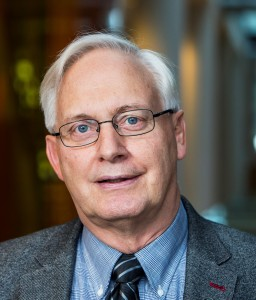
“Why don’t schools change?” In this two-part interview, Jón Torfi Jónasson reflects on his work studying educational change in Iceland and other parts of the world. Part 1 explores some of the institutional factors that make it difficult to make changes even in an “undisciplined” system like that in Iceland. In Part 2, Jónasson discusses some of the advice that he has shared with policymakers and education leaders. Jónasson is a Professor Emeritus of the University of Iceland School of Education where he was also Dean of Social Sciences and Dean of the School of Education.
Thomas Hatch: Can you share with us how your ideas about school improvement have evolved?
Jón Torfi Jónasson: For the past 20 to 25 years, I’ve been interested in how education changes or doesn’t change. In the “old days,” I was very interested in the use of computers in education, and I went to a meeting about this in Switzerland in 1980. I came back from that meeting and advised the Ministry of Education here in Iceland, “We must know what’s happening because this is very, very important.” I thought that from now on everything would change very fast, partly or even mainly through the influence of computers. A few years later, the Government set up a committee on the future of all aspects of government, and I was asked to write on what I thought would happen in education in the next 25 years, from 1985 to 2020. Some thought I would, among other things, be able to explain how computers would change everything and, perhaps, how school might not be needed at all, due to the power of computers. But I was very careful and I often claim that this was a particularly boring book because I said, more or less, that very little would change. Computers would be introduced; they would be used – this was before the internet – and they would probably be connected via video link, but not very much else will change. Well, perhaps something, but probably not very much. And my judgment on this, by hindsight, is that I was more or less correct.
After that, around 2010, I thought I would write another book about the next 25 years, but I didn’t want to write another boring book so I decided to speculate about what might change but more importantly, what actually hindered sensible change. What should change? And why doesn’t it? That led me to become interested in the inertia of educational systems and educational work generally, and with this I’ve been preoccupied in the past decade or more. In one article, “Educational change, inertia and potential futures,” for example, I focused on inertia and the aspects of education that make change difficult. One of my main conclusions is that people erroneously view education as an organization. Thus, many have been interested in developing organizational leadership and thus organizational change, and have perhaps not sufficiently understood that education is more of an institution. (This argument has been most powerfully made by David Labaree in his 2010, book Someone Has to Fail.) You have to focus on institutional changes and how institutions should or can be changed if you want education to develop.
One of my main conclusions is that people erroneously view education as an organization. Thus, many have been interested in developing organizational leadership and in organizational change, and have perhaps not sufficiently understood education is more of an institution…. You have to focus on institutional changes and how institutions should or can be changed if you want education to develop.
In order to explain my argument, I’ve concentrated on two main institutional aspects, even though there are more that matter. One is that there are subjects that should be taught, and they’ve been essentially the same for over a century or two, with mathematics as the prime example. The other institutional issue is credentialism. Internationally these are very powerful constraining forces, keeping education in a certain form.
But if you ask about Icelandic education, I think it is actually in good shape. A lot of people are more skeptical than I am, but I claim that the strength of the Icelandic system is its lack of formal discipline or constraints. It’s a system that is not disciplined by examinations; we have no national leaving examination, with stakes, at any level. That may change, but that’s been the case during this century. In the past, at the highest level we have had a formal entrance examination (university entrance examination -ice: stúdentspróf), but it is not the same from different upper secondary (i.e., high) schools and thus not national, they all have their own final examinations. Then, when we had the national examination at the end of compulsory education, it was only indirectly used for tracking. Some high schools would try to select students on that basis, but that was not uniformly so. For most students, at least from the countryside, who in practical terms only had access to one upper secondary school, this examination didn’t matter. The tests in compulsory education will now be re-established in a totally revised form, initially in reading Icelandic and mathematics in 4th, 7th and 9th class (out of 10), but solely as a formative assessment mechanism – even though I claim that nobody knows exactly how to use formative mechanisms, but that is a different story.
[T]he strength of the Icelandic system is its lack of formal discipline or constraints. It’s a system that is not disciplined by examinations as we have no national leaving examination, with stakes, at any level.
Of course, we have problems. The main problems are related to the notion of inclusion, e.g., supporting different groups like those who are having mental health issues or learning difficulties, and we also have an increasing immigrant population, and thus we have problems with language, i.e. teaching young people to speak Icelandic who have a different mother tongue. These are being addressed, though I’m not sure how well we are doing this. But we are doing better in education generally than many people accept. We are doing quite well academically and many of our young people are working all over the world in interesting jobs or doing well at top institutions. We’re doing quite well in sports. We have national teams in both genders that are doing reasonably internationally, e.g., in soccer, handball, gymnastics, and basketball. Our young people are internationally successful in music. PISA’s not the only measure of how well we do, that’s my main point. One of the problems with PISA is that it hijacks the discourse. It may have positive aspects, but it is very damaging when one measure takes over the discourse and tells you what needs to be addressed.
TH: If Iceland has one of the most undisciplined systems, in the sense you have explained – and I’m not aware of many others that are like it – that raises a question: Why hasn’t it been easier to change the Icelandic system? Many people in other countries complain that the tests and examinations make it hard for them to change, but what are the institutional factors that are making it hard for this “undisciplined” system to change? What is producing the inertia that’s making change difficult?
JTJ: It is the institutional character of education. One problem, as I mentioned, is the subject control. There are certain subjects that everyone agrees must be taught; well, many – perhaps most people, seem to agree about this, except me. I’m trying to argue that one problem is the absolute versus relative importance of curricular content. There is nothing that’s absolutely necessary to teach, but there are so many things that are useful to understand (even very useful), and certain things may be relatively more important than others. Many, perhaps most of the things we are now teaching are, in my mind, relatively less important than things we’re not teaching. Take genetics which doesn’t have central role in our curriculum. Why isn’t genetics, or perhaps microbiology, the main focus in the natural sciences rather than physics or chemistry? You could easily suggest still other foci. Why shouldn’t artificial intelligence be addressed with connections to the brain and computer sciences – and even placed in primary focus? Isn’t that more important than some of the mathematics we are teaching? I’m certainly not saying mathematics is not important. I’m only saying other things are possibly more important. Teaching about psychology, particularly related to mental health, is another very important subject. And we could go on. So, I’m suggesting that the current subject hierarchy is actually holding control when it shouldn’t.
Most of the things we are now teaching are, in my mind, relatively less important than things we’re not teaching. Take genetics. Why isn’t genetics or perhaps microbiology, the main focus in the natural sciences rather than physics or chemistry?
The other controlling factor is the credential. You want your exams, and you want your marks; you want your social currency, you want to get on. You want to get ahead based on credentials even though a credential is not so important in Iceland, compared to other systems – it still matters – but probably much less than in most other systems. As I said before, here, there is no standardized university entrance examination. In principle, everybody who finishes high school and takes a high school matriculation exam has access to university. Before there was a hindrance if you pursued the vocational track rather than the academic path; then you weren’t allowed unconditionally to enter university. But now that hindrance has been removed, and if you go through a vocational track and take subjects that are needed – some Icelandic, some mathematics, wherever you want to take them – then you can enter university even without taking the matriculation exam.
TH: But who in Iceland determines the entrance criteria for the universities?
JTJ: It’s to a large extent determined by the individual high school who adopt their own standards, but those are based a general framework set by the ministry. Students leave the school with certain marks in certain subjects. If they have some predefined combination of subjects – they have met the university entrance criteria. It’s somewhat diffuse because it can be different for different universities and in different university subjects. If you ask someone “what is it?” No one can actually give a simple general answer. So it’s amorphous and flexible, which I think is very sensible. There are discussions about changing this, but, for the most part, it’s incredibly open. In the medical professions, programs for nurses and doctors have special entrance examinations, but they are exceptions.
TH: Let’s keep pursuing this. If the system is so undisciplined, in the sense you have explained, and it’s so open, shouldn’t Iceland be the easiest place in the world to make changes and improvements in conventional schooling? What else is holding things back?
JTJ: Again my response is: it is education as an institution. There is curriculum guidance for the preschool, which is very open so, in fact, teachers there can do whatever they think makes sense within that very general frame. This makes sense for the preschool and is easy for most people to accept. But it is in fact similar for compulsory education. There is a national curriculum, but it is very open, and I claim that the schools have more freedom to do what they think makes sense than they actually realize. They have been held back by some very ill-defined constraints set by a “divine” tradition. Many would say, “We will not be allowed to do this or that,” when they actually have the implicit permission.
[S]chools have much more freedom to do what they think makes sense than they actually realize. They have been held back by some very ill-defined constraints set by a “divine” tradition. Many would say, “We will not be allowed to do this or that,” when they have implicit permission.
So it’s quite interesting, why we don’t see more changes? There is one institution I haven’t mentioned, which is the parents. A preschool teacher told me this morning that many parents ask her, “Why are you not teaching reading in preschool? You should be doing that.” The parents are making sure that the “right things” are being done, even though the right things they think of are determined by their own, often narrow perspectives. That’s also a controlling force.
It’s a very important question. Why aren’t we changing more than we are? In my writing on inertia I’ve tried to mention a number of constraints. One of the constraints I talk about related to the control of the subjects is the education of teachers, i.e. what they can and cannot teach. What new material are they able to teach? I thought in the 1980’s and 90’s that we should teach computer programming at school. Definitely not to produce programmers but for the same reason we teach mathematics. It’s reasonable to understand and master some of the things that are happening around us. But that was a futile suggestion to make. Hardly anybody was available to teach programming, so you couldn’t press that point. And it’s the same with some other important topics. If you want to place more emphasis on AI or genetics, or ethics or other important new things, who would be teaching those topics? Then, if we think certain skills are important – like teaching initiative, friendship, or creativity – who’s going to teach those? These are very difficult to teach! It’s easier to teach fractions. Teachers also have to attend to all kinds of important things in school that are rather difficult so they would perhaps prefer to do something more manageable like teaching time honored concrete content. Related to this are vested interests. For instance, in secondary schools, when students in Iceland were given more choice of foreign languages, the pupils started to choose Spanish rather than German. Some of the teachers of German, unfortunately, lost their jobs. This doesn’t happen, of course if we don’t change. There are a lot of things like that keeping the system in place. And it is easy to understand and even to sympathize with many of those. But my main point is that if people don’t understand the various institutional constraints, then they don’t understand why the changes that they think are reasonable, don’t happen.
[I]f people don’t understand the various institutional constraints, they don’t understand why the changes that they think are reasonable, don’t happen.
One of the problems is that education is not being discussed as an idea. When people say, “we should change education,” they’re normally implying “we should change the way we teach, for example, mathematics.” They’re not asking if we should teach mathematics at all or other such fundamental questions. There are many things like that, you’re not “allowed” or expected to question so all the changes discussed and potentially taking place are minor. Another problem is that people have this idea that you have to go through all the basics in a content area, otherwise, you can’t understand complex ideas. That means school must attend to a wide range of curricular basics even though nobody actually knows what these basics need to be. There were basics, perhaps defensible in the 1900’s, but not necessarily now, even if they still retain their curricular place. This is being discussed among other related issues in the recent fascinating book by my colleague Tom Fox on becoming edGe-ucated.

Another content issue is communication. Communication should perhaps be the most important subject in a modern curriculum. There are incredibly many different sides to it. I mention a single example. With whom do you have to communicate, how and about what?
Next Week: “Relish the freedom you have and find the balance”: A Conversation with Jón Torfi Jónasson on Educational Change in Iceland (Part 2)
 Thomas Hatch